

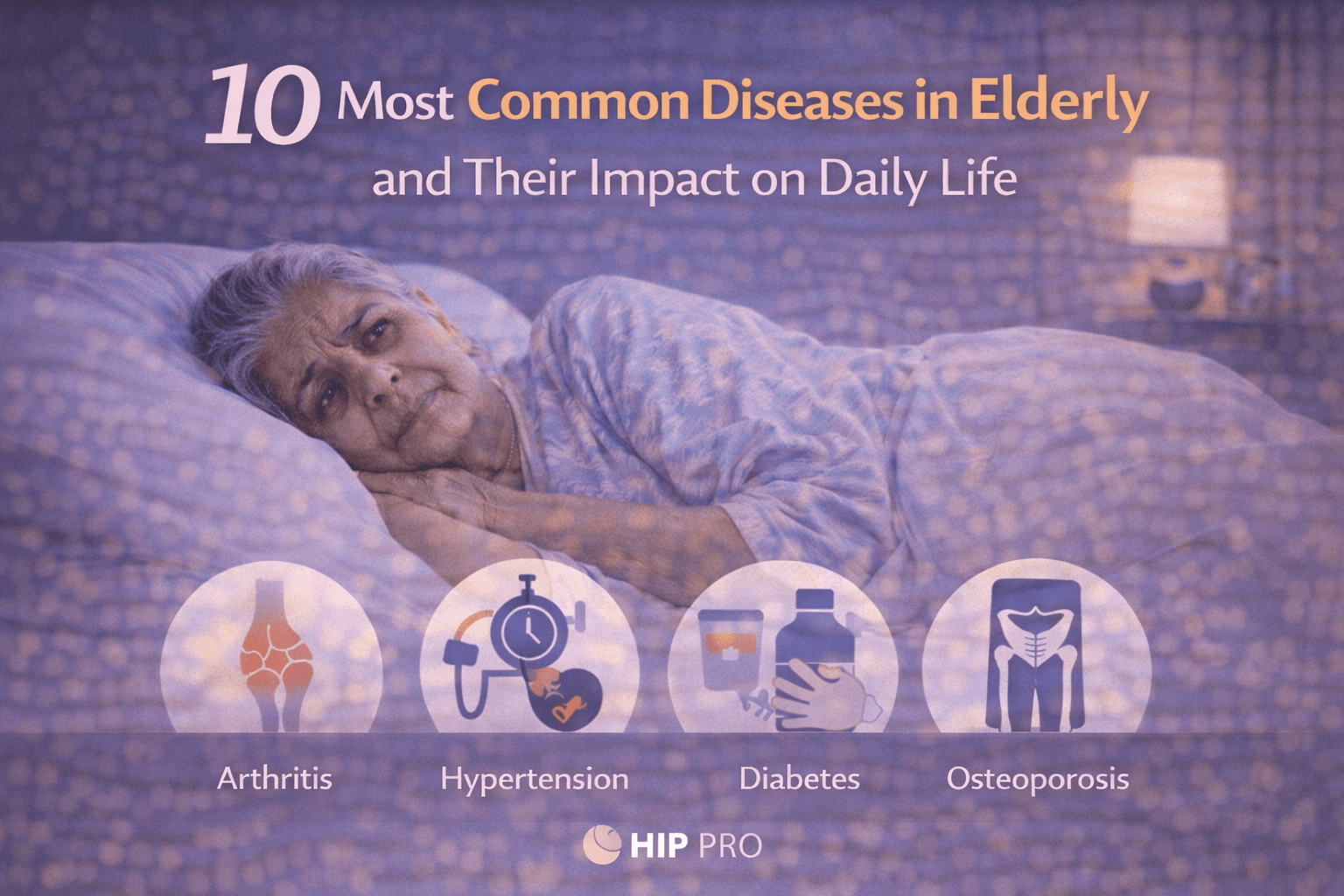
As people age, the body becomes more vulnerable to chronic illnesses that affect mobility, balance, memory, and overall independence. In India, these conditions often go unnoticed until they lead to serious complications—especially falls and hip injuries. Understanding the common diseases in elderly is the first step toward prevention, safety, and better quality of life. One important fact caregivers often miss: many age-related diseases quietly increase fall risk, even before major symptoms appear.
Why common diseases in elderly need early attention
Ageing diseases don’t act in isolation. A condition affecting bones, blood pressure, or nerves can: Reduce balance and reflexes Cause dizziness or weakness Increase chances of slipping or falling Turn a minor fall into a life-altering hip fracture This is why awareness and early protection matter.
1. Arthritis
Arthritis causes joint pain, stiffness, and reduced range of motion—especially in the knees and hips.
Daily life impact:
Difficulty walking or climbing stairs Slower movements and instability Increased risk of tripping and falls
Pain often makes elderly people avoid movement, which further weakens muscles and balance.
2. Hypertension (High Blood Pressure)
Hypertension is extremely common in older adults and often has no obvious symptoms.
Daily life impact:
Dizziness or light-headedness Sudden drops in blood pressure while standing Increased risk of fainting and falls
Blood pressure fluctuations are a hidden but major fall trigger.
3. Diabetes Mellitus (Type 2)
Diabetes affects nerves and circulation over time.
Daily life impact:
Numbness in feet (loss of sensation) Poor balance and delayed reaction Vision problems
Elderly individuals may not feel uneven surfaces, increasing fall risk.
4. Osteoporosis
Osteoporosis weakens bones, making them fragile and prone to fractures.
Daily life impact:
No pain until a fracture occurs High risk of hip fractures after minor falls Long recovery and loss of independence
This condition turns simple falls into serious medical emergencies.
5. Heart Disease
Cardiac conditions reduce oxygen supply and physical endurance.
Daily life impact:
Fatigue during simple activities Shortness of breath Sudden weakness leading to falls
Reduced stamina often limits safe mobility.
6. Dementia and Alzheimer’s Disease
Cognitive decline affects judgment, memory, and spatial awareness.
Daily life impact:
Difficulty recognizing hazards Poor coordination Wandering and unsafe movements
Falls are a leading cause of injury in elderly with dementia.
7. Parkinson’s Disease
Parkinson’s directly affects movement and balance.
Daily life impact:
Shuffling gait Muscle rigidity Sudden freezing while walking
This disease significantly increases the likelihood of repeated falls.
8. Vision Problems (Cataract, Glaucoma)
Poor eyesight reduces depth perception and hazard detection.
Daily life impact:
Difficulty seeing steps and obstacles Trouble navigating low-light areas Increased night-time falls
Vision loss is a silent contributor to home accidents.
9. Hearing Loss
Hearing loss may seem unrelated, but it affects balance.
Daily life impact:
Reduced spatial awareness Delayed response to surroundings Increased instability while walking
The inner ear plays a key role in maintaining balance.
10. Depression
Mental health issues are common but underdiagnosed in elderly people.
Daily life impact:
Reduced physical activity Poor coordination Lack of alertness
Inactivity leads to muscle weakness, which increases fall risk.
How these diseases increase fall and hip injury risk
Most of these conditions:
Affect balance or mobility Reduce muscle strength Slow reflexes Weaken bones
That’s why falls in elderly are rarely “accidents”—they are usually predictable and preventable.
Early protection matters more than recovery
Hip fractures are among the most serious outcomes of falls in elderly adults. Recovery can take months, and many seniors never regain full independence. While medications and physiotherapy help manage disease, they cannot prevent sudden falls. This is where passive protection becomes important
A simple step toward safer ageing
For elderly individuals with: Balance problems Osteoporosis Parkinson’s disease Previous falls General weakness External hip protection can significantly reduce injury severity during unexpected falls. HIP PRO is designed to: Absorb impact energy during falls Protect the hip region without restricting movement Provide daily, wearable safety for at-risk elderly individuals It works silently in the background—because prevention should not wait for an accident.
Final thoughts
Understanding the common diseases in elderly helps families move from reaction to prevention. When health conditions, fall risks, and protective solutions are addressed together, elderly individuals can live safer, more confident, and more independent lives. If you are caring for an elderly parent or loved one, start with awareness—and take steps today that prevent injuries tomorrow.