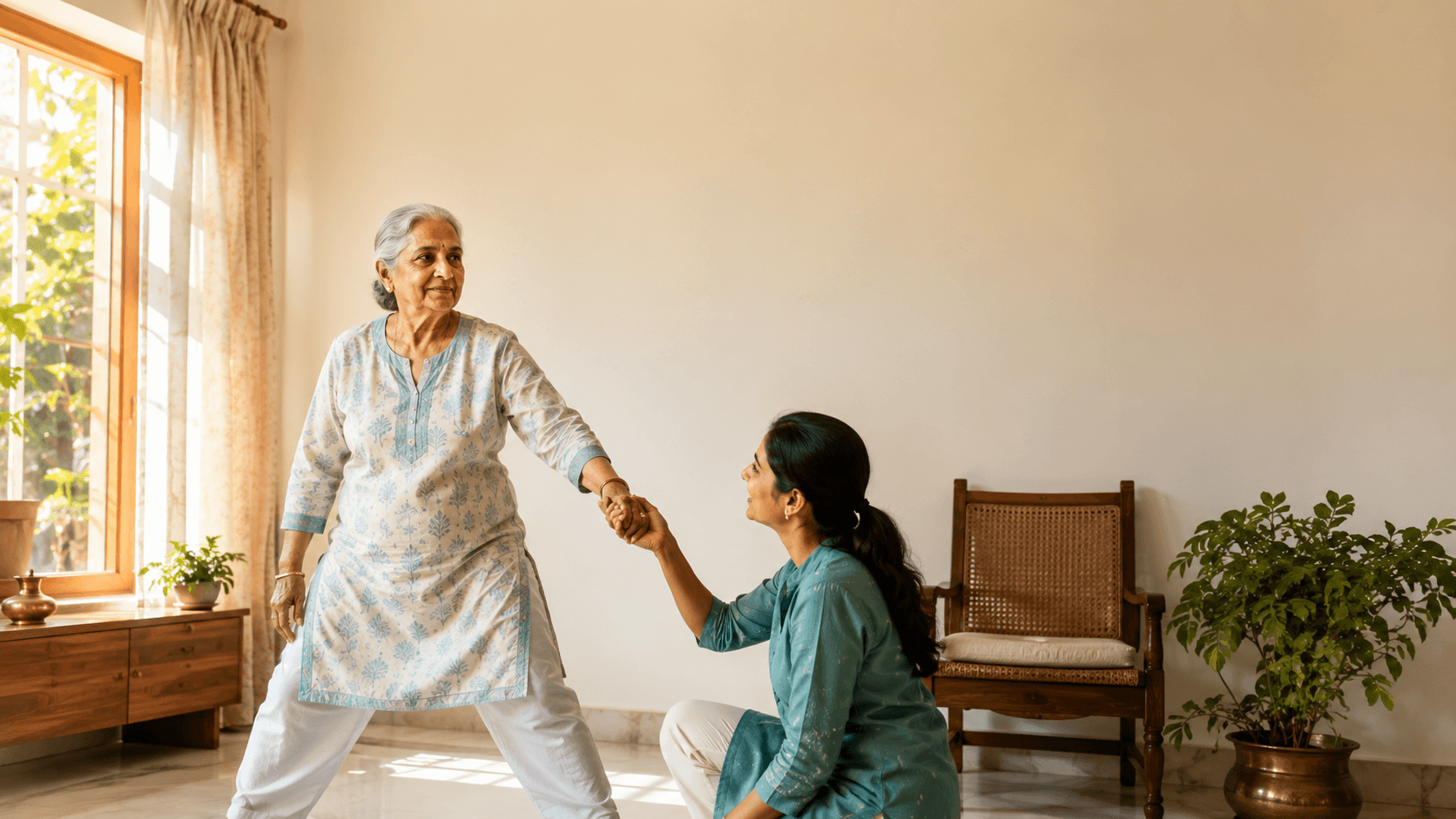


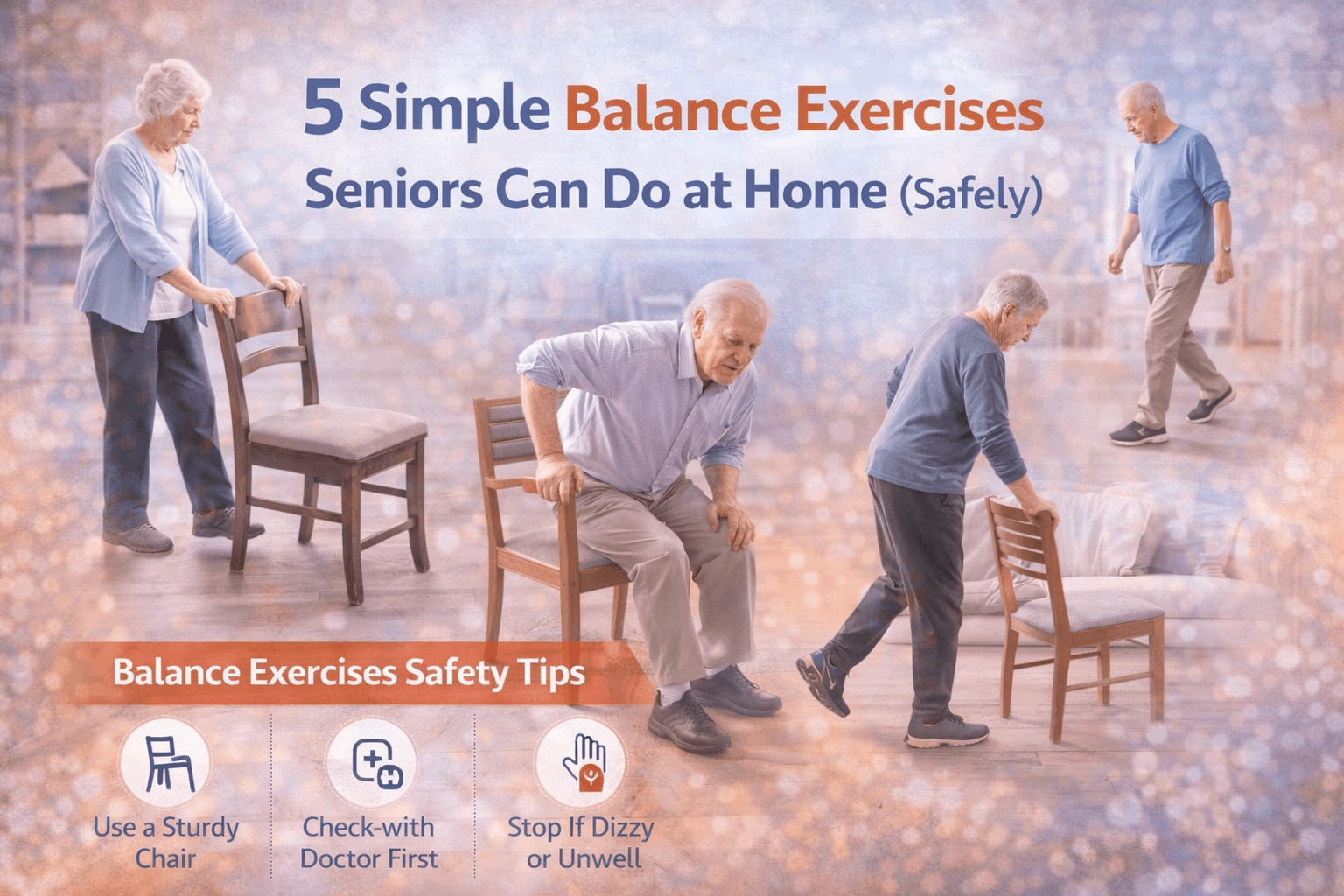
Balance naturally changes as we age. Muscles weaken, reflexes slow, vision may decline, and long periods of inactivity can make us feel unsteady. The good news? Balance can be improved at any age—and it doesn’t require fancy equipment or intense workouts. A few simple, regular exercises done safely at home can significantly reduce the risk of falls and build confidence in everyday movement. Before starting, always make safety the priority. Wear comfortable shoes, keep a sturdy chair or wall nearby for support, and stop immediately if you feel dizzy, breathless, or unwell. If your parent has a medical condition or recent fall, it’s best to consult a doctor or physiotherapist first.
1. Standing With Chair Support
This is one of the safest ways to begin balance training. Stand behind a sturdy chair and hold the backrest lightly with both hands. Keep your feet hip-width apart and your posture upright. Try to stand still without leaning forward or locking your knees. Hold this position for 20–30 seconds, then relax. As balance improves, you can reduce hand support or use just one hand. This exercise helps the body relearn steady upright posture.
2. Weight Shifting Side to Side
Stand with your feet shoulder-width apart, close to a wall or chair for support. Slowly shift your weight onto your right foot while lifting your left heel slightly off the ground. Hold for a few seconds, then return to the center and repeat on the other side. This gentle movement trains the body to control balance during everyday actions like turning, reaching, or stepping.
3. Heel-to-Toe Walk (Tandem Walking)
This exercise improves walking stability. Stand near a wall or corridor railing. Place one foot directly in front of the other so the heel of the front foot touches the toes of the back foot. Take slow, controlled steps forward, focusing on a straight posture and steady breathing. If needed, lightly touch the wall for balance. This exercise mimics real-life walking and helps reduce unsteadiness.
4. Single-Leg Stand (With Support)
Stand behind a chair and hold it firmly. Lift one foot slightly off the ground and balance on the other foot for 10–15 seconds. Switch legs and repeat. Over time, try increasing the duration or using only one hand for support. This exercise strengthens stabilizing muscles around the hips and ankles, which are critical for preventing falls.
5. Sit-to-Stand Practice
Balance isn’t just about standing still—it’s also about safe movement transitions. Sit on a firm chair with your feet flat on the floor. Slowly stand up using your legs, not your hands if possible, then sit back down in a controlled manner. Repeat 5–10 times. This exercise improves leg strength, coordination, and balance during one of the most common daily activities.
How Often Should Seniors Do Balance Exercises?
For best results, balance exercises should be done at least 3–5 times a week, even if only for 10–15 minutes. Consistency matters more than intensity. Progress should be slow and steady, with safety always taking priority.
A Few Important Safety Tips
Balance exercises should never feel rushed or risky. Always exercise in a clutter-free space with good lighting. Avoid doing these exercises when tired or unwell. If your parent has frequent falls, dizziness, or neurological conditions, professional guidance is essential.
Final Thought
Falls are not an inevitable part of aging. With simple, safe balance exercises practiced regularly at home, seniors can improve stability, confidence, and independence. These small daily efforts can make a big difference in staying mobile, active, and safe.