

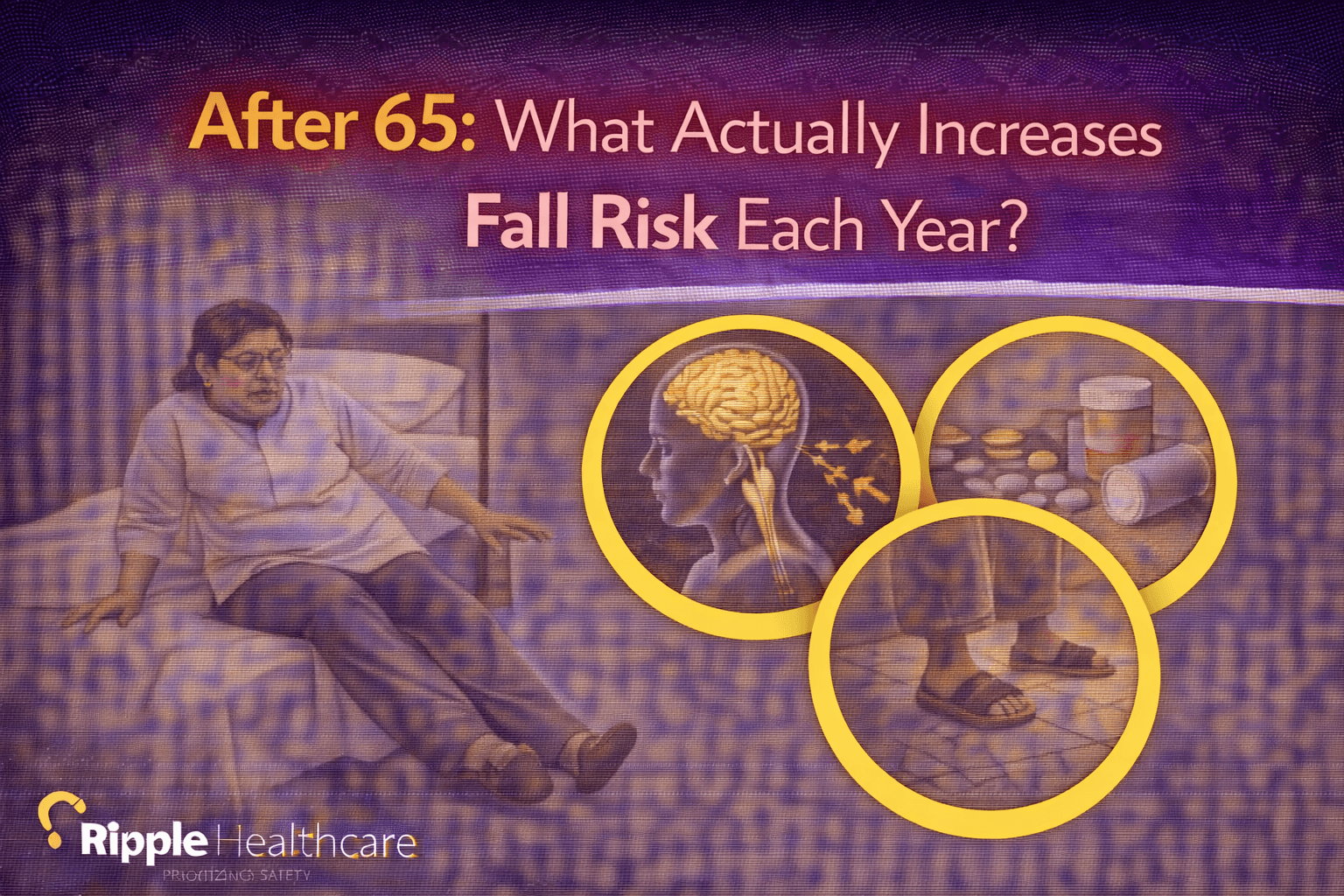
Fall risk does not appear suddenly—it increases gradually each year after 65. This deep pillar article explains the biological, neurological, and environmental changes that compound fall risk and how Ripple Healthcare supports safer aging.
Introduction: Fall Risk Is Progressive, Not Sudden
Families often ask, “Why did the fall happen now?” The answer is rarely sudden. Fall risk builds gradually each year after 65. Small biological changes accumulate until balance, strength, and reflexes can no longer compensate.
Yearly Muscle Mass Decline
After 65, adults lose approximately 1–2% of muscle mass per year. This reduces leg strength and stability.
Bone Density Reduction Over Time
Bone mineral density declines steadily, increasing fracture severity.
Slowing Nerve Transmission
Neural communication slows with age, reducing reaction speed.
Vision Changes and Depth Perception Loss
Contrast sensitivity and depth perception gradually weaken.
Inner Ear (Vestibular) Changes
Balance organs in the inner ear deteriorate, affecting equilibrium.
Joint Stiffness and Reduced Flexibility
Arthritis and stiffness reduce quick corrective movements.
Medication Accumulation
More medications increase side-effect risk such as dizziness.
Chronic Conditions Multiply Risk
Diabetes, Parkinson’s disease, and heart disease add instability.
Reduced Physical Activity Each Year
Inactivity accelerates muscle and balance decline.
Fear of Falling Develops Gradually
Minor stumbles create subconscious caution, reducing movement.
Environmental Risk Stays Constant While Body Changes
Homes remain unchanged while the body becomes less stable.
Why Risk Multiplies, Not Adds
Muscle loss + bone fragility + slower reflexes combine exponentially.
Why Exercise Alone Cannot Eliminate Risk
While helpful, exercise cannot reverse all biological aging factors.
The Growing Importance of Injury Prevention After 65
As risk increases yearly, reducing injury severity becomes crucial.
Ripple Healthcare’s Long-Term Safety Vision
Ripple Healthcare supports aging populations by focusing on protection before severe injury occurs.
How the HipPro Belt Supports Aging Safely
By absorbing impact during falls, the HipPro Belt reduces fracture risk as vulnerability increases with age.
Final Takeaway
Fall risk increases each year after 65. Proactive protection from Ripple Healthcare can preserve independence and dignity.
Learn More About Ripple Healthcare
Visit https://www.ripplehealthcare.in Contact https://www.ripplehealthcare.in/contact Buy Now https://www.ripplehealthcare.in/Buynow