


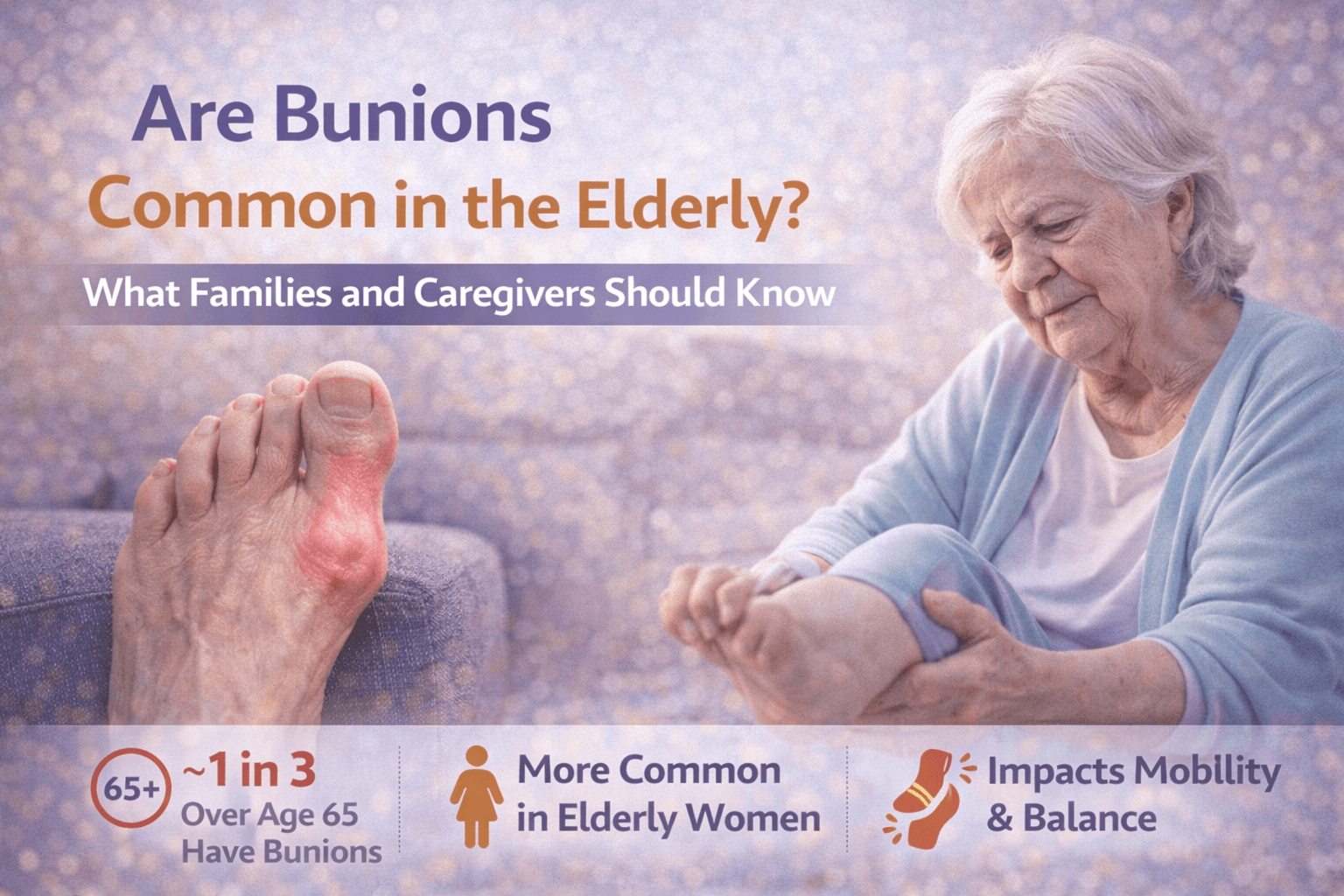
Foot problems are often overlooked in older adults, yet they play a major role in mobility, balance, and overall independence. One of the most common foot conditions seen in the elderly is the bunion. While bunions may seem like a minor or cosmetic issue at first, in older adults they can quietly contribute to pain, difficulty walking, and an increased risk of falls.
What Is a Bunion?
A bunion, medically known as hallux valgus, is a bony prominence that develops at the base of the big toe. Over time, the big toe gradually shifts toward the other toes, causing the joint to stick out and become misaligned. This process usually happens slowly, often over decades, which is why bunions are far more common in later life than in younger people.
How Common Are Bunions in the Elderly?
Bunions are extremely common in older adults. Studies suggest that up to one-third of people over the age of 65 have some degree of bunion deformity. They are particularly common in elderly women, largely due to a combination of bone structure, hormonal factors, and years of wearing narrow or ill-fitting footwear earlier in life. Many older adults have bunions in both feet, though one side is often more painful than the other.
Why Do Bunions Become More Noticeable With Age?
As we age, the structures that support our feet change. Ligaments and tendons lose strength, joints become less stable, and arthritis may set in. These changes allow foot deformities like bunions to progress more rapidly. Long-term pressure on the feet, combined with reduced muscle support and joint wear, causes the big toe joint to drift further out of alignment over time. In many cases, bunions that were mild and painless earlier in life become more pronounced and symptomatic in old age.
Why Bunions Are a Bigger Problem for Older Adults
In younger people, bunions are often dismissed as a cosmetic concern. In the elderly, however, bunions are a functional issue. Pain and stiffness at the big toe joint can alter the way a person walks. This change in gait can affect balance, reduce confidence while walking, and increase the risk of trips and falls. Bunions can also make it difficult to find comfortable footwear. Tight or poorly fitting shoes may worsen pain and inflammation, while overly loose shoes can reduce stability. For older adults already dealing with balance issues, this combination can be dangerous.
Signs That a Bunion Needs Attention
Families and caregivers should take bunions seriously if an elderly parent experiences pain while walking or standing, visible redness or swelling around the joint, difficulty wearing shoes, or noticeable changes in walking pattern. Increased fear of walking or reduced activity can also be warning signs that foot pain is affecting mobility.
How Are Bunions Managed in the Elderly?
Most bunions in older adults are treated conservatively. Supportive, wide-toe footwear can significantly reduce pressure on the joint. Padding, toe spacers, and orthotic inserts may help improve comfort and alignment. Gentle foot exercises and balance training can also support stability and reduce fall risk. Surgery is usually considered only when pain is severe and daily activities are significantly limited. For many elderly individuals, non-surgical measures are effective in managing symptoms and maintaining mobility.
The Bigger Picture: Foot Health and Independence
Bunions may seem like a small foot problem, but in the elderly they can have a ripple effect on mobility, balance, and confidence. Addressing bunions early—through proper footwear, pain management, and attention to walking patterns—can help older adults stay active and independent for longer.
Final Takeaway
Yes, bunions are very common in the elderly, and they should not be ignored. While they often develop slowly over a lifetime, their impact becomes most significant in older age. Paying attention to foot health is a simple but powerful way to protect mobility, prevent falls, and support quality of life in aging parents.