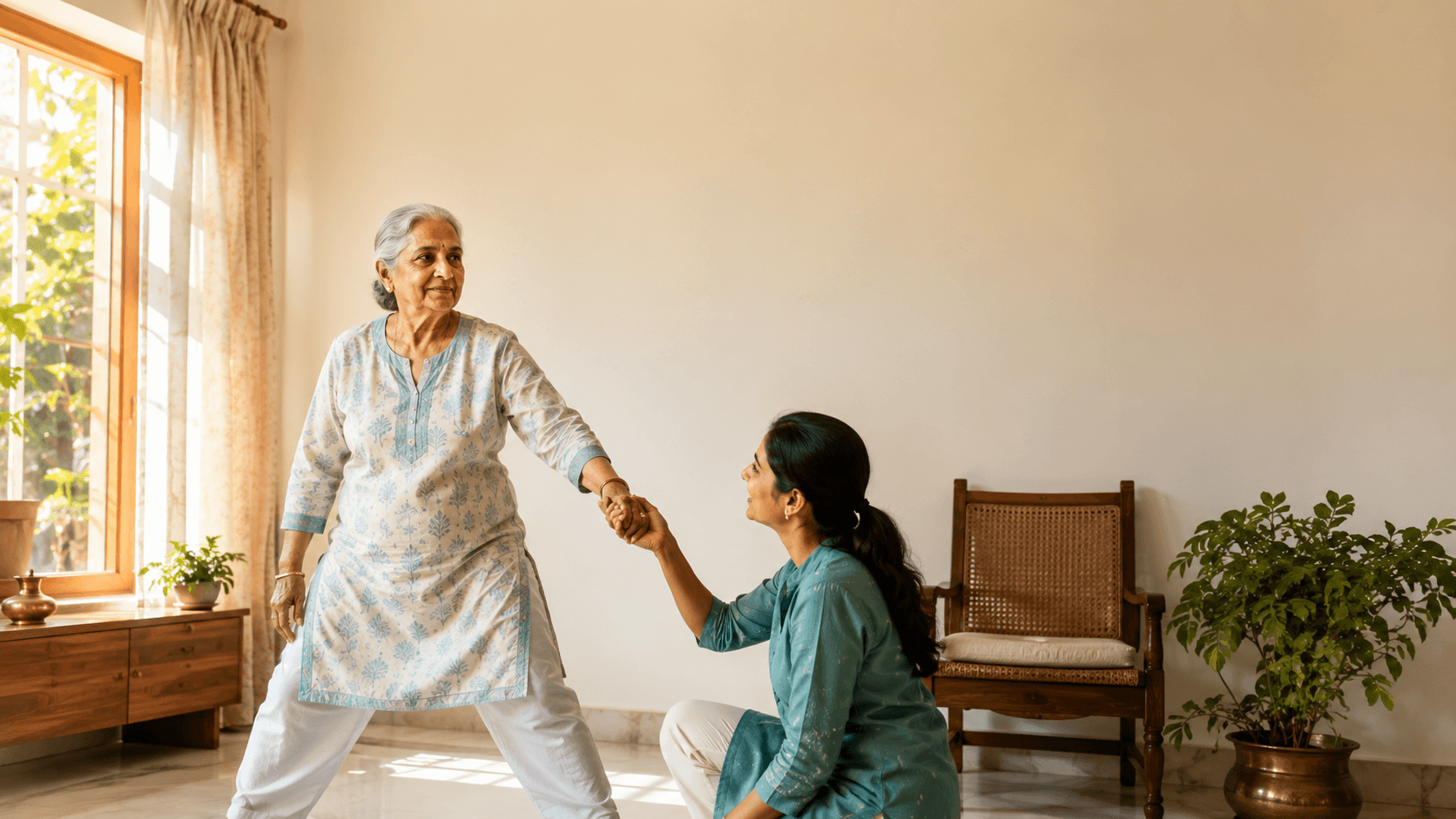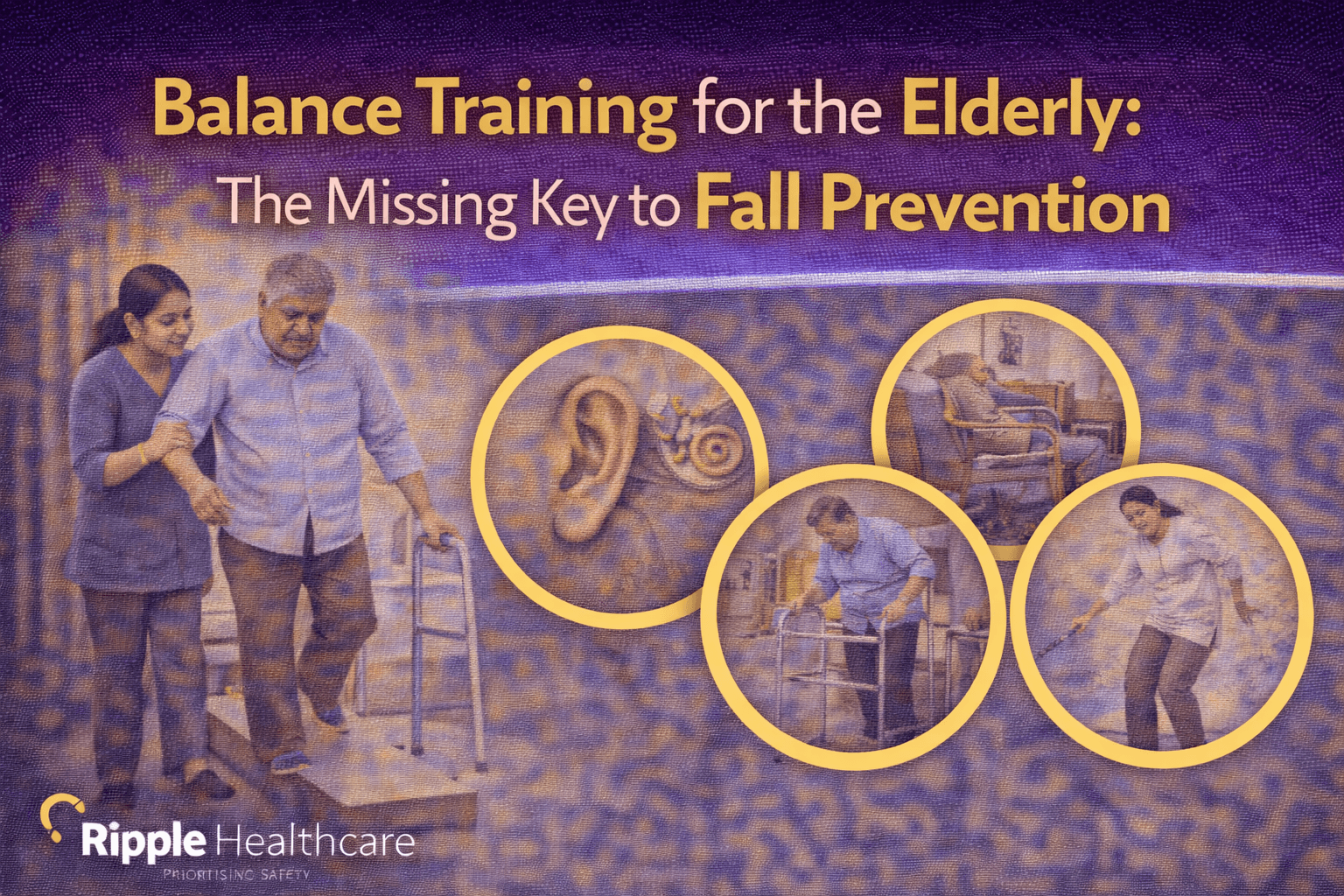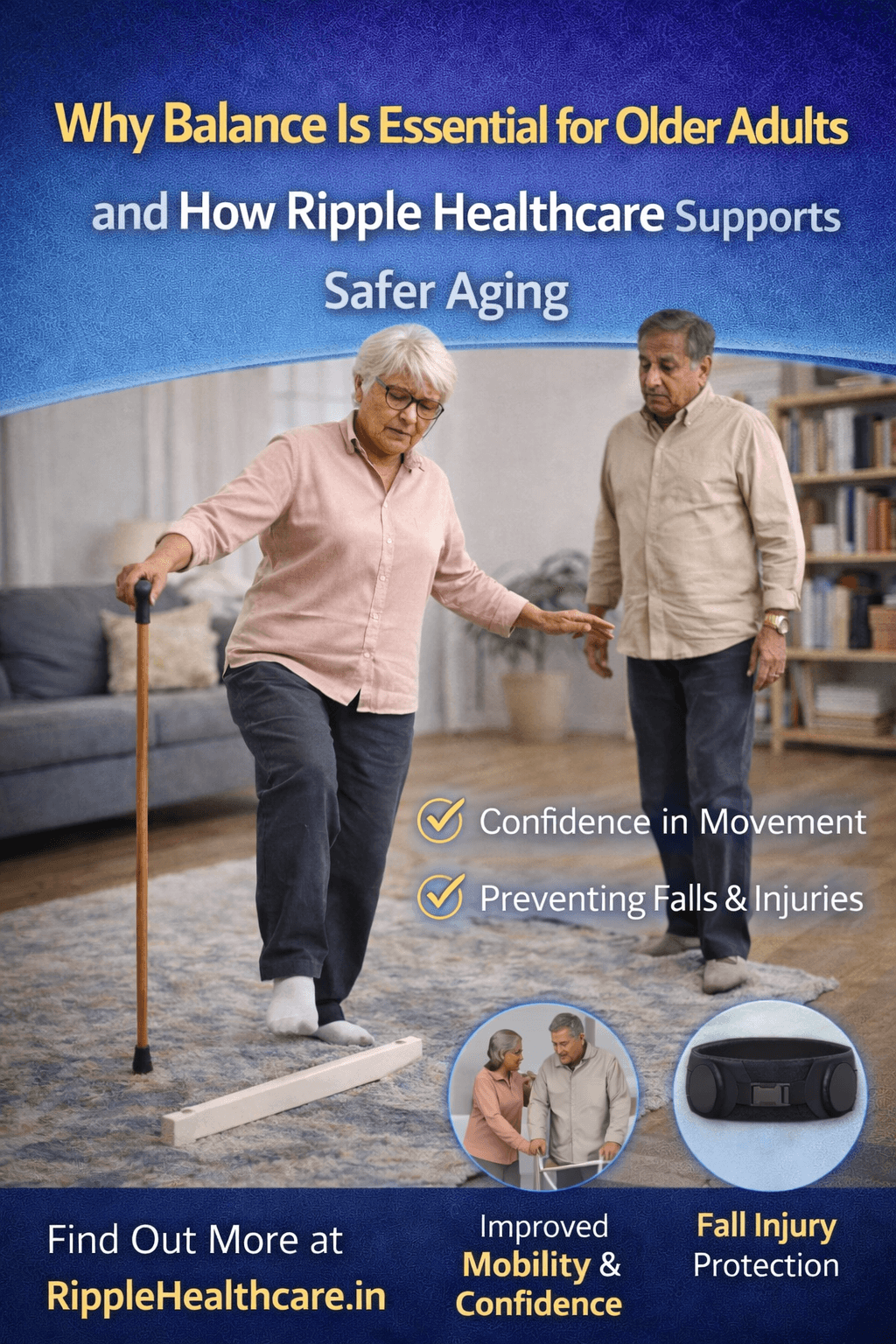


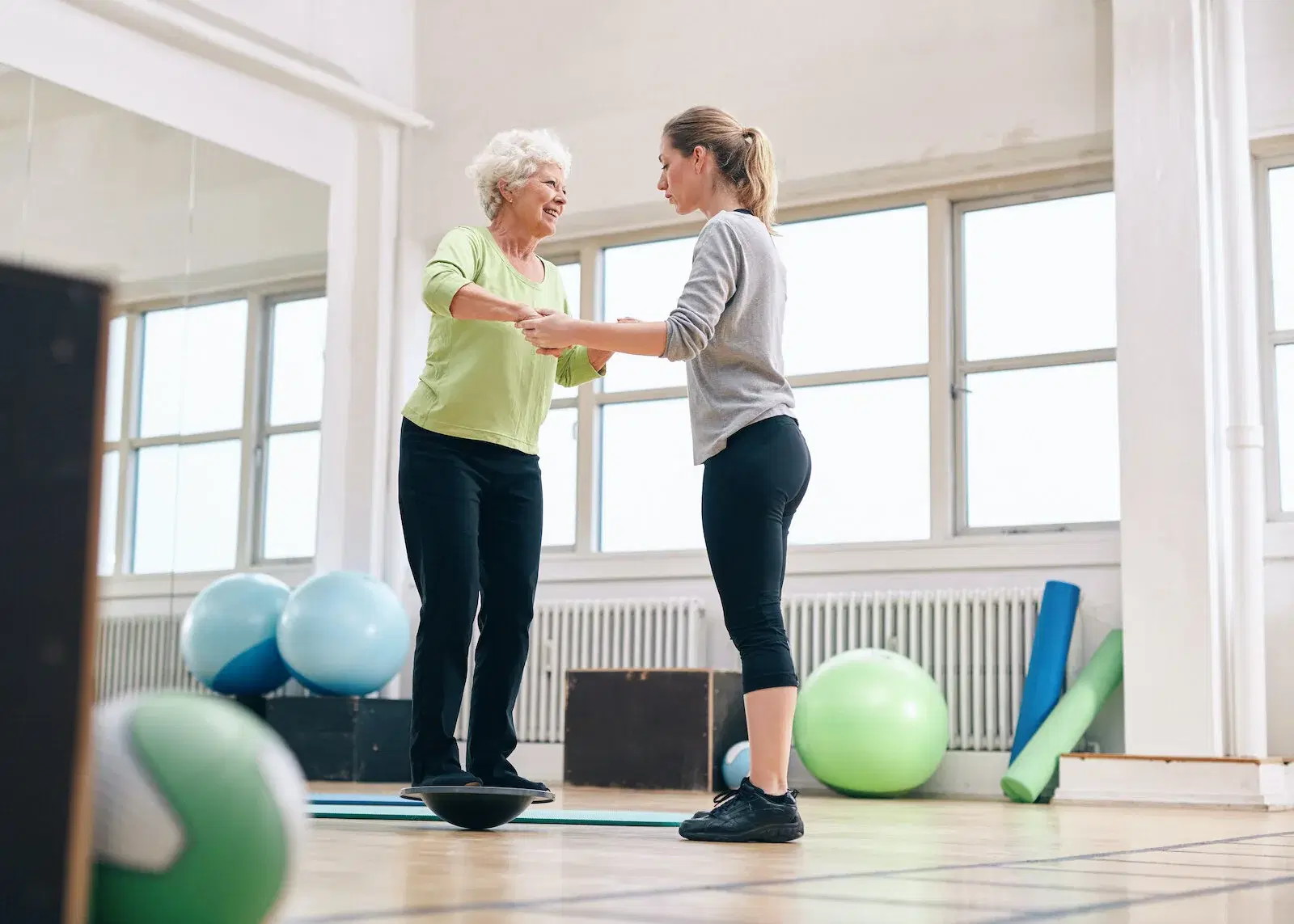
Balance training is a vital yet often overlooked aspect of elderly care. As people age, changes in muscle strength, coordination, vision, and reaction time significantly increase the risk of falls. These falls can lead to serious injuries, loss of confidence, and reduced independence. Structured balance training plays a key role in helping seniors stay mobile, safe, and self-reliant. At Ripple Healthcare, balance training is an essential part of our holistic approach to elderly care—focused not only on recovery but also on long-term prevention and independence.
Why Balance Training Is Important for the Elderly
With aging, the body’s natural balance mechanisms weaken. Even simple activities like standing up, turning, or walking on uneven surfaces can become challenging. Lack of balance can lead to:
Increased risk of falls and fractures
Fear of movement and reduced physical activity
Loss of confidence and social withdrawal
Dependence on caregivers for daily activities
How Balance Training Supports Independence of the Elderly
The independence of elderly individuals depends largely on their ability to move safely. Balance training strengthens core muscles, improves coordination, and enhances posture, allowing seniors to perform daily activities with greater ease. Key benefits include:
Improved walking stability
Better posture and coordination
Reduced fear of falling
Increased confidence in daily movement
Greater ability to live independently at home
Common Balance Training Activities for Seniors
Balance training for elderly individuals is designed to be safe, gradual, and effective. Typical exercises include:
Standing on one leg with support
Heel-to-toe walking
Sit-to-stand exercises
Gentle strength and flexibility movements
Guided physiotherapy-based balance routines
Ripple Healthcare’s Approach to Balance Training in Elderly Care
At Ripple Healthcare, we understand that balance training is not a one-size-fits-all solution. Every elderly individual has unique health needs, mobility levels, and risk factors. Our approach includes:
Personalized balance and mobility assessments
Structured balance training plans tailored to each senior
Continuous monitoring and progress tracking
Integration with physiotherapy and rehabilitation care
Use of technology-enabled solutions for safety and alerts
Balance Training as a Preventive Elderly Care Strategy
Balance training is not only for recovery—it is a powerful preventive tool. Regular balance-focused care helps:
Reduce fall-related hospitalizations
Lower the risk of hip fractures and injuries
Support long-term mobility and independence
Improve overall quality of life
How Ripple Healthcare Supports Families and Caregivers
Elderly care extends beyond the individual—it includes families and caregivers. Ripple Healthcare provides guidance, monitoring, and reassurance to families by ensuring their loved ones receive consistent, reliable balance training and mobility support. Learn more about our elderly care solutions and commitment to senior independence at https://ripplehealthcare.in
Conclusion
Balance training is a cornerstone of effective elderly care. It strengthens the body, restores confidence, and protects the independence of elderly individuals. With the right guidance, structured exercises, and continuous support, seniors can lead safer, more active lives. At Ripple Healthcare, we are dedicated to improving elderly mobility through personalized balance training and comprehensive care—helping seniors stay steady, confident, and independent every step of the way.