

Bathrooms cause more senior falls and hip fractures than almost any other room at home. Learn why, and the simple changes families can make to prevent it.
Why the Bathroom Is the Most Dangerous Room for Seniors
When families think about fall prevention, they often picture cluttered hallways, loose rugs, or poorly lit staircases. But one room quietly causes more falls — and more hip fractures — than almost any other space in the house: the bathroom. The bathroom combines almost every fall risk factor in one compact space — slippery surfaces, hard tile floors, low seating, and tasks that require balance, such as stepping over a tub edge or turning in a confined area. Unlike a living room fall onto carpet, a bathroom fall usually means landing directly on a hard, unforgiving surface, which sharply increases the risk of a hip fracture. For seniors with weaker bones, reduced muscle strength, or balance issues, even a brief moment of instability near the shower or toilet can have serious consequences.
Wet and Slippery Surfaces
Water on tiled floors dramatically reduces traction, and many seniors lose their footing while stepping in or out of the shower or bathtub. Non-slip mats and textured flooring can significantly reduce this risk.
Hard Landing Surfaces
Ceramic tile and stone flooring offer no cushioning during a fall, which is why bathroom falls are more likely to result in hip fractures compared to falls on carpeted areas elsewhere in the home.
Repeated Daily Use Increases Exposure
Most people use the bathroom multiple times a day, often during early morning grogginess or nighttime drowsiness — both periods when balance and alertness are naturally lower, raising overall fall risk.
Practical Bathroom Modifications That Prevent Falls
The good news is that bathroom-related falls are highly preventable with relatively simple, low-cost changes. Families don't need a full renovation — small, targeted modifications can make a significant difference in safety. The goal is to reduce slipperiness, add support points, and minimize the physical strain required to use the bathroom independently.
Install Grab Bars Near the Toilet and Shower
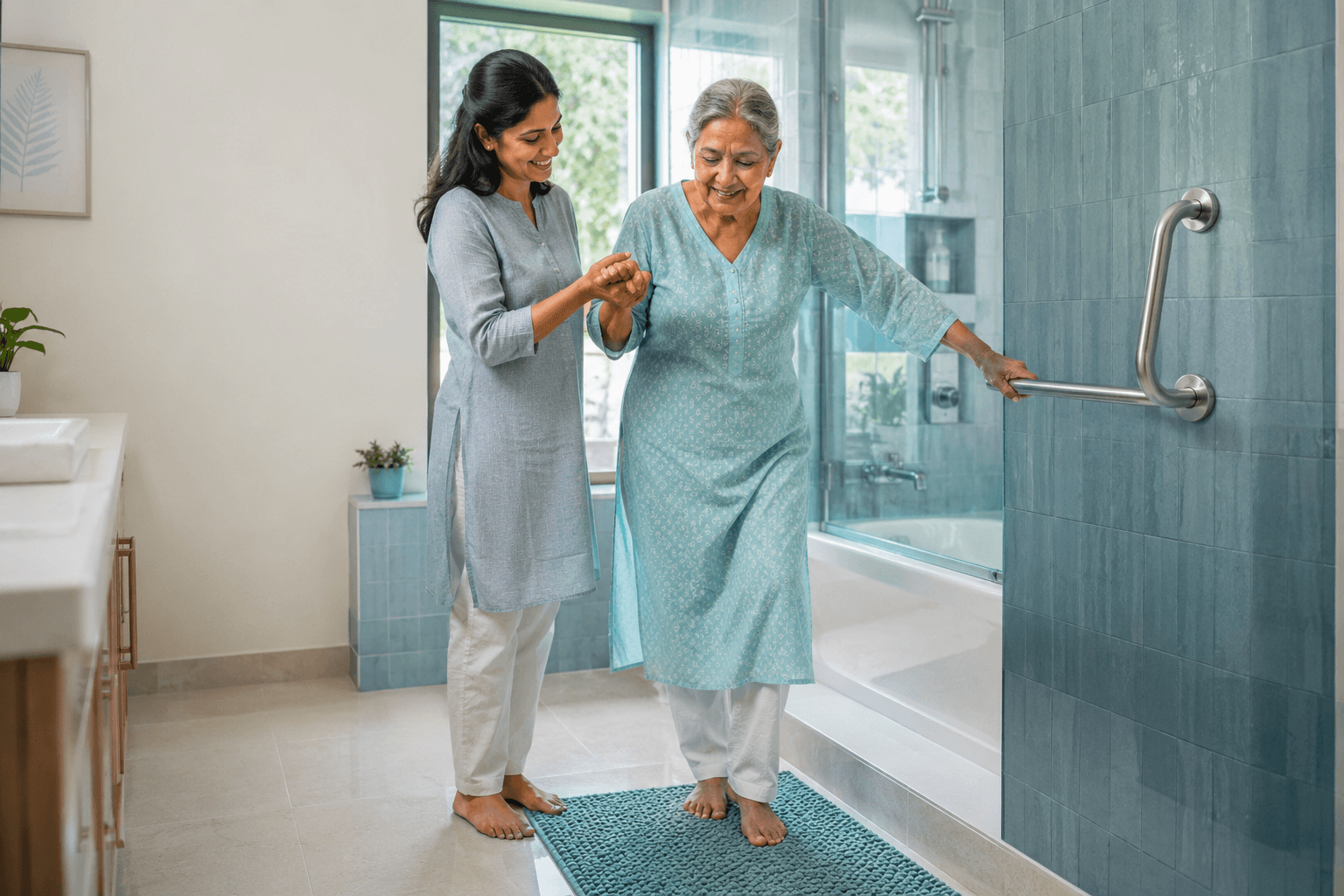
Sturdy, wall-mounted grab bars give seniors something secure to hold onto while sitting down, standing up, or stepping over a tub edge. Unlike towel racks, they're designed to bear full body weight safely.
Use Non-Slip Mats and Strips
Rubber-backed bath mats inside and outside the shower, along with adhesive non-slip strips on the tub floor, reduce the chances of slipping on wet surfaces, especially right after bathing.
Add a Shower Chair and Raised Toilet Seat
A sturdy shower chair allows seniors to bathe while seated, reducing the strain of standing for long periods. A raised toilet seat lowers the effort needed to sit down and stand up, easing pressure on hips and knees.
Building Safer Bathroom Habits for Everyday Use
Physical modifications work best when paired with safer daily habits. Caregivers play a vital role in gently encouraging routines that reduce risk without making seniors feel like they're losing independence. Small behavioral shifts, combined with the right environment, create a much safer experience every single day.
Encourage Slower, Mindful Movements
Rushing while stepping in or out of the shower, or twisting quickly to reach for a towel, increases fall risk. Encouraging a slower pace, especially during transitions, helps maintain balance and control.
Improve Lighting, Especially at Night
Poor visibility is a major contributor to nighttime bathroom falls. Installing a nightlight or motion-sensor light along the path to the bathroom helps seniors see clearly and avoid missteps during early morning or late-night visits.
Keep Essentials Within Easy Reach
Placing soap, shampoo, and towels at waist height — rather than requiring bending or reaching overhead — reduces the need for risky movements that can throw off balance, particularly on wet flooring.
Conclusion
The bathroom may seem like a routine, everyday space, but for seniors, it's one of the highest-risk areas in the home when it comes to falls and hip fractures. By installing grab bars, using non-slip mats, adding supportive seating, improving lighting, and encouraging slower, mindful movements, families can transform the bathroom from a hidden hazard into one of the safest rooms in the house. Prevention doesn't require a major renovation — it requires awareness, small changes, and consistent habits. Taking these steps today can spare your loved one from a life-altering injury tomorrow.