


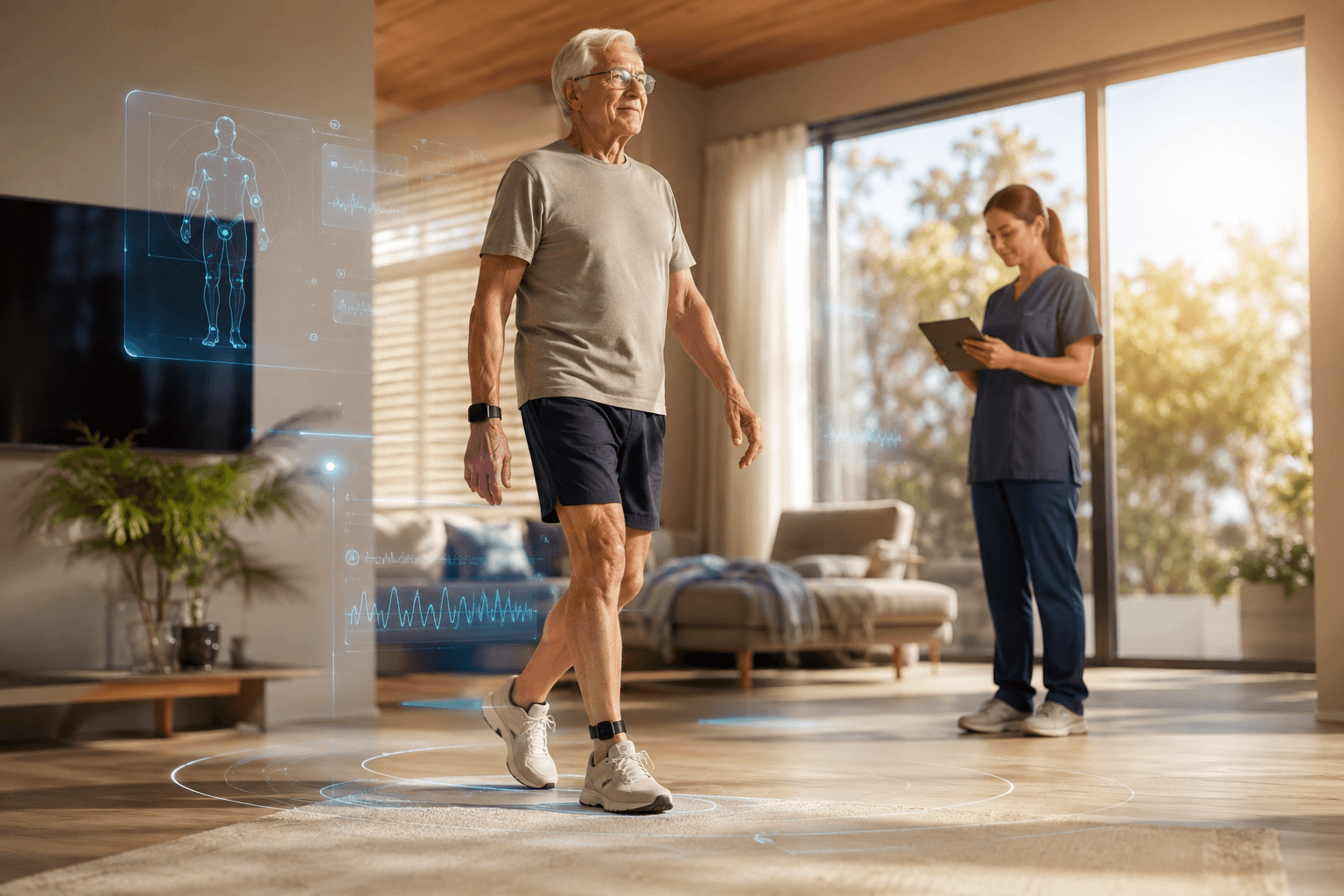
Parkinson's disease affects millions worldwide, and medication alone often isn't enough. This article explores how wearable technology — from continuous gait monitoring to real-time Freezing of Gait alerts — is helping patients, clinicians, and caregivers move toward smarter, more personalized disease management. Discover how data-driven insights are closing the gap between clinic visits and everyday life, reducing fall risk, and improving quality of life.
Understanding Parkinson's Disease and the Limits of Medication
Parkinson's disease is one of the fastest-growing neurological disorders worldwide, significantly impacting millions of individuals and their families. It is characterized by tremors, rigidity, slowed movement, balance impairment, and gait disturbances — all of which compromise quality of life and independence. For decades, pharmacological therapies such as levodopa have been the cornerstone of treatment. These medications can improve motor function and support daily activities, but their effectiveness often fluctuates, producing unpredictable "on" and "off" periods throughout the day. Over time, many patients develop motor fluctuations or reduced medication responsiveness. Certain symptoms — particularly gait disturbances, balance problems, and Freezing of Gait (FoG) — frequently resist even optimized drug regimens, contributing to falls, injuries, and loss of independence.
Rapid Global Growth of Parkinson's
Parkinson's disease is among the fastest-growing neurological conditions worldwide, affecting a large and rising number of patients and placing increasing demands on healthcare systems.
Core Symptoms Affecting Daily Life
Key symptoms include tremors, rigidity, slowed movement, balance impairment, and gait disturbances, all of which substantially reduce a patient's independence and quality of life.
Fluctuating Medication Effectiveness
Levodopa and similar therapies often produce inconsistent results, with unpredictable "on" and "off" periods leaving symptoms poorly controlled for portions of the day.
Persistent Mobility Challenges Remain
Gait disturbances, balance problems, and Freezing of Gait frequently persist even with optimized medication, driving increased fall risk, reduced confidence, and diminished independence.
The Rise of Wearable Technology in Neurological Care
Wearable technology refers to electronic devices worn on the body that monitor physiological signals, movement patterns, and health-related metrics. In Parkinson's care, these devices leverage sensors including accelerometers, gyroscopes, and inertial measurement units (IMUs) to capture nuanced movement data. Unlike traditional assessments during periodic appointments, wearable systems enable continuous monitoring in clinical and real-world environments. This persistent data collection provides a far more complete and accurate picture of how symptoms evolve throughout the day. By capturing objective information about disease progression and treatment effectiveness, wearable technology is transforming Parkinson's management from a reactive model into a proactive, data-driven approach — helping clinicians and patients move beyond medication-only strategies.
Sensor Technologies Powering Wearables
Accelerometers, gyroscopes, and IMUs enable wearable devices to precisely capture movement data, forming the technical foundation of modern Parkinson's monitoring systems.
Continuous Real-World Monitoring
Unlike periodic clinic visits, wearable devices collect data continuously during normal daily activities, providing a richer and more representative picture of symptom burden.
Bridging Clinical and Home Settings
Wearable systems connect clinic and home, allowing healthcare professionals to access objective movement data from daily life rather than relying solely on in-office observations.
Shifting to Proactive Disease Management
Continuous objective insights enable a shift from reactive symptom management to proactive intervention, helping clinicians detect changes early and adjust treatment plans accordingly.
How Wearables Address Mobility Deficits and Freezing of Gait
One of the most significant contributions of wearable technology is its ability to objectively monitor gait speed, stride length, balance performance, step symmetry, and movement variability — metrics impossible to obtain through occasional clinical assessments alone. Continuous monitoring allows healthcare professionals to identify subtle changes in movement patterns indicating worsening symptoms or elevated fall risk. Early identification enables timely adjustments to treatment and rehabilitation strategies before significant mobility decline occurs. Freezing of Gait (FoG) — one of the most disabling Parkinson's symptoms — is also being addressed. Modern wearable systems analyze movement patterns to identify characteristics associated with impending freezing episodes and deliver vibrotactile or sensory cues that help patients maintain movement, offering a non-pharmacological complement to existing therapies.
Objective Gait and Balance Metrics
Wearable devices measure gait speed, stride length, step symmetry, and balance performance objectively, giving clinicians quantitative data to guide treatment and rehabilitation decisions.
Early Detection of Symptom Changes
Continuous monitoring enables identification of subtle movement deterioration, allowing healthcare professionals to intervene proactively before significant functional decline or falls occur.
Detecting Impending Freezing Episodes
Advanced wearable systems analyze gait patterns to recognize early signs of Freezing of Gait, offering a critical window for timely intervention and cueing.
Vibrotactile Cueing for FoG Relief
Some wearable solutions deliver real-time vibrotactile or sensory cues, helping patients overcome freezing episodes and maintain safer, more fluid movement without additional medication.
Personalizing Rehabilitation and Strengthening Clinical Decision-Making
Rehabilitation is a vital pillar of Parkinson's disease management. Physiotherapy programs targeting balance, strength, gait training, and mobility have demonstrated meaningful improvements in functional outcomes. Wearable technology is making these programs more personalized and measurable through objective performance data. Therapists can use continuous mobility data to assess baseline performance, track improvement, and tailor interventions to individual needs. Patients benefit from feedback outside clinical settings, fostering greater adherence to prescribed exercise programs and extending the benefits of therapy beyond scheduled sessions. For clinicians, continuous objective data represents a major advancement. Rather than relying solely on patient self-reporting or infrequent observations, healthcare providers can now leverage detailed symptom pattern data to support medication optimization, fall-risk assessment, rehabilitation planning, and long-term disease monitoring.
Data-Driven Rehabilitation Programs
Objective mobility data allows physiotherapists to establish accurate baselines, monitor progress precisely, and tailor exercise interventions to each patient's specific functional needs.
Encouraging Exercise Adherence at Home
Wearable feedback systems support patients in following prescribed rehabilitation programs between clinical visits, improving adherence and extending the therapeutic impact of physiotherapy.
Optimizing Medication Management
Continuous symptom data enables clinicians to assess medication effectiveness with greater precision, supporting timely dose adjustments and reducing the impact of motor fluctuations on daily life.
Reducing Falls Through Risk Assessment
Ongoing monitoring of balance and gait quality allows healthcare professionals to identify increasing fall risk early and implement targeted preventive strategies before serious injuries occur.
The Future of Wearable-Enhanced Parkinson's Disease Care
The future of Parkinson's disease management is increasingly oriented toward personalized, data-driven healthcare. Wearable technologies are at the center of this transformation, connecting patients, clinicians, caregivers, and rehabilitation professionals through actionable, real-time insights previously unavailable. Advances in predictive analytics, remote monitoring, and digital therapeutics are expected to further extend wearable capabilities. These innovations may enable earlier intervention, more precise treatment adjustments, and improved long-term patient outcomes, enhancing quality of life across the full disease trajectory. Critically, wearable technologies are not intended to replace medication but to complement existing therapies by addressing challenges that pharmacological treatment alone cannot fully resolve. As these digital health solutions mature, they are poised to become an integral component of comprehensive Parkinson's disease management.
Predictive Analytics for Earlier Intervention
Emerging predictive analytics capabilities within wearable platforms may allow clinicians to anticipate symptom changes and intervene earlier, slowing functional decline and improving patient outcomes.
Expanding Remote Monitoring Capabilities
Remote monitoring innovations will enable healthcare teams to maintain continuous oversight without frequent in-person visits, improving care access and reducing burden on patients and caregivers.
Wearables Complementing Medical Therapy
Wearable technologies are designed to work alongside pharmacological treatment, addressing mobility challenges and symptom management gaps that medication alone cannot fully resolve.
Integral Role in Future Care Models
As the technology matures, wearable devices are expected to become a standard component of comprehensive Parkinson's disease care, enabling more personalized, proactive patient management.