

Type 2 Diabetes Mellitus is one of the most common chronic health conditions worldwide—and one of the most misunderstood. Often developing silently over years, it affects how the body uses sugar (glucose), the main source of energy for our cells. When left uncontrolled, Type 2 diabetes can quietly damage multiple organs, but with awareness and proper care, it is highly manageable.
What Is Type 2 Diabetes?
In Type 2 diabetes, the body either does not produce enough insulin or cannot use insulin effectively. Insulin is a hormone that helps glucose move from the bloodstream into the cells. When this process doesn’t work properly, glucose builds up in the blood, leading to persistently high blood sugar levels. Unlike Type 1 diabetes, which usually begins in childhood, Type 2 diabetes most often develops in adulthood and is strongly linked to lifestyle factors—though genetics also play a role.
Why Type 2 Diabetes Is So Common Today
Modern lifestyles have significantly increased the risk of Type 2 diabetes. Reduced physical activity, unhealthy eating habits, weight gain, chronic stress, and longer life expectancy all contribute to its rising prevalence. Older adults are particularly vulnerable because insulin sensitivity naturally decreases with age. Many people live with diabetes for years without knowing it, which is why early awareness and screening are so important.
Common Symptoms That Are Often Ignored
Type 2 diabetes may develop gradually, with mild or no symptoms initially. When symptoms do appear, they often include increased thirst, frequent urination, constant fatigue, slow wound healing, blurred vision, unexplained weight changes, and frequent infections. In elderly individuals, symptoms may be even subtler—sometimes presenting as weakness, dizziness, confusion, or repeated falls—making diagnosis more challenging.
Why Uncontrolled Diabetes Is Dangerous
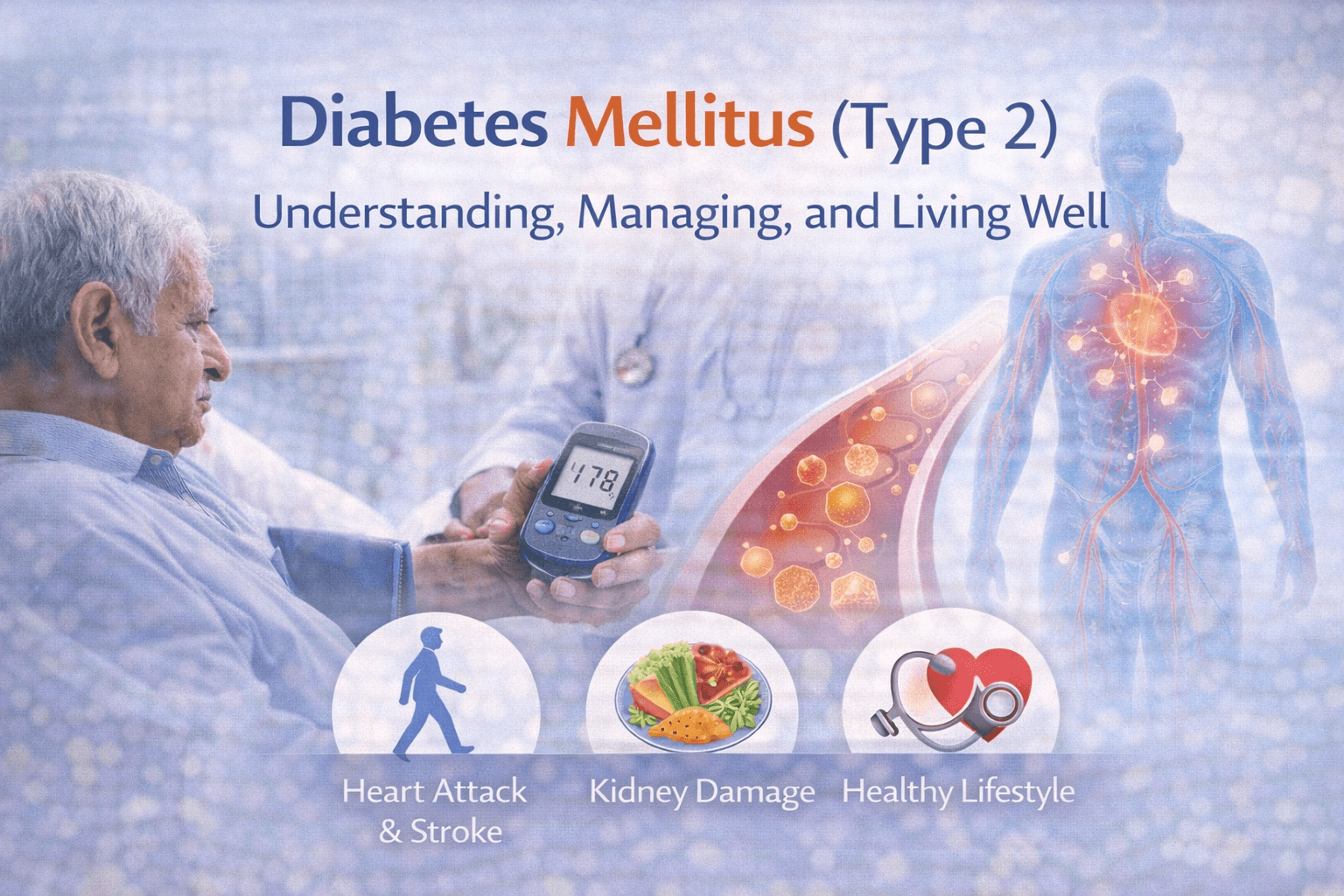
Persistently high blood sugar damages blood vessels and nerves throughout the body. Over time, this can lead to serious complications such as heart disease, stroke, kidney failure, vision loss, nerve damage, foot ulcers, and cognitive decline. Diabetes also increases the risk of infections and slows recovery from illness or injury. This makes early detection and consistent management essential.
How Type 2 Diabetes Is Managed
The cornerstone of diabetes management is lifestyle modification, supported by medication when necessary. Healthy eating with controlled portions, reduced refined sugars, and balanced meals helps stabilize blood sugar. Regular physical activity—such as walking—improves insulin sensitivity and overall health. Medications may be prescribed to help control blood sugar levels, and some individuals may eventually require insulin. Regular monitoring of blood glucose, blood pressure, and cholesterol is a crucial part of long-term care. For elderly patients, treatment goals are individualized to balance blood sugar control with safety, avoiding low blood sugar episodes.
The Role of Family and Caregivers
Managing diabetes is easier with support. Family members play a vital role in encouraging healthy habits, ensuring medication adherence, monitoring for complications, and accompanying elderly parents for regular check-ups. Emotional support is just as important as medical care. Living with a chronic condition can be overwhelming, and reassurance goes a long way.
Can Type 2 Diabetes Be Prevented or Reversed?
In many cases, Type 2 diabetes can be prevented or delayed through healthy lifestyle choices. For some individuals diagnosed early, significant improvements in diet, activity, and weight management can even lead to remission. The key is early action—before complications set in.
Final Thought
Type 2 Diabetes Mellitus is a serious condition, but it does not have to control your life. With awareness, regular monitoring, and consistent care, people with diabetes can live long, active, and fulfilling lives. The most powerful step is the first one: knowing your blood sugar levels and taking action early—for yourself and for those you care about.