

Many of us grow up believing that if an elderly person falls, help will arrive quickly. A neighbor will hear the noise. A family member will call at the right time. Someone will come. Unfortunately, this belief is one of the most dangerous myths in elderly care. At Ripple Healthcare, we have spoken to many older adults and their families, and a painful pattern keeps repeating. Seniors tell us they fell inside their own homes and lay on the floor for hours—unable to get up, unable to reach a phone, and unsure if anyone even knew they needed help. Emergency help was not nearby. It was far away, delayed, or completely unavailable.
The Reality of Falls: Silence, Not Sirens
Falls don’t always happen dramatically. Many occur quietly—while getting out of bed at night, walking to the bathroom, or bending to pick something up. Phones are often in another room. Voices are weak. Doors are closed. In apartments or independent homes, no one hears the fall. We have heard firsthand accounts of elderly individuals who: Slipped and fractured their hip but couldn’t move Lay on cold floors for hours, afraid and in pain Missed critical early treatment because help arrived too late These delays don’t just increase discomfort—they increase complications, hospital stays, and long-term loss of independence.
Why “Someone Will Come” Is a Risky Assumption
As families, we often assume systems are in place: neighbors, security guards, domestic help, or daily check-in calls. But falls don’t follow schedules. They happen unexpectedly, often when a person is alone. Relying purely on chance or routine check-ins creates a dangerous gap—one that becomes painfully visible only after something goes wrong. This is why the idea that “emergency help is always nearby” is a hoax. It offers comfort, but not protection.
When Minutes and Hours Make All the Difference
Medical research and real-life experience show that long lie times after a fall—when a person remains on the ground for extended periods—can lead to: Severe pain and shock Dehydration and hypothermia Pressure injuries Increased risk of complications after hip fractures Early assistance isn’t just about rescue. It’s about reducing damage and preserving recovery.
Why Proactive Protection Matters
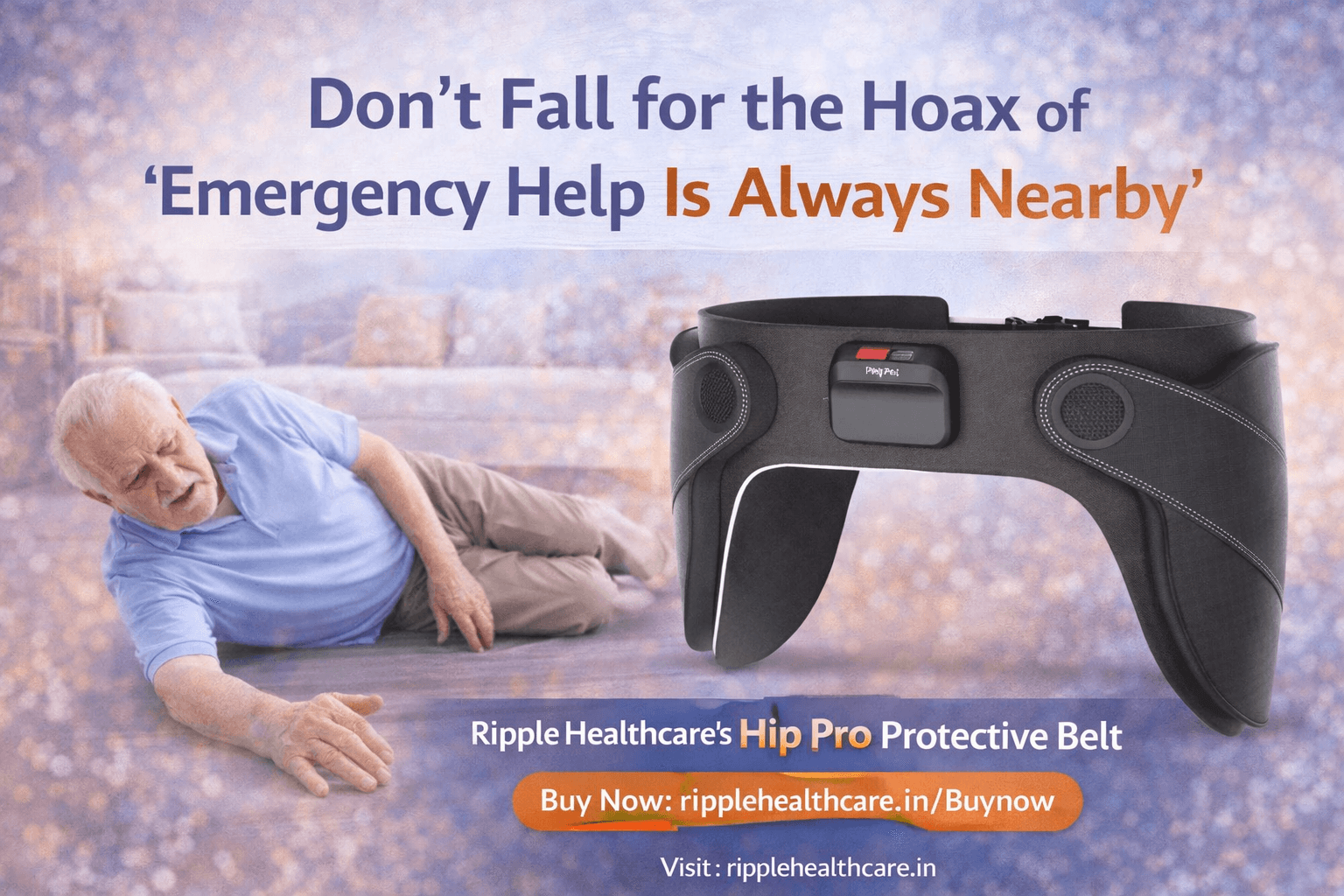
Through our conversations with elderly individuals and caregivers, one truth is clear: waiting for help is not a strategy. Prevention and immediate response are. This is why we designed HIP PRO, a protective belt created specifically to reduce the impact of falls—especially hip injuries, which are among the most devastating consequences of a fall in older adults. HIP PRO is not about replacing caregivers or technology. It is about adding a physical layer of protection for moments when no one is nearby. You can buy the HIP PRO belt here: 👉 https://www.ripplehealthcare.in/Buynow
A Shift in Thinking for Families
Instead of asking, “Who will help if they fall?” We need to ask, “What protection is in place if help is delayed?” Falls are not rare accidents. They are predictable risks in aging—and predictable risks deserve planned solutions, not hopeful assumptions.
Final Thought
The stories we hear from elderly individuals who lay helpless for hours are not meant to scare—they are meant to wake us up. Emergency help is not always nearby. Sometimes, the only thing nearby is the floor. Protecting our parents and elders means preparing for reality, not myths. To learn more about our work and how we support elderly safety, visit: 👉 https://www.ripplehealthcare.in/