

Learn what dual tasking is, why it matters for senior balance and fall prevention, and how families can practice safe, simple dual-task exercises at home.
What Is Dual Tasking, and Why Does It Matter for Seniors?
Most of us do two things at once without thinking about it — walking while talking, carrying a cup of tea while stepping over a doorway, or checking our phone while crossing a room. This is called "dual tasking," and it's something the brain handles automatically when it's working well. But as we age, the brain's ability to manage two tasks at the same time — one physical, one mental — can slow down. This isn't a sign of failure; it's a natural part of how attention and movement systems change with age, especially after a stroke, a fall, or the early stages of conditions like mild cognitive decline. For caregivers and families, understanding dual tasking is one of the most overlooked yet powerful tools in fall prevention, because so many real-world falls don't happen while a senior is standing still — they happen while walking and doing something else at the same time.
The Hidden Fall Risk
Many falls occur during ordinary multitasking moments — walking while answering a question, looking for keys, or carrying groceries — not during quiet, focused movement.
The Brain-Body Connection
Walking safely requires constant communication between balance centers and attention centers in the brain; when both are taxed at once, reaction time and stability can drop.
Why It's Often Missed
Standard balance checks (like standing on one foot) don't reveal dual-task difficulties, which is why this risk often goes undetected until a fall happens.
How Aging Affects the Ability to Multitask Safely
To understand why dual tasking becomes harder with age, it helps to know that walking is not as "automatic" as it feels. In younger adults, walking on a flat, familiar surface uses relatively little conscious brainpower, leaving plenty of mental capacity free for conversation or problem-solving. But aging changes this balance. Slower nerve conduction, reduced muscle reaction speed, and changes in how the brain prioritizes information mean that walking increasingly requires more conscious attention than it used to. When a second task — talking, thinking, or reacting to something in the environment — competes for that same attention, the brain often has to choose. Research in geriatric rehabilitation consistently shows that many older adults will unconsciously slow their walking speed or shorten their stride when asked to talk or think while walking, a protective response that, paradoxically, can also increase instability if it happens too suddenly or unevenly. Conditions such as Parkinson's disease, post-stroke recovery, early dementia, or even general deconditioning after a hospital stay can make this attention-sharing problem more pronounced, raising fall risk significantly during everyday activities.
Slower Cognitive-Motor Switching
Aging slows the speed at which the brain shifts attention between thinking and moving, creating brief but risky lapses in balance control.
The "Stops Walking When Talking" Sign
If a senior pauses or stumbles when asked a question while walking, this is a recognized clinical sign of elevated fall risk, not just absent-mindedness.
Greater Risk in Specific Conditions
Stroke survivors, those with Parkinson's, and people with early memory changes often show more pronounced dual-task difficulties and need extra supervision during multitasking activities.
Simple Dual-Task Exercises Families Can Practice at Home
The encouraging news is that dual tasking, like balance and strength, can be trained and improved with regular, gentle practice. The goal isn't to make seniors "perfect multitaskers," but to gradually rebuild confidence and control so that everyday situations — like talking while walking to the kitchen — feel safer and more manageable. These exercises should always start simple and progress slowly, ideally with a caregiver nearby for support, especially in the early stages. The key principle is to combine a basic physical task (like walking or standing) with a basic mental task (like counting or naming), and only increase difficulty once the easier version feels comfortable and steady.
Walk-and-Talk Practice
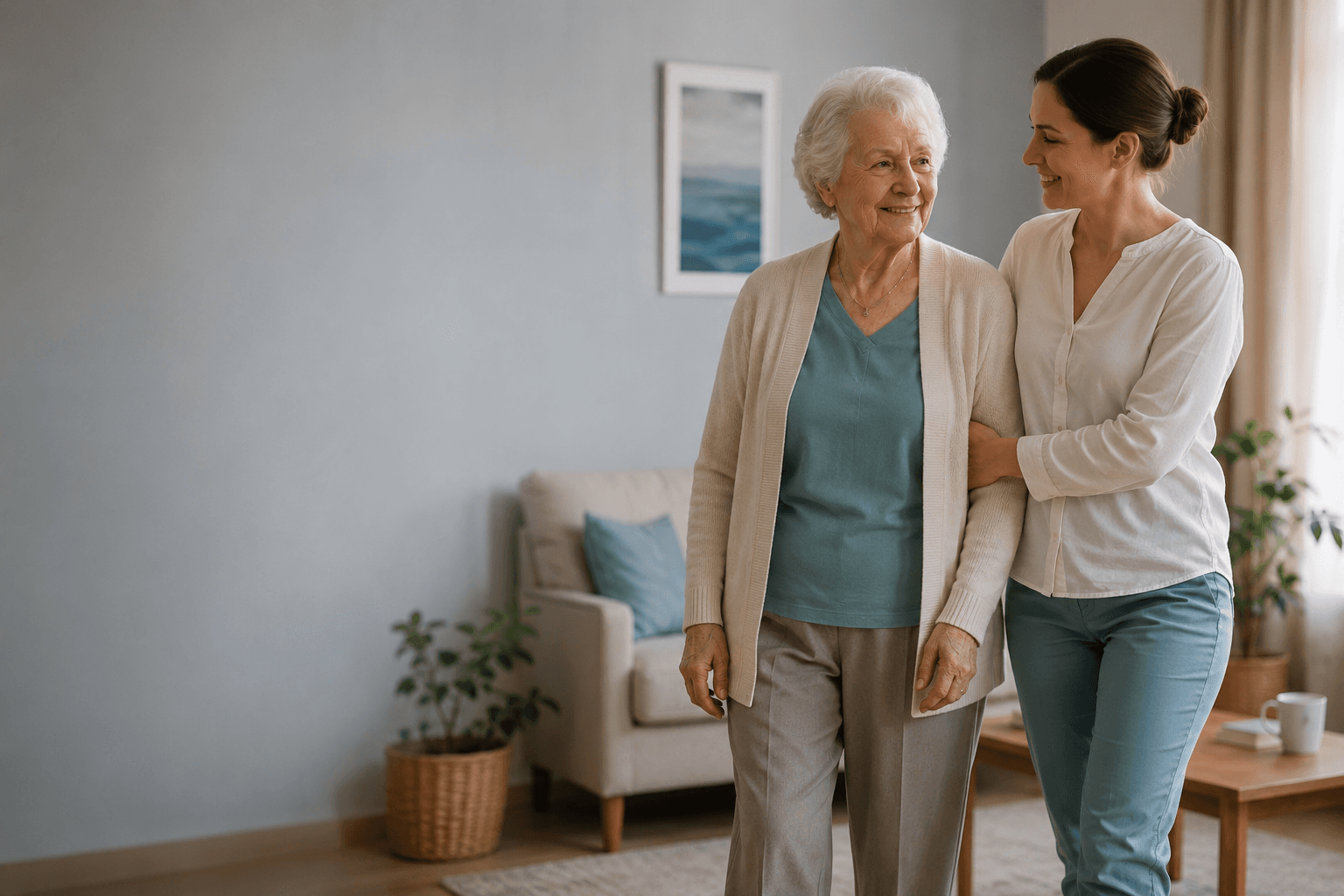
Start with short walks indoors while having a relaxed conversation; if speech or steps become unsteady, pause and continue once balance is restored.
Counting and Stepping
Practice walking a short, safe path while counting backward from 20 by twos, or naming items in a category like fruits or colors — this trains attention-sharing in a low-risk setting.
Carry-and-Walk Tasks
Practice walking while carrying a light, unbreakable object (like a folded towel) to simulate real household movements, building toward more functional independence.
Making Dual Tasking Part of Daily Life Safely
Once a senior is comfortable with structured dual-task exercises, the next step is weaving this awareness into daily routines without turning every moment into a "test." Caregivers play a central role here — not by doing everything for the senior, but by gently observing how they move during normal multitasking moments and stepping in only when needed. Small environmental adjustments can also reduce the demand on attention, making dual tasking naturally safer. For example, clearing walking paths of clutter, ensuring good lighting, and reducing background noise during conversations while walking can all lower the "mental load" a senior has to manage, leaving more attention available for balance and stepping safely.
Observe Without Hovering
Watch for signs like slowing down, swaying, or stopping mid-task during normal activities, and offer support calmly rather than startling or rushing the person.
Reduce Environmental Distractions
Keep walkways clear, well-lit, and free of loose rugs or cords, since a cluttered environment adds extra "mental work" during walking.
Build Gradual Confidence
Encourage seniors to practice dual tasking in safe, familiar spaces first before attempting it in busier or unfamiliar environments like markets or hospitals.
When to Involve a Physiotherapist or Rehabilitation Specialist
While home practice is valuable, dual-task training works best when guided by a professional, especially for seniors recovering from a fall, stroke, hip fracture, or those showing early signs of cognitive decline. A physiotherapist or rehabilitation specialist can formally assess dual-task performance using simple, validated tests — such as observing walking speed with and without a cognitive task — to identify exactly where the risk lies. This allows for a personalized training plan rather than guesswork, and it ensures exercises are progressed safely as strength and confidence improve. Technology-assisted rehabilitation tools, including wearable sensors and guided exercise programs, are increasingly being used in India and globally to make this kind of training more accessible, consistent, and motivating for seniors practicing at home between clinical sessions.
Formal Dual-Task Assessment
: A physiotherapist can measure how much walking speed or stability changes under a mental load, giving an objective picture of fall risk.
Personalized Progression Plans
Professionals can safely increase difficulty over time — combining harder physical and mental tasks — without overwhelming the senior or risking a fall during practice.
Technology-Supported Home Practice
Wearable sensors and guided rehab tools can help track progress between clinic visits, keeping seniors motivated and caregivers informed.
Conclusion: Building Safer, More Confident Movement Every Day
Dual tasking is not a niche concept reserved for clinics and research papers — it's a part of everyday life that directly shapes how safely a senior moves through their home and community. Recognizing that walking and thinking together can become harder with age is the first step toward preventing the kind of falls that often catch families completely by surprise. With patient, consistent practice, the right environmental support, and guidance from a rehabilitation professional when needed, seniors can rebuild confidence in their everyday movements — chatting on the phone while walking to the door, carrying a cup of tea safely, or stepping into a busy room without fear. At Ripple Healthcare, we believe fall prevention isn't just about strength or balance in isolation; it's about preparing the brain and body to work together safely, the way they're asked to every single day.
Start Simple, Stay Consistent
Begin with easy walk-and-talk practice at home and build difficulty gradually over weeks, not days.
Watch, Don't Wait
Notice early signs like slowing or stopping during multitasking, and seek a professional assessment before a fall occurs, not after.
Partner with Professionals
Involve a physiotherapist or rehabilitation specialist for a personalized, safe dual-task training plan tailored to your loved one's needs.