

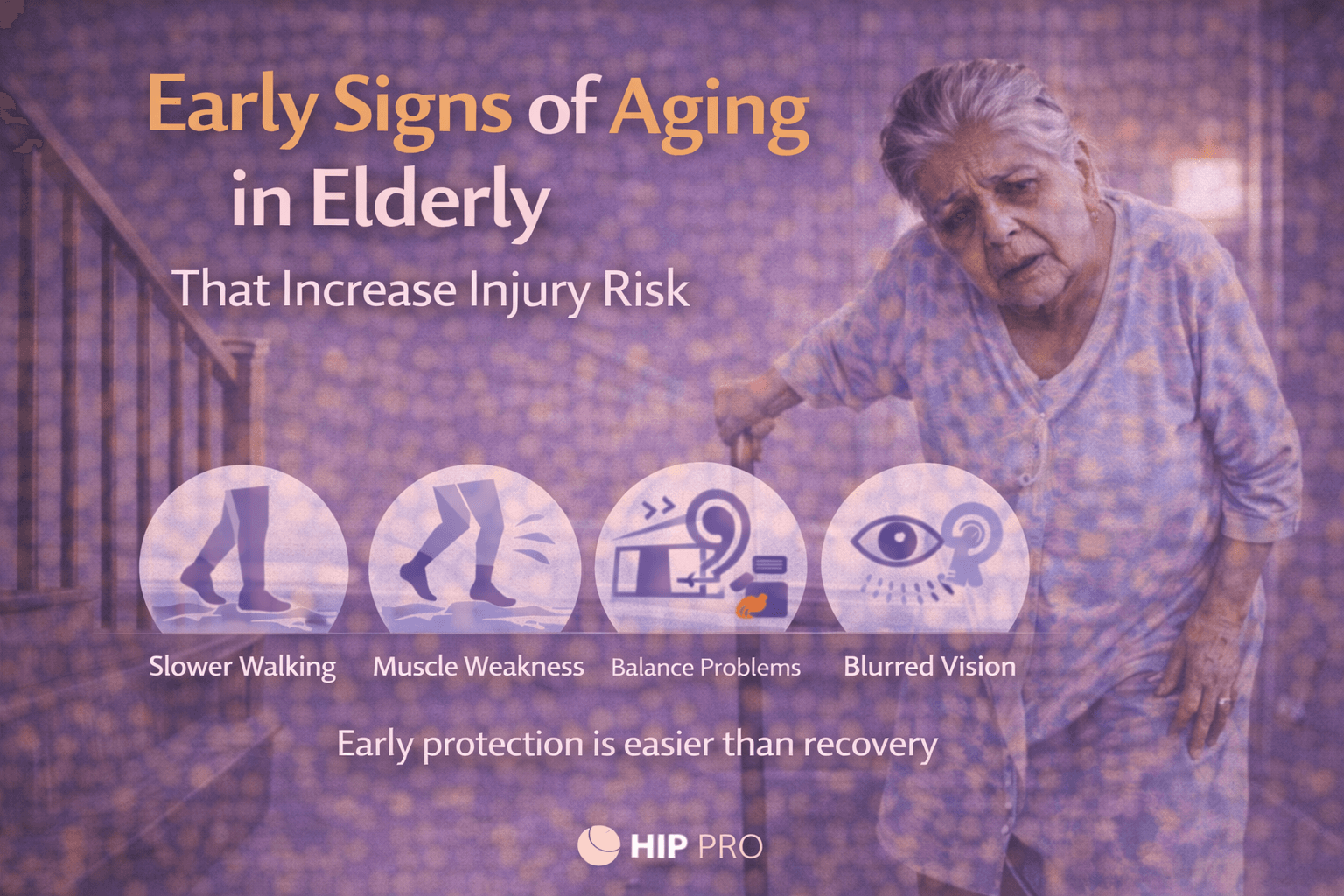
Ageing is a natural process, but some changes appear earlier and more subtly than most families realize. These early signs often go unnoticed or are dismissed as “normal ageing.” Unfortunately, many of them directly increase the risk of falls, fractures, and serious injuries. Recognizing the early signs of aging in elderly people allows caregivers and families to act before a preventable injury changes everything.
Why early signs of aging should not be ignored
Small changes in strength, balance, or reaction time can quietly reduce an elderly person’s ability to protect themselves during sudden movements or slips. When these signs are missed, the first major indicator of decline is often a fall. The reality is simple: 👉 Injury risk rises long before dependency becomes visible.
1. Slower walking speed
A noticeable reduction in walking speed is one of the earliest ageing signs.
Why it matters:
Indicates reduced muscle strength and coordination Makes recovery from a stumble more difficult Increases fall risk during everyday activities
2. Difficulty standing up or sitting down
Struggling to rise from a chair or bed suggests weakening leg and core muscles.
Injury risk:
Loss of balance during transitions Higher chance of backward or sideways falls
3. Poor balance and frequent unsteadiness
Feeling unsteady while walking, turning, or standing is a major warning sign.
Common clues:
Holding onto furniture Hesitating before walking Frequent near-falls This is one of the strongest predictors of future falls.
4. Reduced grip strength
Weak grip strength reflects overall muscle decline.
Why it matters:
Difficulty holding railings or supports Reduced ability to break a fall safely
5. Vision changes
Age-related vision decline affects depth perception and contrast.
Injury risk:
Missing steps or obstacles Increased night-time falls Difficulty navigating uneven surfaces
6. Slower reaction time
Reflexes naturally slow with age.
Impact:
Delayed response to slips Inability to adjust posture quickly Increased severity of falls
7. Joint stiffness and reduced flexibility
Stiff joints limit natural movement and balance corrections.
Common effects:
Shorter steps Awkward posture Increased tripping risk
8. Fatigue during simple activities
Getting tired quickly while walking or standing indicates declining endurance.
Injury risk:
Poor posture when fatigued Higher chance of losing balance
9. Memory lapses and reduced attention
Mild cognitive changes can affect judgment and awareness.
Impact:
Forgetting to use support Misjudging distances Unsafe movement decisions
10. Fear of falling
Fear often develops subconsciously after near-falls.
Why it’s dangerous:
Leads to reduced movement Causes muscle weakness Increases long-term fall risk
How these signs increase injury risk
When these early ageing signs combine: Balance becomes unreliable Muscles cannot absorb impact Reflexes fail to protect vital areas The hip becomes especially vulnerable, making hip injuries and fractures one of the most serious outcomes of ageing-related falls.
Acting early makes the biggest difference
Many families wait until after a fall to take action. By then, recovery is slow, expensive, and emotionally difficult. Early protection is easier than recovery. Simple steps—medical checkups, home safety changes, strength exercises, and protective solutions—can dramatically reduce injury severity.
Protection during everyday life
Even with the best precautions, ageing bodies cannot always react fast enough during sudden slips or imbalance episodes. For elderly individuals showing early signs of ageing—such as balance problems, muscle weakness, or slowed reactions—external hip protection provides valuable added safety. HIP PRO(https://www.ripplehealthcare.in/Buynow) is designed to: Absorb impact during unexpected falls Protect the hip without limiting daily movement Work quietly in the background during normal life
Final thoughts
Early signs of aging in elderly people are not just markers of time—they are signals to act. When families respond early, injuries can be prevented, independence can be preserved, and quality of life can be maintained. Because when it comes to ageing, prevention today is far easier than recovery tomorrow.