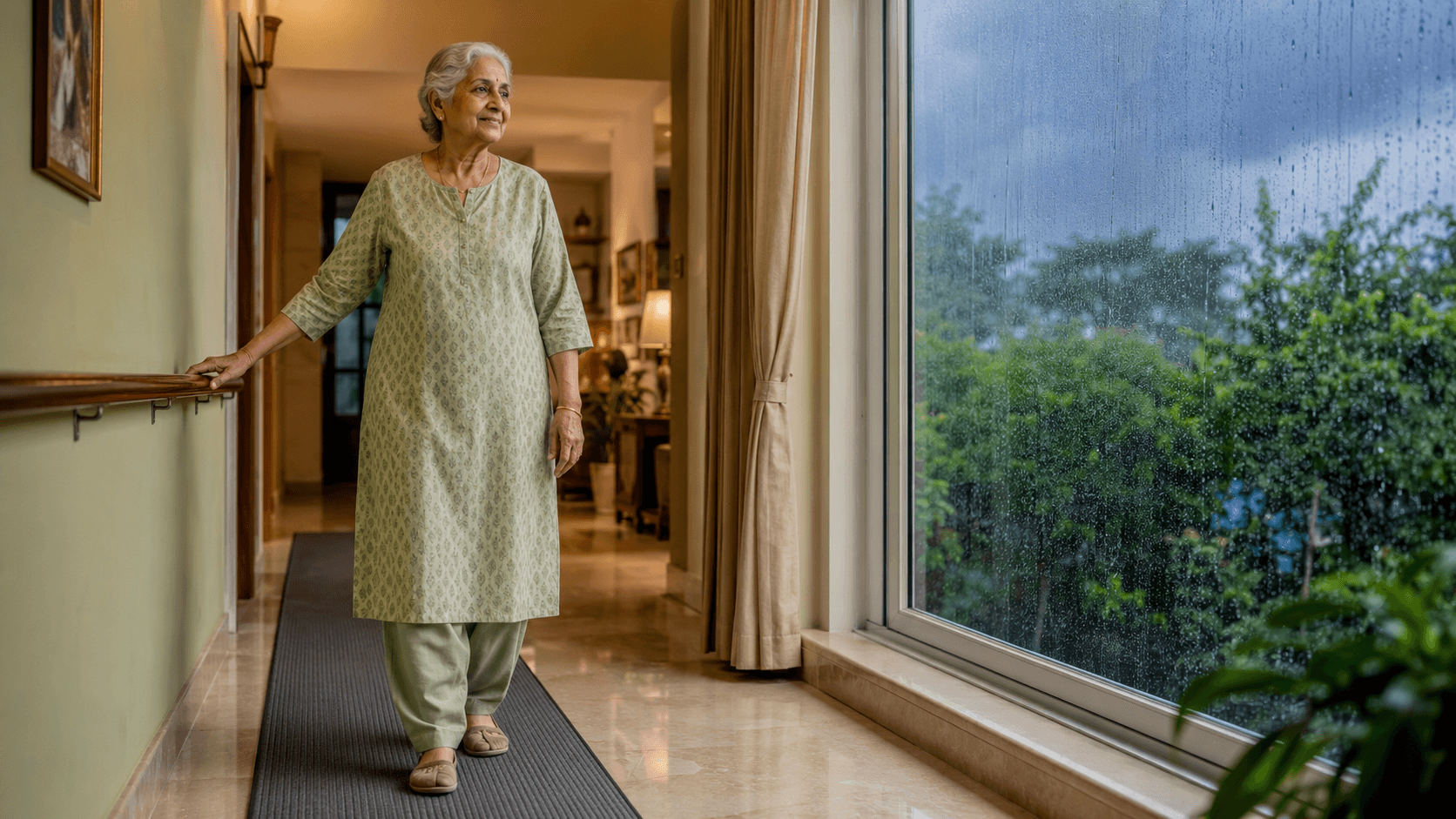


Falls are one of the most common—and most serious—injuries among older adults. While we often worry about tripping in the living room or outdoors, one of the most high-risk places in the home is the bathroom. Because of slippery surfaces and confined spaces, falls in bathrooms happen frequently and are more dangerous than many people realise.
How Common Are Bathroom Falls?
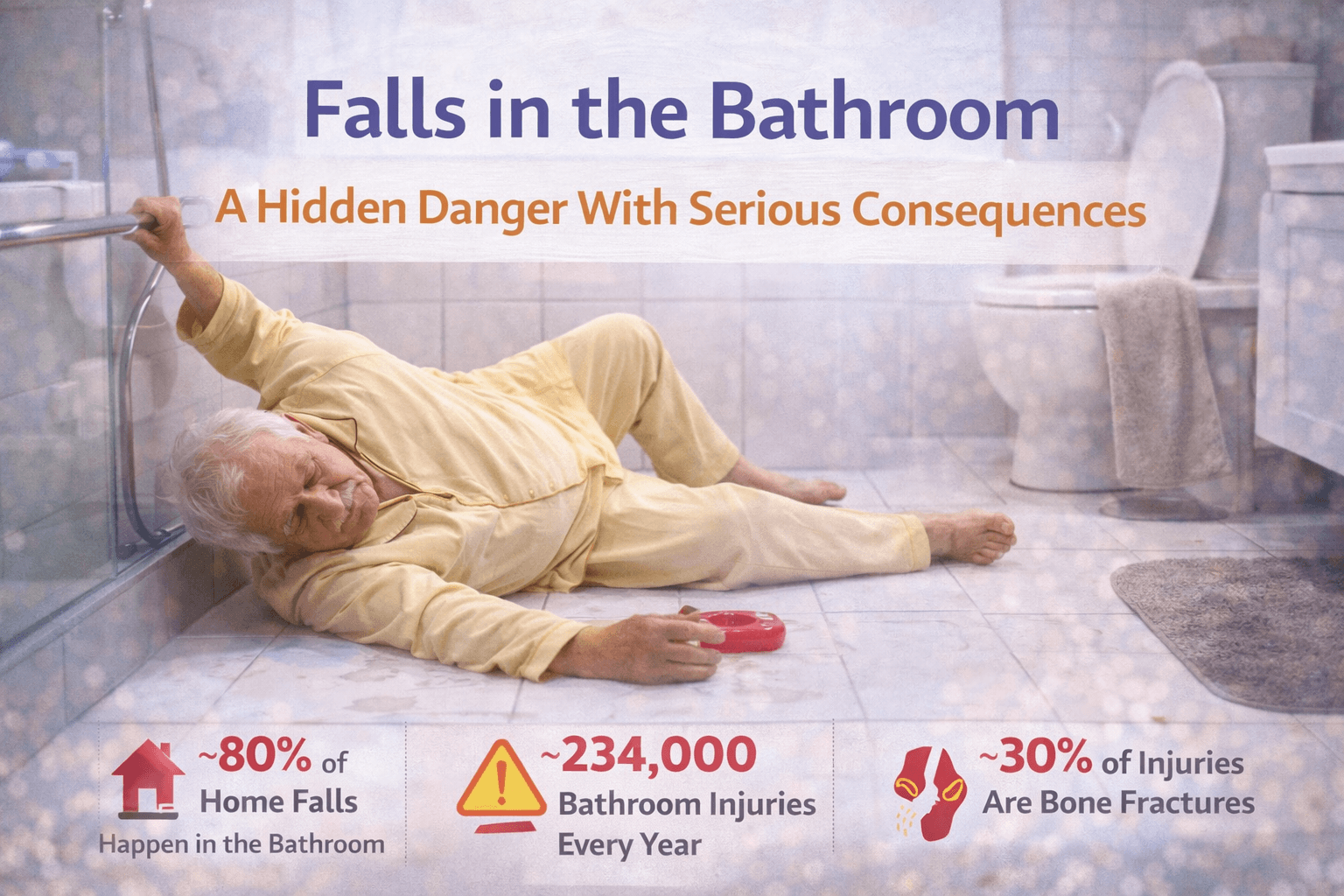
Falls in older adults are widespread. In fact, about one in four adults aged 65 and older falls each year. What makes the bathroom particularly risky is that a very large proportion of home falls occur there—some studies suggest about 80 % of home falls happen in the bathroom. Slippery floors, transitions in and out of showers or tubs, and hard, unforgiving surfaces all contribute to this risk. Another research article found that approximately 50 % of indoor falls happened in the bathroom, which was the single most common room for falls inside a house.
Who Is Most at Risk?
Older adults are especially vulnerable due to changes in balance, vision, and muscle strength that come with aging. Globally, about 30 % of adults over 65 fall every year, and this increases to 50 % in adults over 80. When these falls occur in a tight, wet space like a bathroom, the chances of injury—and serious injury—become even higher. In one analysis of fall-related injuries treated in emergency departments, around 234,000 people are injured each year in bathroom falls in the United States alone, and more than 80 % of those injuries were caused by slips and falls. Among older adults who suffered bathroom injuries, an estimated 30 % were diagnosed with fractures, with hospitalization being especially common in those aged 85 and older.
Why Bathrooms Are So Risky
There are several factors that make bathrooms hazardous for seniors:
Slippery floors and water spills
even small amounts of moisture can make tiles dangerously slick.
Transitions between standing, sitting, and stepping into tubs
each shift in position is a moment when balance can fail.
Low lighting and clutter
difficult to see obstacles, especially during nighttime bathroom visits.
Cramped spaces
fewer places to grip when slipping or stumbling.
The Consequences Can Be Severe
Falls may lead to minor injuries like bruises and scrapes, but for older adults, they often result in more serious harm such as fractures, head injuries, and hospital stays. When fractures occur, recovery takes longer and increases the risk of loss of independence. These events are a major reason seniors are admitted to hospitals or long-term care facilities. Even beyond physical injury, the fear of falling again can lead to restrictions in activity, social withdrawal, and reduced quality of life.
Turning Awareness Into Action
The statistics make it clear: Bathroom falls are not random accidents—they’re predictable injuries, especially among older adults. Fortunately, many of these falls are preventable with simple changes like: Installing grab bars near showers, tubs, and toilets Using non-slip mats or stickers on the floor Ensuring adequate lighting, especially at night Keeping floors dry and free of clutter Adding bathroom aids like shower chairs or handrails Bathroom safety planning should be a priority for anyone caring for elderly parents or family members.
Final Word
When it comes to fall prevention, knowing the numbers helps us take the right steps. Bathrooms may seem like a private, everyday space, but they are also one of the most dangerous rooms in the house for older adults. With thoughtful changes and proactive measures, many of these avoidable injuries can be prevented—helping seniors stay safer and more independent at home.