

When a hip fracture occurs, most families focus on surgery, pain control, and recovery of mobility. However, one serious and potentially life-threatening complication often goes unnoticed until it happens—fat embolism. Though relatively uncommon, fat embolism can rapidly worsen a patient’s condition and requires immediate medical attention. Understanding this risk is crucial, especially for elderly patients with hip fractures.
What Is Fat Embolism?
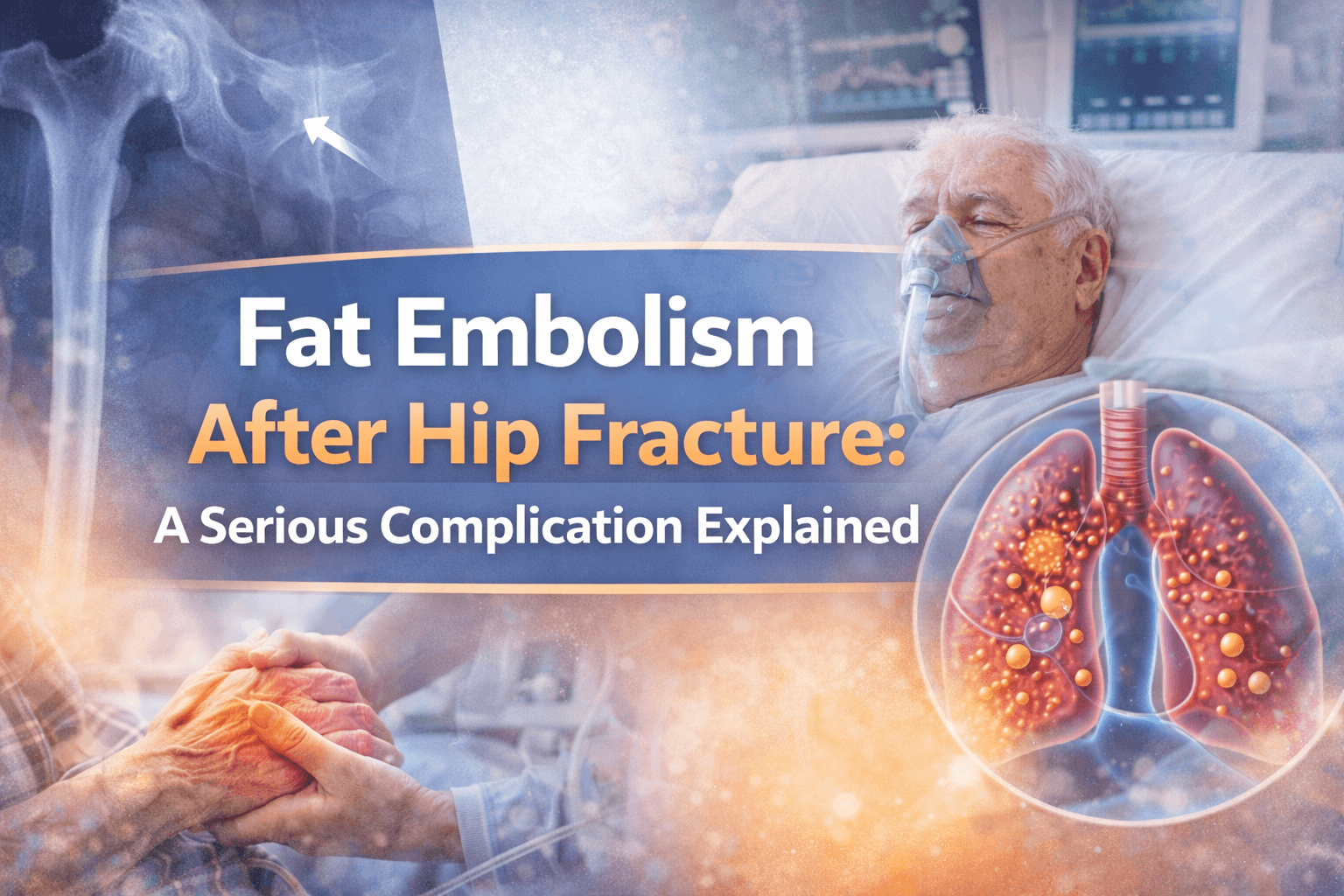
Fat embolism occurs when fat droplets from the bone marrow enter the bloodstream and travel to vital organs such as the lungs, brain, or skin. Long bones like the femur (thigh bone), which is directly involved in most hip fractures, contain rich fatty marrow. When the bone breaks—or even during surgical manipulation—fat particles can escape into the circulation. In some cases, this leads to Fat Embolism Syndrome (FES), a severe inflammatory response that affects multiple organs.
Why Hip Fractures Are High Risk
Hip fractures are particularly dangerous for fat embolism because they involve the proximal femur, one of the most marrow-rich bones in the body. Elderly patients are at higher risk due to fragile bones, delayed surgery, reduced physiological reserve, and pre-existing heart or lung disease. The risk increases when:
There is a delay in fracture stabilization or surgery
The fracture is displaced or comminuted
The patient undergoes extensive orthopedic manipulation
The patient is elderly or has multiple medical conditions
How Fat Embolism Affects the Body
Once fat droplets enter the bloodstream, they can lodge in small blood vessels and trigger inflammation.
Lungs
This is the most commonly affected organ. Fat emboli block blood flow and cause inflammation, leading to breathing difficulty and low oxygen levels.
Brain
Reduced oxygen and direct emboli can cause confusion, agitation, drowsiness, or even loss of consciousness.
Skin
Tiny fat emboli can cause a characteristic rash—small red or purple spots, usually on the chest, neck, or eyes.
Signs and Symptoms to Watch For
Fat embolism typically develops 24 to 72 hours after a hip fracture or surgery, though it can occur earlier. Warning signs include:
Sudden breathlessness or rapid breathing
Drop in oxygen saturation
Confusion, restlessness, or altered mental state
Fever and rapid heart rate
Pinpoint rash on upper body
Why Fat Embolism Is So Dangerous in Elderly Patients
Older adults often have limited cardiopulmonary reserve. This means their heart and lungs cannot easily compensate for reduced oxygen delivery. As a result, fat embolism can rapidly lead to: Acute respiratory failure Need for ICU care and ventilatory support Increased risk of mortality Prolonged hospital stay and delayed rehabilitation What might be manageable in a younger patient can become critical in the elderly.
Prevention and Risk Reduction
While fat embolism cannot always be prevented, its risk can be significantly reduced through proper medical care. Early stabilization of the fracture is one of the most important steps. Prompt surgical fixation reduces ongoing fat release from the bone marrow. Gentle handling of the fracture during surgery, adequate oxygenation, and close postoperative monitoring also play key roles. Equally important is early recognition. Hospitals experienced in managing hip fractures monitor oxygen levels, mental status, and vital signs closely in the first few days after injury.
Treatment: Supportive but Critical
There is no specific drug that “removes” fat emboli. Treatment focuses on supportive care, including oxygen therapy, fluid management, and sometimes ventilatory support in an intensive care unit. With timely intervention, many patients recover—but delays can be fatal.
The Bigger Picture
Hip fractures are not just orthopedic injuries; they are systemic events, especially in older adults. Fat embolism is a stark reminder that complications can extend far beyond the broken bone itself. For families and caregivers, awareness is key. Asking about postoperative monitoring, understanding warning signs, and ensuring care in a facility equipped to manage complications can make a real difference.
Final Takeaway
Fat embolism is a serious, under-recognized complication of hip fractures—particularly in elderly patients. Early surgery, vigilant monitoring, and rapid response to symptoms can save lives. A hip fracture should always be treated as a medical emergency, not just a bone injury.