

Hip fractures are among the most serious injuries affecting older adults. Often caused by simple falls, they can lead to surgery, long-term disability, and loss of independence. This detailed guide explains why hip fractures happen, how they are treated, the recovery journey, and how Ripple Healthcare is working to reduce the risk and impact of hip fractures in the elderly.
What Is a Hip Fracture?
A hip fracture is a break in the upper part of the thigh bone (femur), usually near the hip joint. In older adults, hip fractures commonly occur after a fall from standing height and are considered a medical emergency due to the high risk of complications.
Why Hip Fractures Are Common in Older Adults
Several age-related factors make elderly individuals more vulnerable to hip fractures:
Osteoporosis (weak bones)
With age, bones lose density and strength, making them more likely to break even after minor falls.
Poor balance and muscle weakness
Reduced muscle mass and slower reflexes increase the likelihood of falls.
Vision and neurological issues
Poor eyesight, stroke, Parkinson’s disease, or nerve disorders affect coordination.
Medication side effects
Drugs for blood pressure, sleep, or anxiety can cause dizziness and instability.
Types of Hip Fractures
Hip fractures are classified based on their location on the femur:
Femoral neck fracture
Occurs just below the ball of the hip joint and may disrupt blood supply to the bone.
Intertrochanteric fracture
Occurs between the neck of the femur and the shaft; more common and usually easier to repair surgically.
Subtrochanteric fracture
Occurs further down the femur and often requires complex surgical fixation.
Why Hip Fractures Are So Serious
A hip fracture is not just a broken bone—it often marks a major turning point in an elderly person’s life:
Loss of mobility and independence
Many seniors are unable to walk independently after a hip fracture.
High risk of complications
Includes infections, blood clots, bed sores, and pneumonia due to immobility.
Emotional and psychological impact
Fear of falling again often leads to reduced activity, anxiety, and depression.
Increased caregiver and family burden
Long-term care, rehabilitation, and lifestyle changes affect the entire family.
Treatment of Hip Fractures
Most hip fractures require surgical intervention followed by structured rehabilitation:
Surgery
Surgery is usually performed within 24–48 hours to stabilize the fracture and reduce complications.
Pain management
Adequate pain control is essential to allow early movement and physiotherapy.
Physiotherapy and rehabilitation
Focused on regaining strength, balance, and confidence in walking.
Long-term care planning
Some patients may need home modifications or assisted living support.
Preventing Hip Fractures: The Most Important Step
Prevention is far more effective than treatment. Key preventive strategies include:
Fall prevention
Improving home safety, balance training, and mobility support significantly reduce risk.
Bone health management
Regular screening for osteoporosis and adequate calcium and vitamin D intake.
Use of protective devices
Hip protection devices help absorb impact during falls and reduce fracture severity.
How Ripple Healthcare Is Addressing Hip Fracture Risk
Ripple Healthcare focuses on proactive, real-world solutions to reduce hip fracture risk and improve elderly safety:
HipPro Belt – Impact Protection for the Elderly
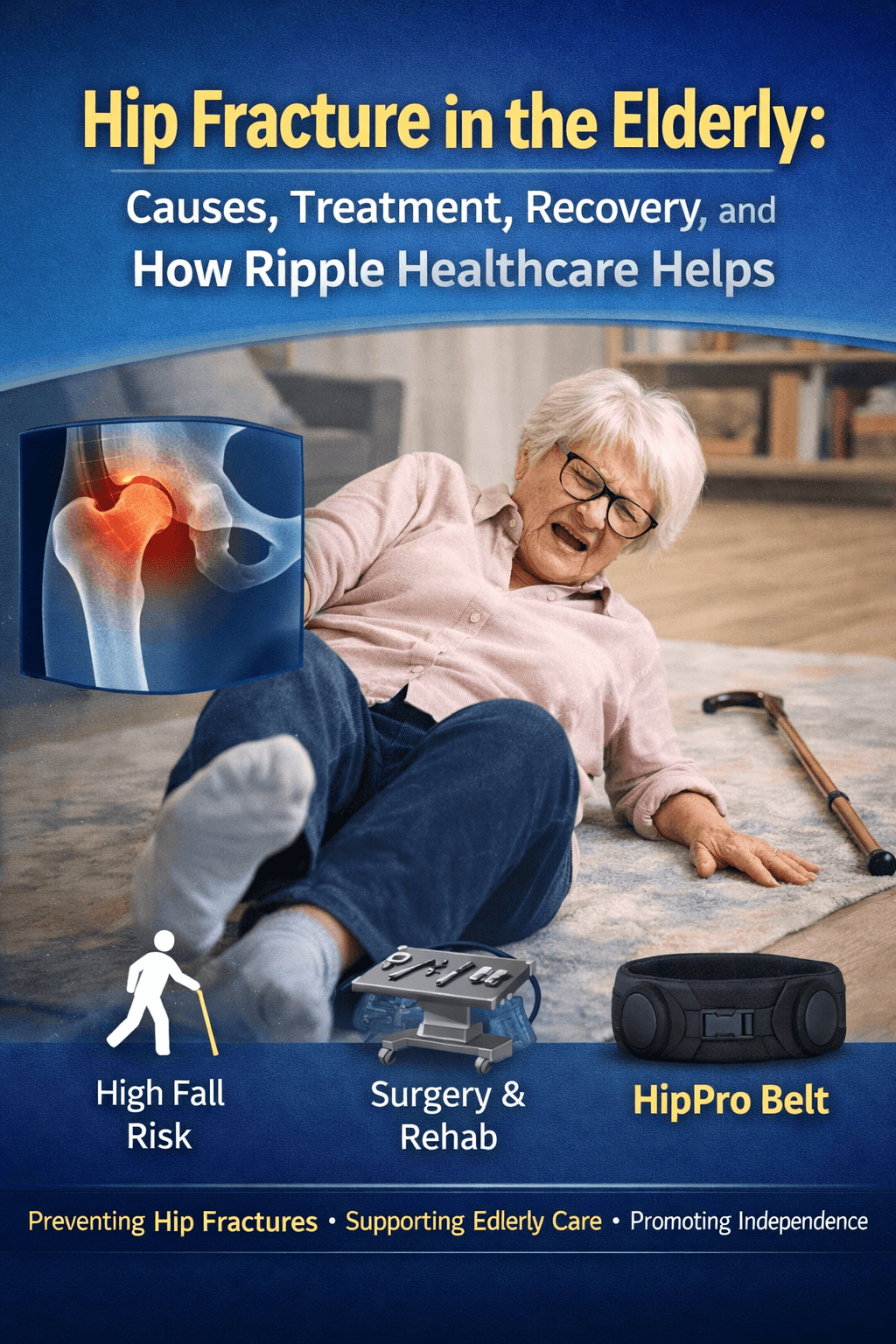
The HipPro Belt is designed to absorb and redistribute impact forces during a fall, significantly reducing the risk of hip fractures.
Comfortable and discreet design
Unlike bulky medical devices, the HipPro Belt is easy to wear daily, encouraging consistent use.
Supporting independent aging
By reducing fear of serious injury, seniors remain active and confident.
Caregiver and family reassurance
Ripple Healthcare solutions provide peace of mind to families caring for elderly loved ones.
A Final Thought
Hip fractures are life-altering but largely preventable. With better awareness, early intervention, and innovative solutions like Ripple Healthcare’s HipPro Belt, elderly individuals can live safer, more independent lives while reducing the devastating impact of falls.