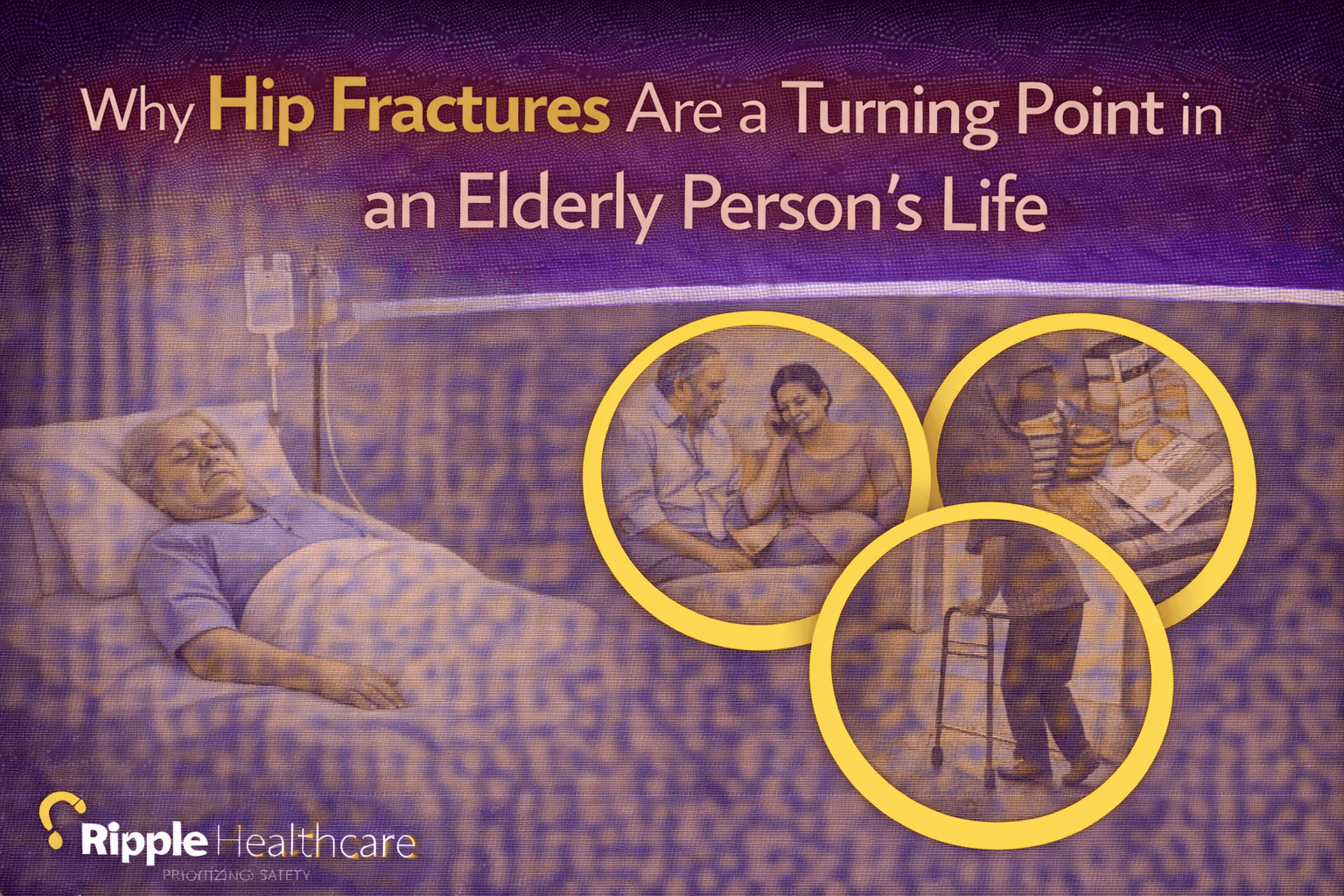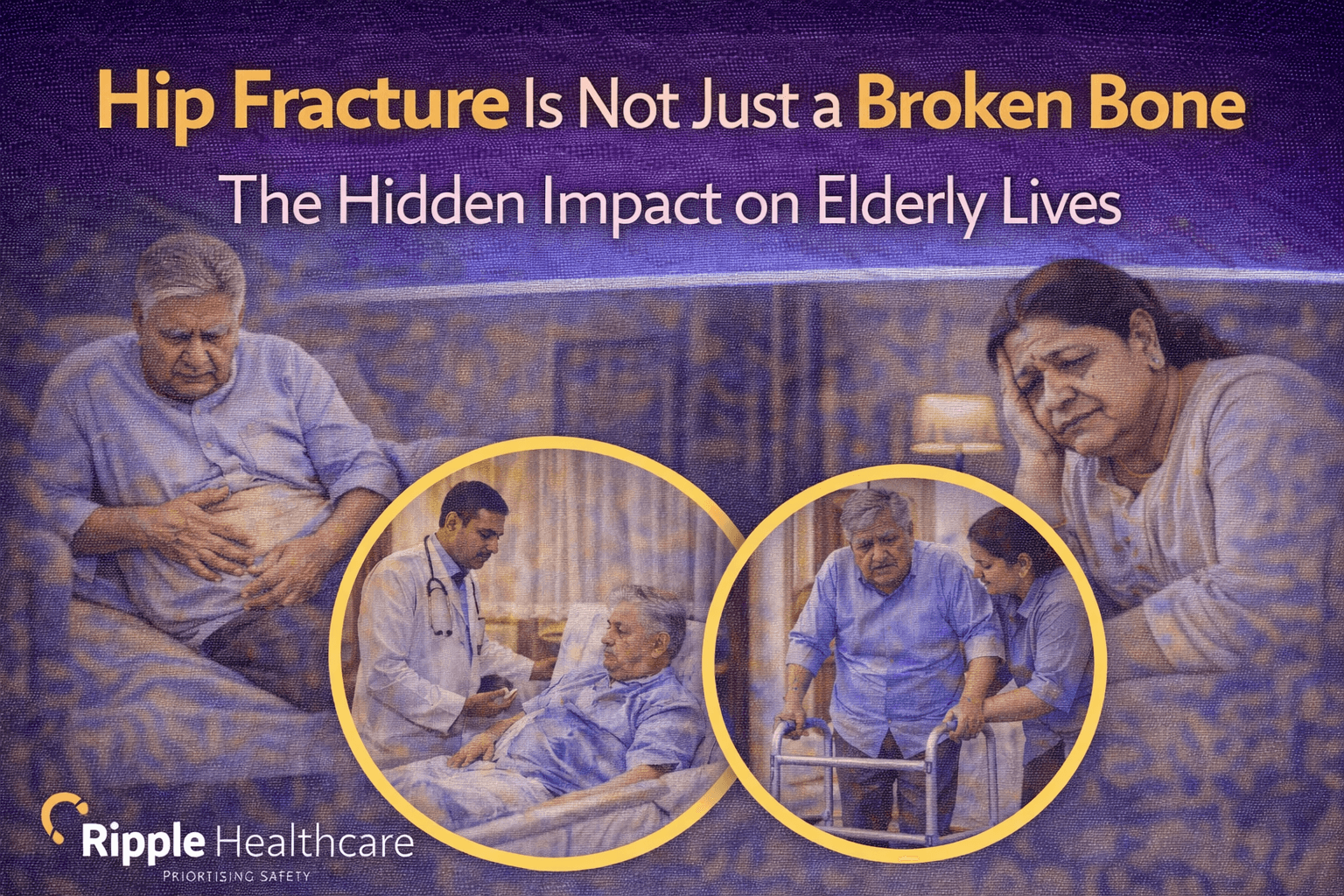


A hip fracture in the elderly is far more than a bone injury. It often triggers long-term physical decline, emotional trauma, loss of independence, and increased mortality. This detailed guide explains the true impact of hip fractures and how Ripple Healthcare focuses on prevention to protect elderly lives.
Why Hip Fractures Are Often Underestimated
Many families view a hip fracture as a routine injury that surgery can fix. In reality, for elderly individuals, a hip fracture is often a turning point that permanently changes mobility, confidence, and quality of life. The injury affects not just bones, but the entire physical and emotional system.
How Aging Changes Bone Strength
With age, bone density naturally decreases due to osteoporosis. This makes the hip joint fragile, meaning even a low-impact fall at home can cause a serious fracture that the body struggles to heal.
The Strong Link Between Falls and Hip Fractures
Most hip fractures in seniors are caused by simple falls—often inside the home. Poor balance, weak legs, and delayed reflexes mean the hip absorbs the full impact during a fall.
Immediate Physical Consequences After a Hip Fracture
Pain, immobility, and inability to stand occur immediately. Many elderly patients cannot move independently and require emergency assistance, hospitalization, and surgery.
Surgery Fixes the Bone, Not the Person
Hip surgery stabilizes the fracture, but it does not restore muscle strength, balance, or confidence. Many seniors assume surgery means full recovery, which is rarely the case.
Long Hospital Stays and Medical Complications
Elderly patients are at high risk of infections, blood clots, pneumonia, and pressure sores during prolonged hospital stays after hip fracture surgery.
Rapid Muscle Loss During Bed Rest
Even a few weeks of immobility can cause severe muscle loss in older adults, especially in the legs and hips, making walking more difficult even after the bone heals.
Loss of Independence After Recovery
Many seniors never regain the ability to walk independently, use the bathroom alone, or perform daily tasks, leading to long-term dependence on caregivers.
Emotional and Psychological Trauma
Fear of falling again is extremely common after a hip fracture. This fear often leads to anxiety, depression, and avoidance of movement, worsening physical decline.
Social Isolation and Reduced Quality of Life
Limited mobility causes seniors to withdraw socially, stop attending family events, and lose confidence in public spaces, deeply affecting mental health.
The Financial and Caregiver Burden
Hip fractures place long-term emotional, physical, and financial stress on families due to medical bills, caregiving needs, and lifestyle changes.
Why Many Elderly Never Fully Recover
Age-related decline, fear, muscle loss, and reduced balance often prevent full recovery, even with physiotherapy and rehabilitation.
Second Falls and Repeat Hip Fractures
After one hip fracture, the risk of another fall and fracture increases significantly due to weakness and fear-driven inactivity.
Why Prevention Is More Powerful Than Treatment
Once a hip fracture occurs, options are limited. Preventing the injury in the first place avoids surgery, trauma, and long-term decline.
How Ripple Healthcare Is Changing Elderly Safety
Ripple Healthcare focuses on a prevention-first approach to elderly care, aiming to reduce injury severity before accidents become life-altering events.
Role of the HipPro Belt in Hip Fracture Prevention
The HipPro Belt is designed to absorb and disperse impact during falls, significantly reducing the force transferred to the hip and lowering fracture risk.
Encouraging Safe and Confident Movement
When seniors feel protected, they remain active. Continued movement helps maintain strength, balance, and independence—key factors in fall prevention.
Final Thoughts
A hip fracture is not just a broken bone—it is often a life-altering event. Prevention through awareness, protection, and solutions like those from Ripple Healthcare can help elderly individuals live safer, more independent lives.
Learn More About Ripple Healthcare
Visit https://www.ripplehealthcare.in to learn more. For guidance, contact https://www.ripplehealthcare.in/contact. To explore or purchase the HipPro Belt, visit https://www.ripplehealthcare.in/Buynow.