


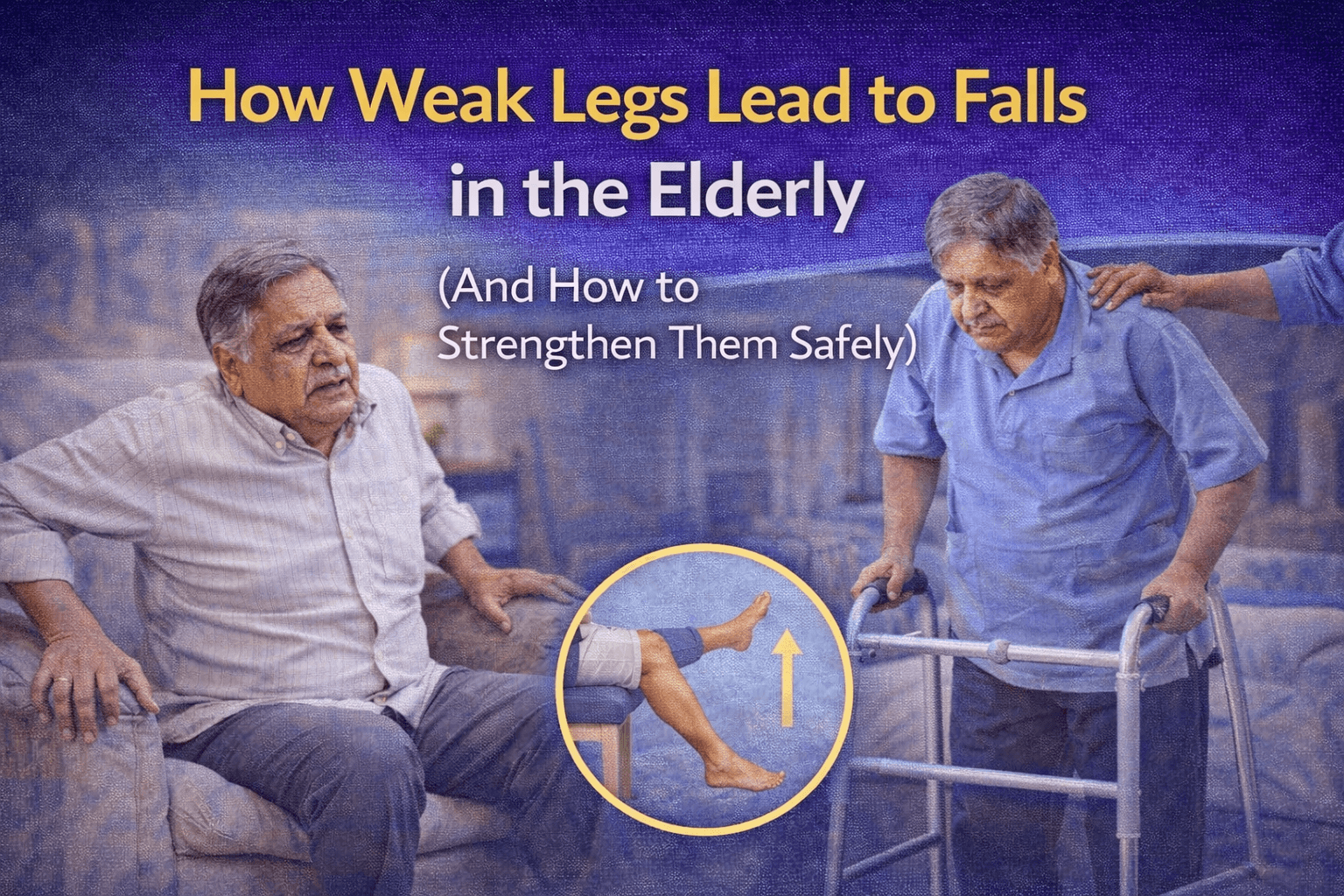
Leg strength plays a critical role in balance, walking, and preventing falls in older adults. As leg muscles weaken with age and inactivity, the risk of falls increases significantly. This blog explains how weak legs contribute to falls in the elderly, early warning signs to watch for, and safe ways to improve strength while reducing injury risk.
Why Leg Strength Is Essential for Stability
Strong leg muscles are the foundation of safe movement. They help older adults stand up, walk steadily, climb stairs, and recover balance after a slip. When leg strength declines, even simple movements become risky.
How Leg Weakness Develops With Age
Leg weakness does not appear suddenly—it develops gradually due to multiple factors:
Age-related muscle loss
After the age of 60, muscle mass naturally decreases if not actively maintained.
Reduced physical activity
Long periods of sitting and reduced walking accelerate muscle weakness.
Joint pain and arthritis
Pain discourages movement, leading to further muscle loss.
Medical conditions
Conditions like diabetes, stroke, and nerve disorders affect leg strength and coordination.
How Weak Legs Increase Fall Risk
Weak legs directly affect balance and mobility, making falls more likely:
Difficulty standing up or sitting down
Weak thigh and hip muscles make transitions unstable.
Unsteady walking
Reduced leg strength leads to shuffling, dragging feet, and poor balance.
Inability to recover from slips
Strong legs help catch balance; weak legs do not.
Higher risk on stairs and uneven surfaces
Leg weakness makes climbing and descending especially dangerous.
Early Signs of Weak Legs in the Elderly
Recognizing early signs can prevent serious falls:
Using hands to push up from chairs
This often indicates weak thigh muscles.
Avoiding stairs or long walks
Fear or fatigue during walking may signal declining strength.
Frequent fatigue while standing
Leg muscles tire quickly when strength is reduced.
Safe Ways to Strengthen Legs in Older Adults
Strengthening legs safely is possible at any age when done correctly:
Sit-to-stand exercises
Repeatedly standing up from a chair builds thigh and hip strength.
Supported walking
Short, regular walks with support improve endurance and muscle tone.
Leg raises and gentle resistance exercises
Simple movements performed slowly help rebuild strength.
Physiotherapy guidance
Professional supervision ensures safety and correct technique.
Why Strengthening Alone Is Not Always Enough
Even with exercise, elderly individuals may still experience sudden loss of balance due to medical conditions or fatigue. This is why combining strength training with fall injury prevention is crucial.
How Ripple Healthcare Supports Safer Movement
Ripple Healthcare takes a preventive approach to elderly safety by addressing both mobility and injury risk:
Encouraging safe activity
Ripple Healthcare promotes regular movement and balance awareness to reduce fall risk.
HipPro Belt for impact protection
The HipPro Belt is designed to absorb impact during falls, helping reduce the risk of serious hip injuries while seniors stay active.
Building confidence to move
Protective support helps elderly individuals remain active without constant fear of injury.
Learn More or Take the Next Step
To learn more about Ripple Healthcare and its elderly safety solutions, visit https://www.ripplehealthcare.in. For questions or guidance, contact the team at https://www.ripplehealthcare.in/contact. To explore or purchase protective solutions like the HipPro Belt, visit https://www.ripplehealthcare.in/Buynow.
Final Thoughts
Weak legs are one of the most overlooked causes of falls in the elderly. With early recognition, safe strengthening, and preventive support from Ripple Healthcare, seniors can improve stability, reduce fall risk, and continue living with confidence and independence.