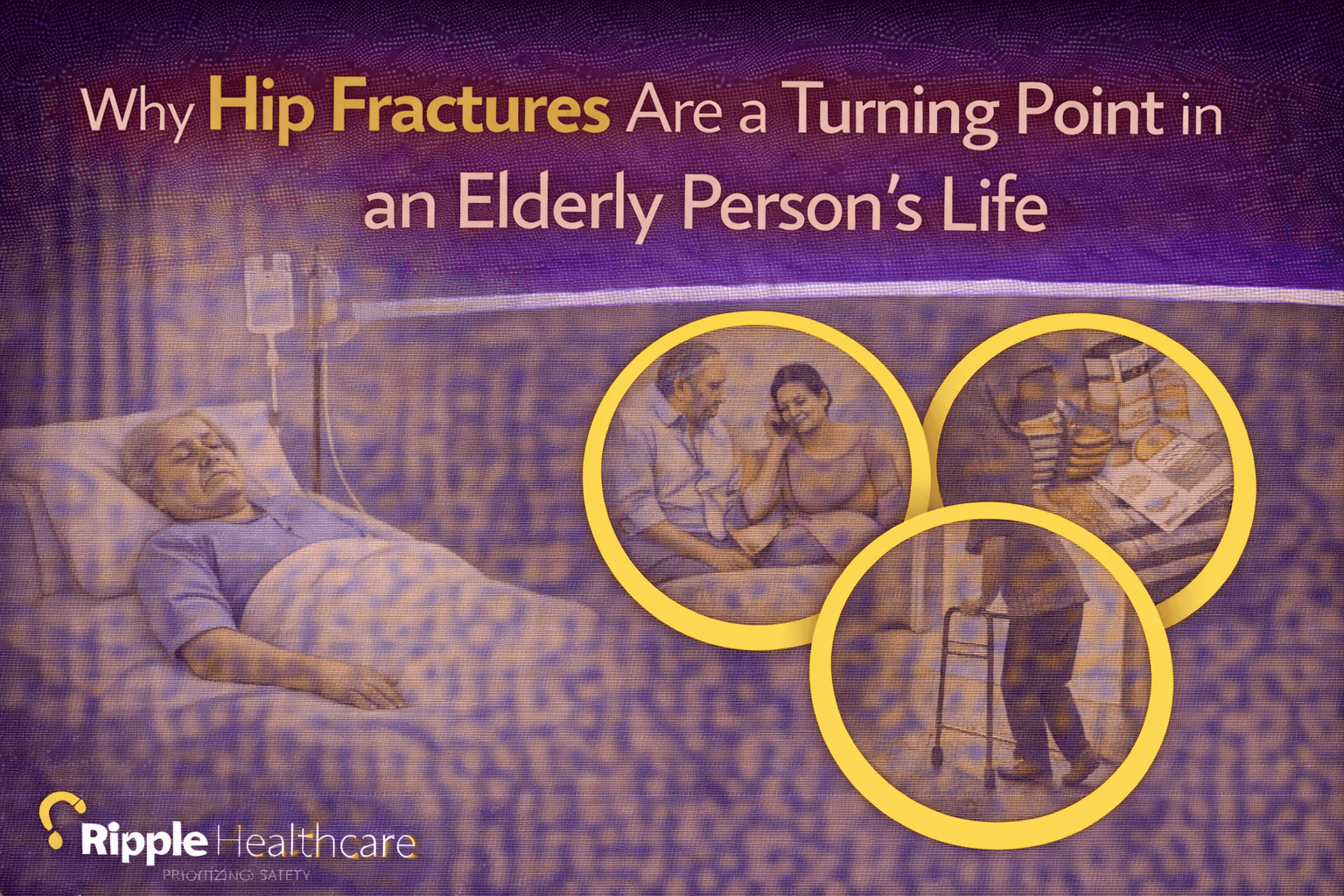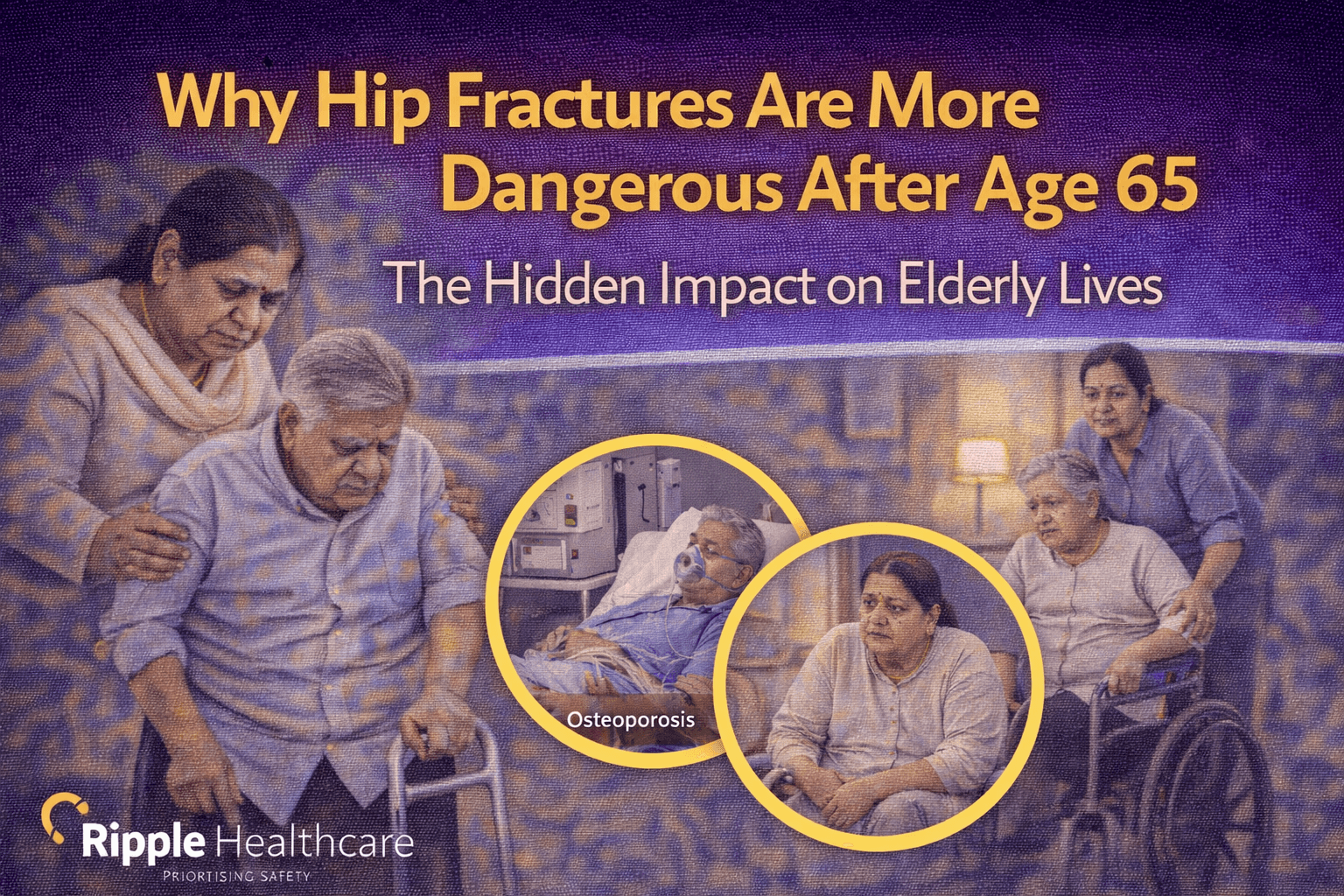


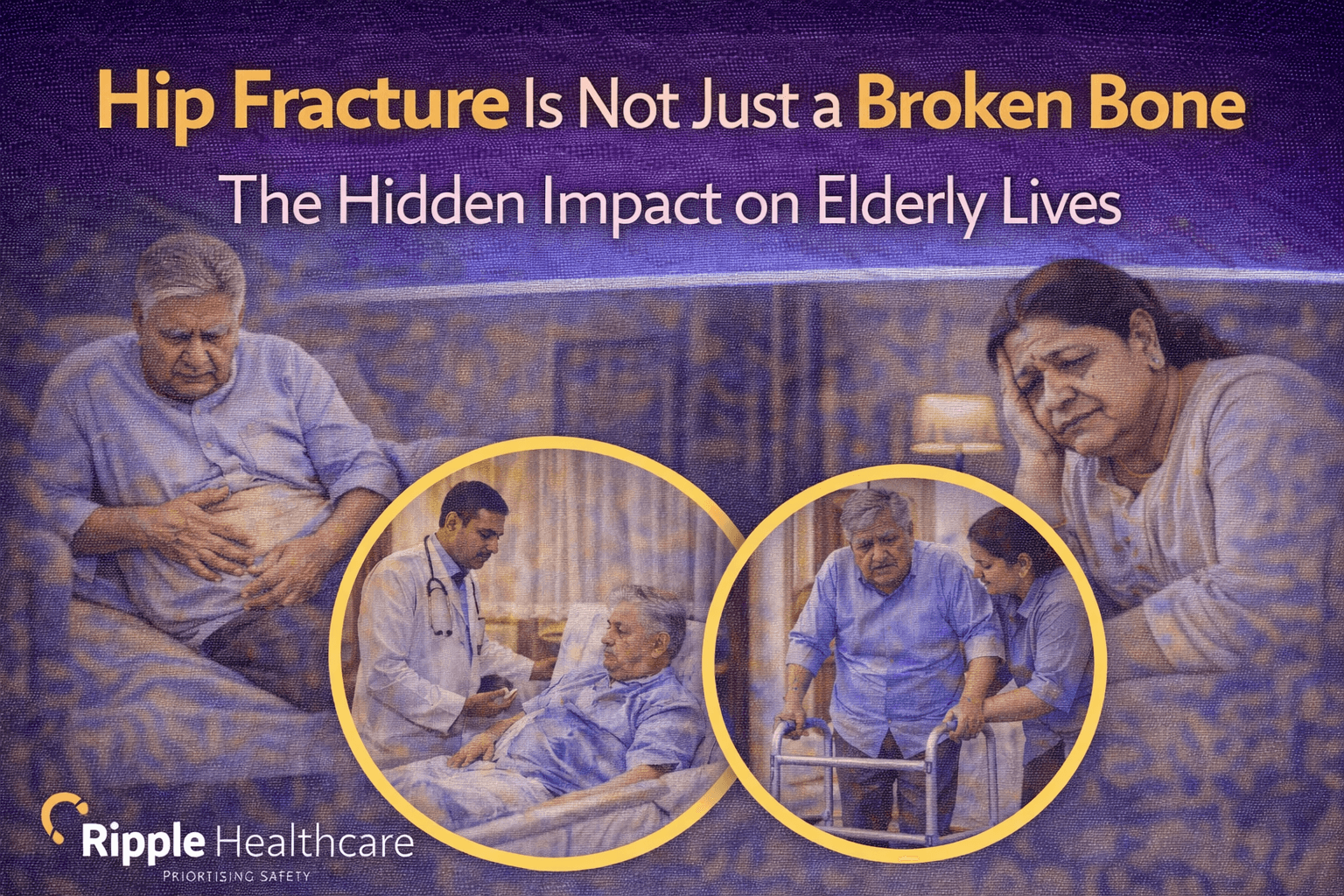
Recovery after a hip fracture is often far more complex than families anticipate. Beyond surgery, elderly individuals face long rehabilitation, emotional challenges, and increased fall risk. This detailed guide explains what families should realistically expect after a hip fracture and how Ripple Healthcare focuses on prevention to improve long-term outcomes.
Introduction: The Reality Few Families Are Prepared For
Many families believe that once hip fracture surgery is successful, recovery will naturally follow. In reality, surgery is only the beginning. Life after a hip fracture involves physical limitations, emotional struggles, and long-term lifestyle changes that require preparation and support.
The Hospital Phase: Surgery and Acute Care
The first stage involves surgery, pain management, and close monitoring. Elderly patients often experience confusion, weakness, and fatigue during this phase due to anesthesia, medications, and stress on the body.
Pain and Discomfort After Surgery
Pain can persist for weeks or months after surgery. This discomfort often discourages movement, which slows recovery and increases stiffness and muscle loss.
Early Mobility Challenges
Standing and walking for the first time after surgery is difficult and frightening for many seniors. Fear of pain or falling again can delay rehabilitation progress.
Dependence on Walking Aids
Many elderly individuals require walkers, canes, or physical support long after surgery. Some may never regain unaided walking ability.
The Long Road of Physiotherapy
Physiotherapy is essential but slow. Progress may feel inconsistent, and setbacks are common due to fatigue, illness, or fear.
Muscle Weakness and Balance Loss
Extended immobility leads to rapid muscle loss in the legs and hips. Balance often deteriorates, increasing the risk of repeat falls.
Fear of Falling Again
Psychological fear becomes one of the biggest barriers to recovery. Seniors may avoid walking or standing even when physically capable.
Emotional and Mental Health Changes
Depression, anxiety, and loss of confidence are common after hip fractures. These emotional effects can slow recovery as much as physical issues.
Loss of Independence in Daily Activities
Simple tasks like bathing, dressing, and using the toilet often require assistance, which can be emotionally difficult for elderly individuals.
Impact on Family Members and Caregivers
Families often face caregiver fatigue, emotional stress, and financial strain while supporting recovery over months or years.
Why Many Seniors Never Fully Recover
Age-related decline, muscle loss, fear, and reduced balance mean many elderly individuals never return to their pre-fracture level of mobility.
Increased Risk of Second Falls After Recovery
Weakness, balance issues, and fear-driven inactivity significantly increase the risk of repeat falls and additional injuries.
Why Post-Recovery Prevention Is Critical
Even after healing, elderly individuals remain vulnerable. Preventing severe injury from future falls becomes essential for long-term safety.
How Ripple Healthcare Supports Life After Hip Fracture
Ripple Healthcare focuses on reducing injury severity and restoring confidence after hip fractures. By emphasizing preventive care, Ripple Healthcare helps seniors continue moving safely during recovery.
Role of the HipPro Belt During Recovery
The HipPro Belt absorbs impact during unexpected falls, protecting fragile hips and helping seniors feel safer while walking and exercising during rehabilitation.
Encouraging Safe and Confident Movement
When seniors feel protected, they are more willing to participate in physiotherapy and daily movement—key factors in regaining strength and balance.
Final Thoughts for Families
Life after a hip fracture requires patience, planning, and prevention. With awareness, emotional support, and protective solutions from Ripple Healthcare, families can help seniors recover with dignity and reduced risk.
Learn More About Ripple Healthcare
To learn more about elderly fall prevention and recovery support, visit https://www.ripplehealthcare.in. For guidance or questions, contact https://www.ripplehealthcare.in/contact. To explore or purchase the HipPro Belt, visit https://www.ripplehealthcare.in/Buynow.