

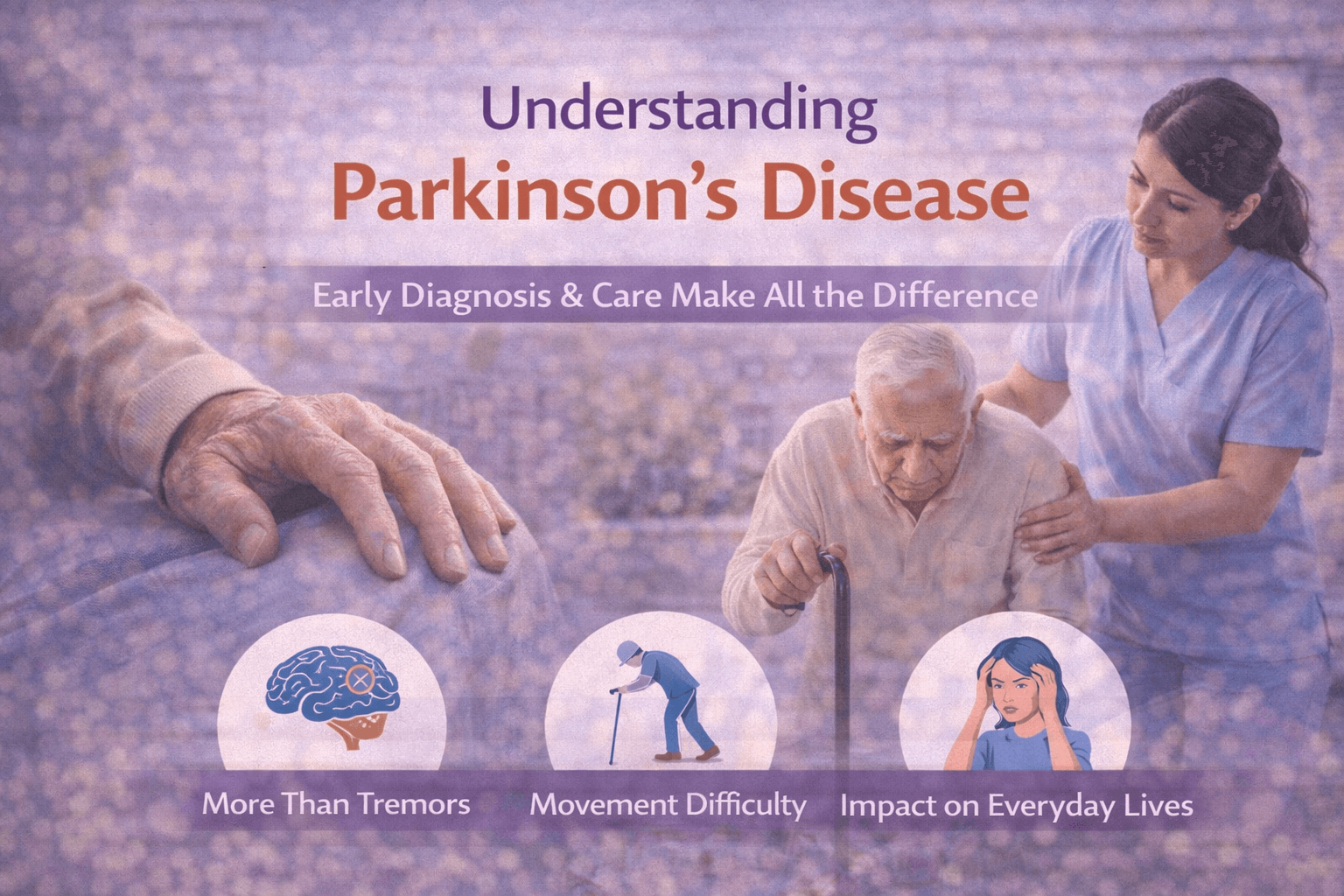
Parkinson’s disease is often misunderstood, overlooked, or mistaken for “normal aging.” Many people associate it only with hand tremors, but Parkinson’s is far more complex—and far more common—than most realise. Raising awareness is critical, because early recognition, timely care, and informed support can dramatically improve quality of life for those affected and their families.
What Is Parkinson’s Disease?
Parkinson’s disease is a progressive neurological disorder that affects movement, balance, and coordination. It occurs due to a gradual loss of dopamine-producing cells in the brain. Dopamine is essential for smooth, controlled movements—when it decreases, movement becomes slow, stiff, and unstable. Parkinson’s is not contagious, not caused by weakness, and not simply a part of growing old. While it is more common in older adults, it can affect people at different ages and progresses differently in each individual.
Common Symptoms People Often Miss
Awareness matters because the early signs are subtle and frequently ignored. These may include slight tremors in one hand, stiffness in the shoulders or neck, reduced arm swing while walking, slower movements, or changes in handwriting. Some people experience soft speech, masked facial expressions, or unexplained fatigue long before a diagnosis is made. As the condition progresses, balance problems, difficulty turning, shuffling gait, and falls become more common. Non-motor symptoms—such as sleep disturbances, constipation, anxiety, depression, and memory changes—are also part of Parkinson’s, yet are rarely talked about.
Why Parkinson’s Awareness Is So Important
Lack of awareness leads to delayed diagnosis. Many individuals seek medical help only after symptoms begin interfering significantly with daily life. By then, opportunities for early intervention may already be lost. Early diagnosis allows: Better symptom control with medication Early physiotherapy and balance training Reduced risk of falls and injuries Planning for future care with dignity Awareness also reduces stigma. People with Parkinson’s are often misunderstood as being frail, confused, or incapable—when in reality, many remain active and independent for years with the right support.
The Impact on Families and Caregivers
Parkinson’s affects not just the person diagnosed, but the entire family. Caregivers often struggle with uncertainty, fear of falls, medication schedules, and emotional stress. When families understand the condition, they are better equipped to offer support without taking away independence. Open conversations and shared awareness help families move from confusion to confidence.
Living Well With Parkinson’s
While Parkinson’s currently has no cure, it is manageable. Medication, physiotherapy, speech therapy, regular exercise, and emotional support all play a vital role. Many people with Parkinson’s continue to work, travel, and participate actively in life for years after diagnosis. What makes the biggest difference is not just treatment—but understanding, patience, and informed care.
What We Can All Do to Raise Awareness
Awareness starts with conversation. Talking openly about Parkinson’s, recognising early signs, supporting those diagnosed, and encouraging medical evaluation can change outcomes. Communities, families, and workplaces all have a role to play in creating environments that are safe, inclusive, and supportive for people living with Parkinson’s.
Final Thought
Parkinson’s disease is more than a tremor—it is a condition that deserves understanding, empathy, and timely care. By spreading awareness, we replace fear with knowledge and silence with support. The earlier we recognise Parkinson’s, the better we can help people move with confidence, live with dignity, and age with care.