

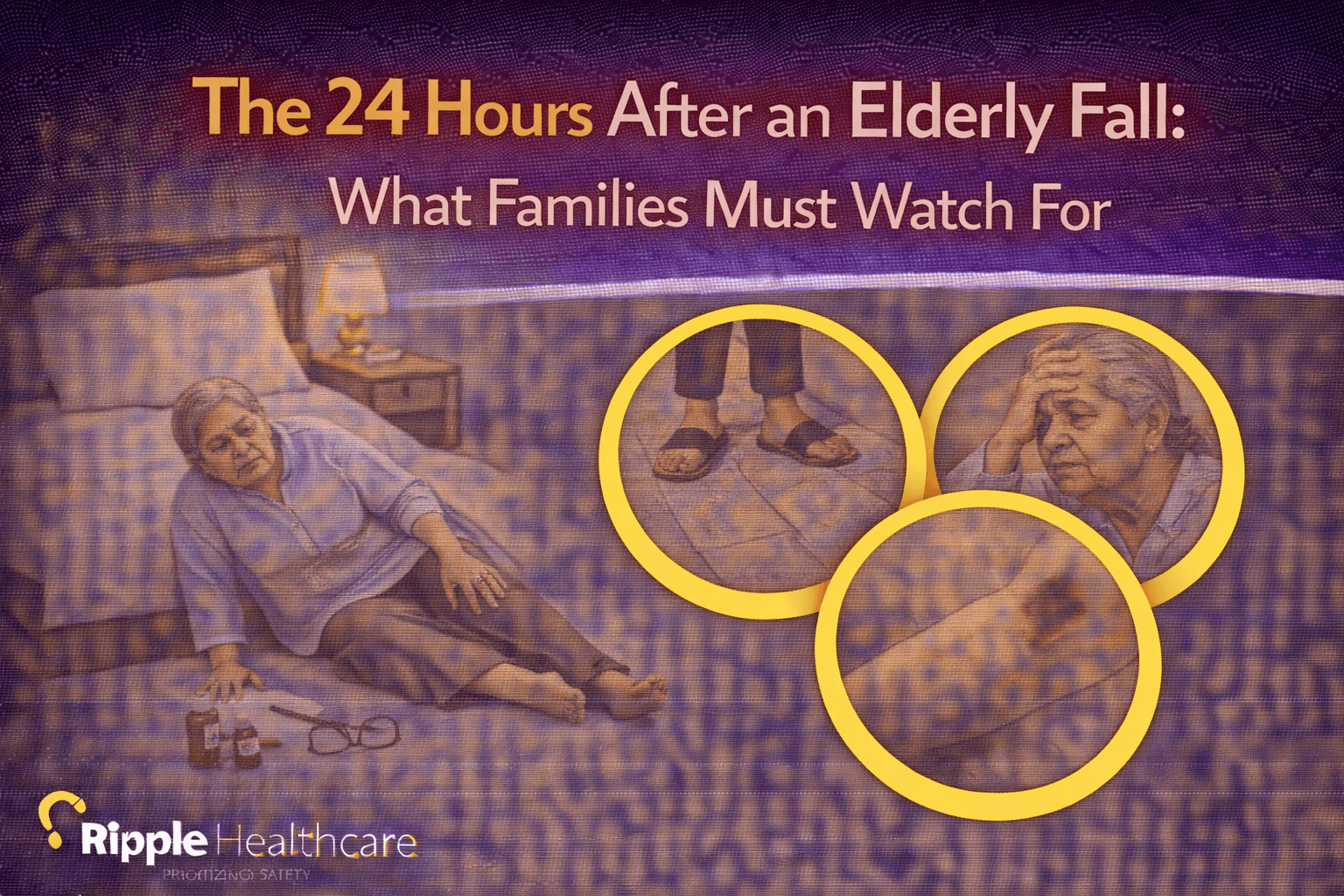
The first 24 hours after an elderly fall are critical. Hidden injuries, delayed symptoms, and emotional trauma can develop quickly. This in-depth flagship article explains what families must monitor and how proactive prevention from Ripple Healthcare can reduce life-altering consequences.
Introduction: Why the First 24 Hours Matter More Than You Think
When an elderly person falls, families often focus only on visible injuries. If the person stands up and says they feel fine, it can create a false sense of relief. However, the first 24 hours after a fall are medically critical. In older adults, injuries do not always present immediately. Internal bleeding, hairline fractures, muscle tears, and head trauma can develop gradually. The difference between a manageable recovery and a serious complication often depends on what is monitored in the hours following the fall. Falls in seniors are rarely random accidents. They are often warning signs of deeper physical decline.
Do Not Rush Them to Stand Immediately
The instinct to quickly lift someone after a fall can cause further harm. If there is an undetected fracture in the hip, pelvis, spine, or leg, sudden movement can worsen the injury. Instead, assess calmly. Ask where pain is located. Check if they can slowly move arms and legs. Look for unnatural leg rotation or shortening. Taking a few extra minutes to assess can prevent long-term damage.
Recognizing Hip Fracture Warning Signs
Hip fractures are among the most serious fall-related injuries in seniors. Classic symptoms include severe groin pain, inability to bear weight, and a leg that appears shorter or turned outward. However, some fractures are subtle. Mild pain or limited walking ability does not rule out a fracture. Imaging may be necessary even when symptoms appear minor.
Monitoring for Head Injury
Head injuries are particularly dangerous in elderly individuals, especially those taking blood thinners. Symptoms may not appear immediately. Watch for confusion, repeated questioning, nausea, headache, unusual sleepiness, or slurred speech. Any change in mental clarity within 24 hours requires urgent evaluation.
Delayed Pain and Swelling
Adrenaline can temporarily mask pain. Within several hours, inflammation increases and pain may intensify. Swelling, stiffness, or expanding bruises are warning signs that tissue damage is present.
Changes in Walking Pattern
Subtle gait changes—shorter steps, limping, holding onto walls—may indicate underlying injury or fear. Any change in mobility after a fall should be treated as a serious signal.
Emotional and Psychological Impact
Falls trigger fear almost immediately. Seniors may withdraw, avoid movement, or become overly cautious. Fear reduces activity, leading to muscle loss and increased fall risk. The psychological effect can begin within hours.
Watching for Internal Bleeding
Especially in individuals on blood thinners, internal bleeding is a major concern. Warning signs include dizziness, weakness, abdominal pain, or unusual bruising.
Hydration and Blood Pressure Monitoring
Falls sometimes occur due to dehydration or sudden blood pressure drops. Encourage slow movements when standing and ensure proper hydration.
A Fall Is a Medical Signal
Falls often reveal balance decline, medication side effects, muscle weakness, or bone fragility. Treating the fall as a medical event rather than an accident allows earlier intervention.
The Increased Risk of a Second Fall
After one fall, the risk of another rises sharply. Fear, weakness, and hesitation combine to increase instability.
Bone Fragility and Fracture Risk
After 65, bone density declines significantly. Even short-distance falls can cause severe fractures.
Immediate Prevention Strategy
Within 24 hours, families should consider reviewing medications, assessing home safety, and evaluating balance and strength.
Ripple Healthcare’s Preventive Philosophy
Ripple Healthcare focuses on reducing injury severity before falls result in life-changing fractures. Awareness and protection are central to preserving independence.
How the HipPro Belt Reduces Severe Outcomes
The HipPro Belt is designed to absorb and disperse impact during sideways falls. By reducing force on fragile hip bones, it may help decrease fracture severity.
Preserving Independence Through Protection
When seniors feel protected, they remain more active. Movement supports muscle strength and confidence, which are essential for fall prevention.
Final Thoughts
The first 24 hours after a fall can determine long-term outcomes. Careful monitoring, medical evaluation, and proactive protection from Ripple Healthcare can help prevent a temporary accident from becoming a life-altering event.
Learn More About Ripple Healthcare
Visit https://www.ripplehealthcare.in Contact https://www.ripplehealthcare.in/contact Buy Now https://www.ripplehealthcare.in/Buynow