

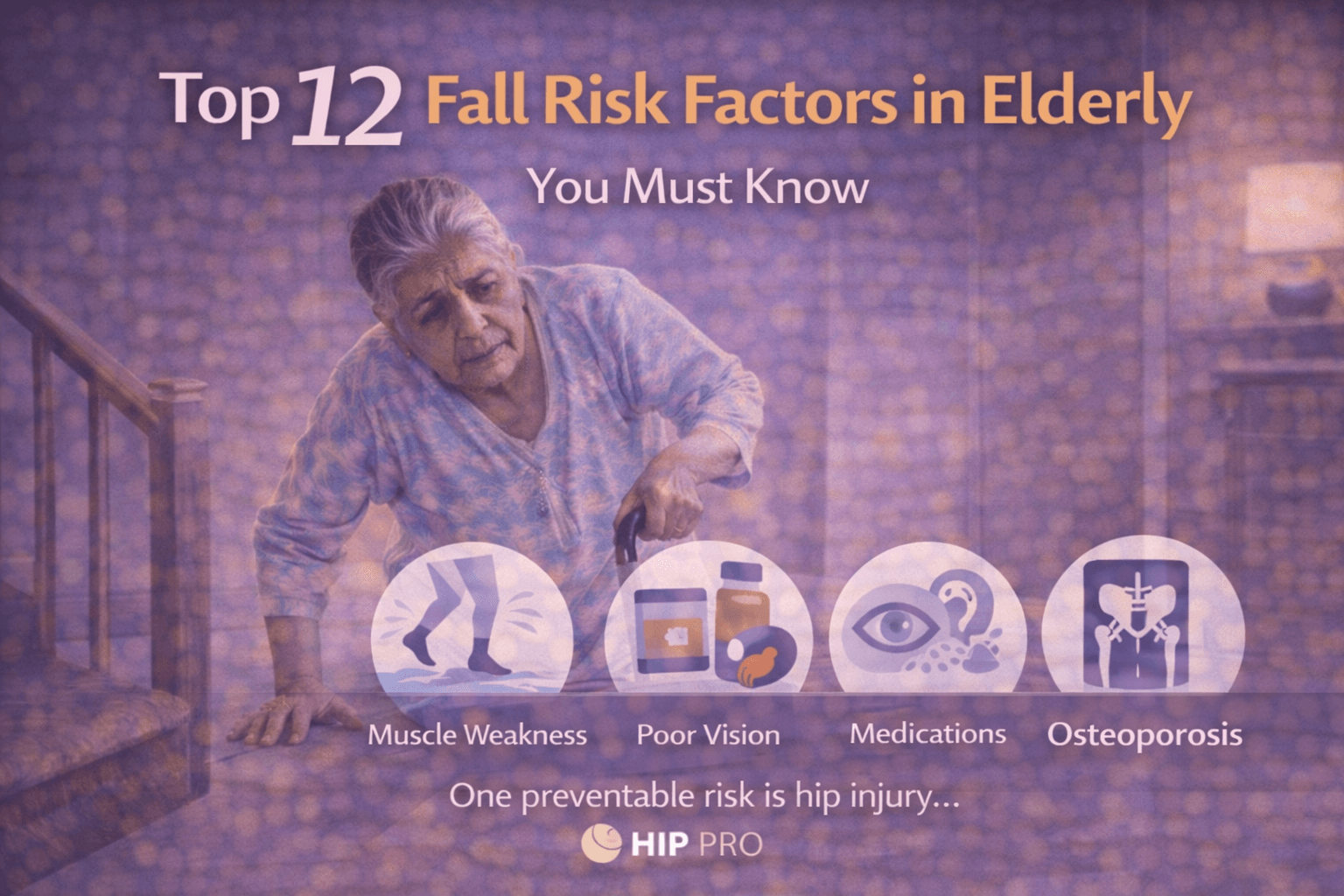
Falls are one of the leading causes of injury, hospitalization, and loss of independence in older adults. Yet, most falls do not happen suddenly or without warning. They are usually the result of multiple fall risk factors in elderly people acting together over time. Understanding these risk factors helps families and caregivers take early, preventive action—before a fall causes serious harm.
Why identifying fall risk factors in elderly matters
A single fall can change an elderly person’s life forever. Hip fractures, head injuries, and long recovery periods often lead to reduced mobility, dependence, and emotional distress. The good news? 👉 Many fall risk factors are modifiable or manageable.
1. Balance problems
Age-related changes in the inner ear, muscles, and nervous system reduce balance.
Risk
Sudden loss of stability while walking or turning
Warning signs
Unsteady gait, frequent stumbling
2. Muscle weakness
Loss of muscle mass (sarcopenia) is common with ageing.
Risk
Difficulty standing, climbing stairs, or correcting posture
Why it matters
Weak muscles fail to prevent a fall once balance is disturbed
3. Poor vision
Conditions like cataracts and glaucoma affect depth perception.
Risk
Missing steps, obstacles, or uneven flooring
High-risk time
Night-time movement
4. Hearing problems
The inner ear helps regulate balance.
Risk
Reduced spatial awareness and delayed responses
Often ignored
Hearing loss as a fall contributor
5. Chronic diseases
Several common diseases increase fall risk: Arthritis Diabetes Parkinson’s disease Heart disease These conditions affect mobility, reflexes, and coordination.
6. Medication side effects
Many elderly individuals take multiple medicines daily.
Risk
Dizziness, drowsiness, low blood pressure
Common culprits
Sedatives, blood pressure drugs, sleep medications
7. Osteoporosis
Weak bones do not cause falls—but worsen the outcome.
Risk
Hip and spine fractures after minor falls
Impact
Long-term disability and slow recovery
8. Cognitive decline
Memory and attention issues affect judgment.
Risk
Unsafe movements, poor hazard recognition
Example
Forgetting to use support while walking
9. Fear of falling
After one fall, many elderly people restrict movement.
Risk
Reduced activity → weaker muscles → higher fall risk
Cycle
Fear creates more falls, not fewer
10. Unsafe home environment
Most falls occur at home.
Common hazards:
Slippery bathroom floors Loose rugs and wires Poor lighting Uneven steps
11. Improper footwear
Footwear without grip or support increases instability.
Risk
Slipping and poor posture
Tip
Avoid loose slippers and worn-out soles
12. Lack of assistive support
Ignoring walking aids or refusing help raises fall risk.
Risk
Overestimating strength or balance
Solution
Proper use of canes, walkers, or support rails
The often-overlooked risk: hip injury
Among all injuries caused by falls, hip injuries are the most devastating. Even a simple fall can lead to a hip fracture, long hospital stays, surgery, and permanent loss of independence. This is why fall prevention must include injury prevention. One preventable risk is hip injury—and it deserves serious attention.
Reducing fall risk beyond prevention
While exercises, home modifications, and medical care reduce fall risk, they cannot eliminate it completely. For elderly individuals with: Multiple risk factors Osteoporosis Balance issues Previous falls External hip protection provides an added layer of safety. HIP PRO(https://www.ripplehealthcare.in/Buynow) is designed to: Absorb impact energy during falls Protect the hip region without restricting daily movement Reduce the severity of injuries when falls occur It works silently—protecting where it matters most.
Final thoughts
Knowing the fall risk factors in elderly helps families move from reaction to prevention. The earlier these risks are identified and addressed, the safer and more confident ageing becomes. Falls are not inevitable. But preparedness makes all the difference.