


Parkinson’s disease is a progressive neurological condition, meaning its symptoms develop slowly and change over time. For patients and caregivers, one of the most common questions is: “What stage are we in—and what comes next?” Understanding the stages of Parkinson’s helps families prepare, plan care, and respond with empathy rather than fear.
Why Parkinson’s Is Described in Stages
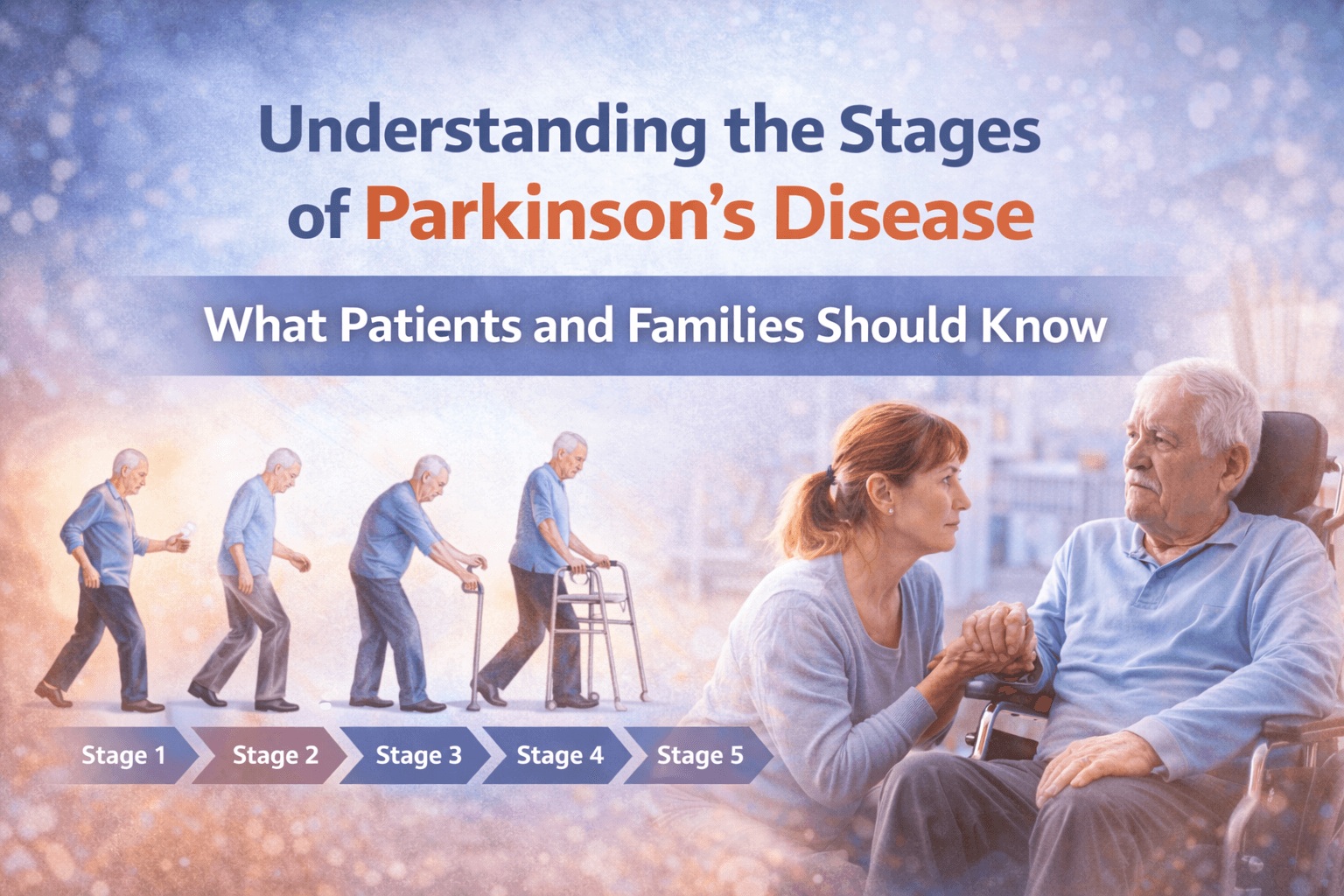
Parkinson’s does not progress the same way in everyone, but doctors often describe it in five clinical stages based on symptom severity and impact on daily life. These stages are not rigid timelines—they are guides to help understand functional changes and care needs as the disease advances.
Stage 1: Early (Mild) Parkinson’s
n the earliest stage, symptoms are subtle and often affect only one side of the body. A slight tremor in one hand, mild stiffness, reduced arm swing while walking, or subtle changes in facial expression may appear. At this stage, many people continue their normal routines, work, and social activities with little difficulty. Because symptoms are mild, Parkinson’s is often missed or mistaken for stress, aging, or arthritis. However, early diagnosis is valuable, as treatment can significantly improve quality of life.
Stage 2: Bilateral Symptoms, Still Independent
In stage two, symptoms begin to affect both sides of the body. Tremors, stiffness, and slowness of movement (bradykinesia) become more noticeable. Daily tasks may take longer, posture may change, and walking can feel more effortful. Despite these challenges, people in this stage usually remain fully independent. Medications are typically very effective here, and many individuals continue to live active, engaged lives.
Stage 3: Balance Problems and Increased Fall Risk
Stage three marks a turning point. Balance becomes impaired, and falls become more likely, even though the person may still walk independently. Movements slow further, and activities like turning, getting up from a chair, or navigating crowded spaces become difficult. At this stage, Parkinson’s starts to interfere more clearly with daily life. While independence is often preserved, support, physiotherapy, and fall-prevention strategies become crucial.
Stage 4: Severe Disability but Still Mobile
In stage four, symptoms are severe and limiting. Walking usually requires assistance, such as a walker or help from another person. Stiffness and slowness are pronounced, and everyday activities like dressing, bathing, and eating may require help. Although cognition may still be relatively preserved in some individuals, the physical burden is high. Most people at this stage cannot live alone safely and need consistent caregiving support.
Stage 5: Advanced Parkinson’s
Stage five is the most advanced stage. Individuals may be unable to stand or walk independently and often require a wheelchair or are bedridden. Speech may be very soft or unclear, swallowing can be difficult, and cognitive decline or hallucinations may occur in some patients. Care at this stage focuses on comfort, safety, dignity, and quality of life. Caregivers play a central role, and medical support is essential to manage complications such as infections, aspiration, and pressure sores.
An Important Reality About Progression
Not everyone with Parkinson’s will move through all stages at the same pace—or even reach the final stages. Some people remain in early or middle stages for many years, especially with good medical care, regular exercise, and strong family support.
Living Well at Every Stage
While Parkinson’s cannot yet be cured, early treatment, physiotherapy, speech therapy, and emotional support can dramatically improve life at every stage. Understanding the stages helps families shift from reacting in crisis to planning with confidence.
Final Thought
Parkinson’s is a journey—not just for the person diagnosed, but for the entire family. Knowing the stages helps replace fear of the unknown with preparedness, compassion, and informed care. With the right support, people with Parkinson’s can continue to live meaningful, dignified lives at every stage of the disease.