

Walking feels automatic—we do it without thinking. Yet the way we walk has a profound impact on balance, joint health, energy use, and fall risk. For older adults especially, small changes in walking pattern can quietly increase pain or instability. Understanding gait and stride helps us walk more safely, efficiently, and confidently at any age.
What Is Gait?
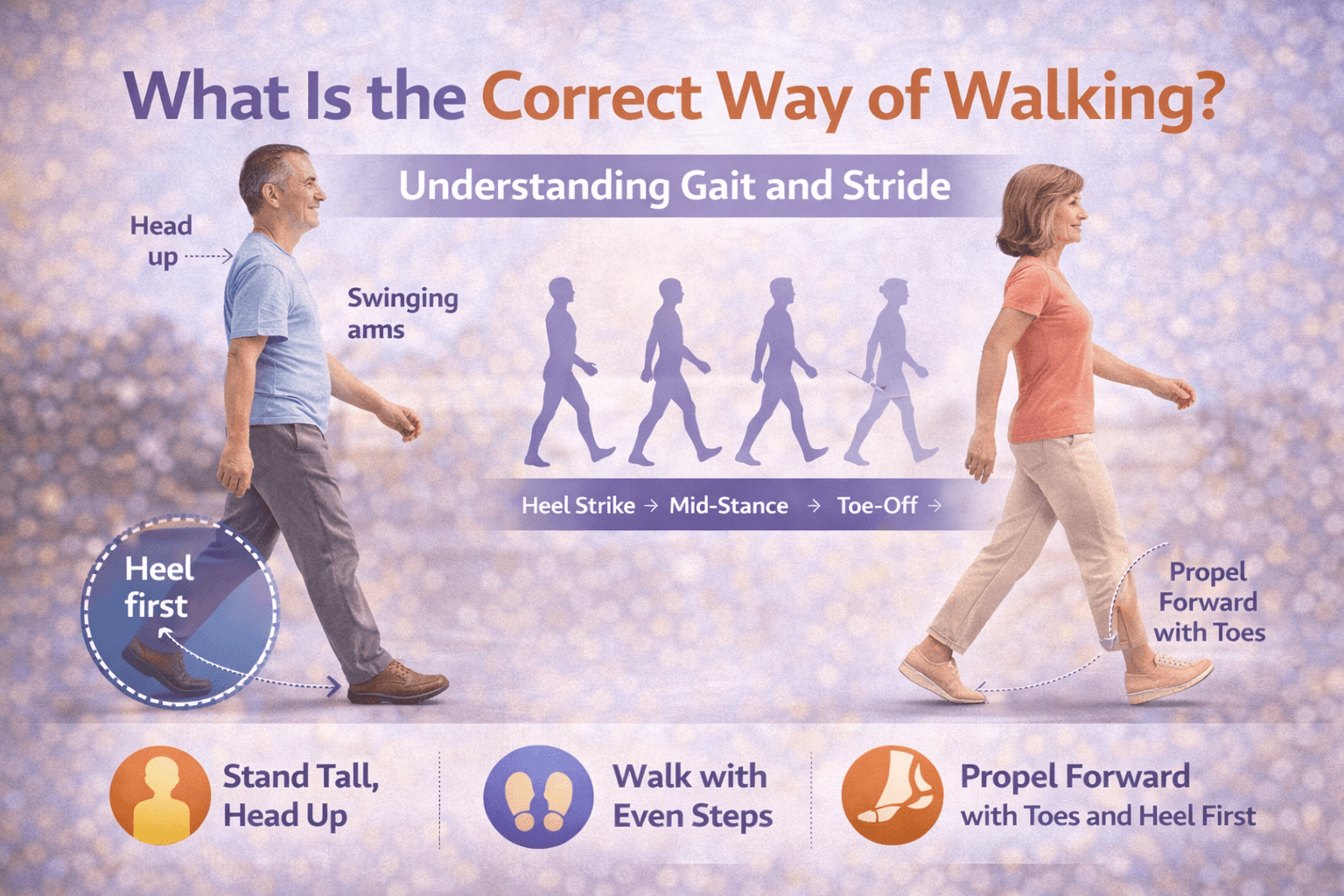
Gait is the overall pattern of how a person walks. It includes posture, rhythm, balance, and how the feet contact the ground from step to step. A healthy gait is smooth, symmetrical, and efficient—meaning both sides of the body move in harmony with minimal effort. A normal walking cycle has repeating phases:
Heel strike
The heel touches the ground first.
Mid-stance
Body weight passes over the foot.
Toe-off
The toes push off to move the body forward.
Swing phase
The leg moves forward to begin the next step.
What Is Stride?
Stride refers to the length and timing of steps. One stride is the distance covered from the heel strike of one foot to the next heel strike of the same foot. A healthy stride is:
Even on both sides
Not too short or rushed
Comfortable, not forced
As people age, stride often becomes shorter and slower—sometimes as a protective response to fear of falling. While a slightly shorter stride can be okay, shuffling or uneven steps can increase fall risk.
The Correct Way to Walk: Step by Step
1) Start with posture.
Stand tall with your head up and eyes looking forward (not at the floor). Relax your shoulders and keep your chest open. Good posture aligns the spine and helps balance.
2) Let the heel lead.
Place the heel down first, then roll through the foot toward the toes. Avoid flat-footed slapping or toe-first steps, which can reduce stability.
3) Keep steps natural and even.
Aim for equal step length on both sides. Don’t rush. A steady rhythm is safer than speed.
4) Allow natural arm swing.
Arms should swing gently opposite to the legs. This counterbalance improves stability and reduces effort.
5) Push off with the toes.
A gentle push from the toes completes each step and propels the body forward efficiently.
6) Breathe and relax.
Tension shortens stride and stiffens movement. Smooth breathing supports a relaxed, balanced gait.
Common Walking Mistakes (and Why They Matter)
Shuffling feet: Increases trip risk. Looking down constantly: Throws off balance. Very wide stance: Signals instability and increases fatigue. Uneven steps: Can strain hips, knees, and back. Rigid arms or no arm swing: Reduces balance. These patterns often appear gradually and can be corrected with awareness and practice.
Why Correct Gait Matters More With Age
With aging, changes in muscle strength, joint flexibility, vision, and reaction time can alter gait. Poor walking mechanics can: Increase joint pain (knees, hips, back) Reduce balance and confidence Raise the risk of falls Increase fatigue The good news is that gait can be improved through posture awareness, balance exercises, strength training, and—when needed—professional guidance.
When to Seek Help
Consider a medical or physiotherapy evaluation if you notice: Frequent tripping or near-falls Marked slowing or shuffling Pain while walking Uneven wear on shoes New changes after illness or injury Early assessment can prevent bigger problems later.
Final Takeaway
The correct way of walking isn’t about perfection—it’s about balance, symmetry, and ease. By understanding gait and stride and making small, mindful adjustments, anyone can walk more safely and comfortably. A good gait protects joints, preserves independence, and—most importantly—helps keep us upright.