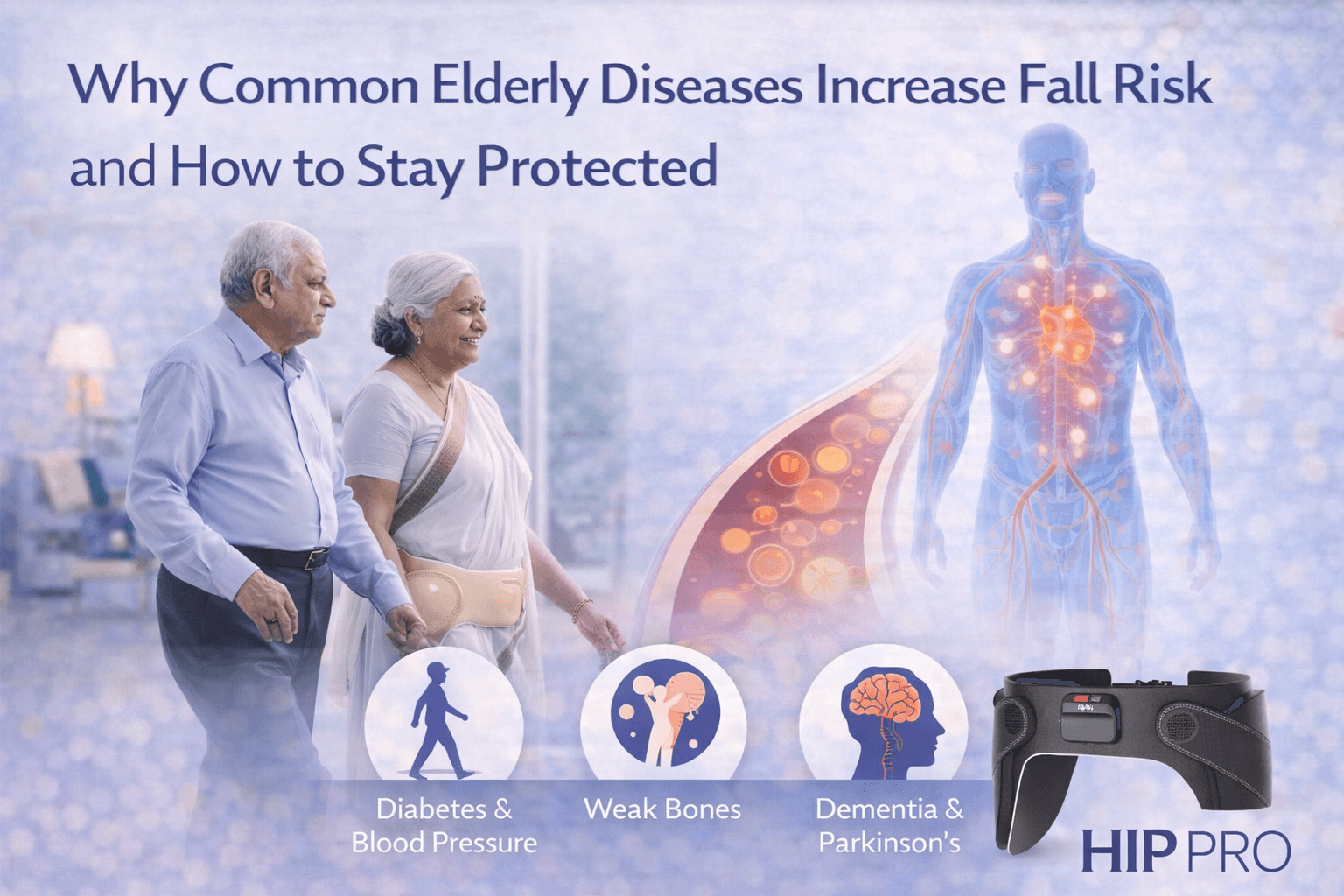
Falls are often seen as “accidents,” but in older adults, they are rarely random. In most cases, a fall is the final outcome of an underlying health condition that has been silently affecting balance, strength, vision, or reaction time. As people cross the age of 60 or 65, chronic diseases become more common—and with them, the risk of falls increases significantly. Understanding this connection is the first step toward prevention. High blood pressure, or hypertension, is extremely common in the elderly and often goes unnoticed because it may not cause obvious symptoms. However, many blood pressure medications can cause dizziness, especially when standing up suddenly. This condition, called postural hypotension, can lead to sudden lightheadedness and loss of balance, making falls more likely, particularly in the bathroom or during nighttime movements. Diabetes is another major contributor to falls in older adults. Long-standing diabetes can damage nerves in the feet and legs, reducing sensation and making it difficult to feel the ground properly. Vision problems caused by diabetic eye disease further increase the risk. When an elderly person cannot clearly see obstacles or feel their footing, even a small uneven surface can result in a dangerous fall. Joint-related conditions like osteoarthritis significantly affect mobility. Pain, stiffness, and reduced joint movement—especially in the knees and hips—cause older adults to walk slowly or with an altered gait. This change in walking pattern reduces stability and increases the chances of tripping. Many seniors avoid movement due to pain, which weakens muscles over time and further worsens balance. Osteoporosis does not directly cause falls, but it makes the consequences far more severe. Weak and brittle bones fracture easily, especially in the hip and spine. A minor slip that would otherwise be harmless can result in a life-altering hip fracture, often leading to long-term dependency, surgery, or even loss of independence. Heart diseases such as coronary artery disease can cause fatigue, shortness of breath, or sudden chest discomfort. These symptoms may lead to weakness or sudden pauses while walking. In some cases, irregular heart rhythms can cause fainting or near-fainting episodes, significantly increasing fall risk. Chronic respiratory conditions like COPD reduce oxygen levels in the body, leading to fatigue and poor muscle endurance. Elderly individuals with breathing difficulty often tire quickly, lose focus, and struggle to maintain balance—especially while climbing stairs or walking longer distances. Stroke is one of the strongest predictors of falls in older adults. After a stroke, many individuals are left with weakness on one side of the body, poor coordination, or difficulty judging distance. Even with rehabilitation, balance may never fully return to normal, making fall prevention a lifelong concern. Neurodegenerative conditions such as dementia and Parkinson’s disease directly affect movement, judgment, and balance. People with dementia may forget to use walking aids or misjudge their surroundings, while Parkinson’s disease causes stiffness, slow movements, and freezing episodes that make sudden falls common. Chronic kidney disease often leads to muscle weakness, fatigue, and electrolyte imbalances, all of which impair coordination and alertness. Combined with multiple medications, this creates a high-risk environment for falls at home. Falls in the elderly are not just physical events—they can mark the beginning of a decline in confidence, independence, and quality of life. Once a senior falls, fear of falling again often leads to reduced activity, muscle weakness, and even higher future risk. This is why fall prevention must go beyond walking carefully. Managing chronic diseases, ensuring safe home environments, and using protective measures such as hip protection can dramatically reduce the severity of injuries when falls do occur. Protecting the hip, in particular, can mean the difference between a minor incident and a life-changing fracture. A fall may happen in seconds, but its impact can last a lifetime. Prevention, awareness, and protection are the real safeguards of healthy aging. Falls cannot always be prevented, especially when age and chronic illnesses affect balance, strength, and reaction time. What can be controlled is the damage a fall causes. Among all fall-related injuries, hip fractures are the most devastating—often leading to surgery, long recovery periods, loss of independence, and heavy emotional and financial burden on families. This is where preventive protection plays a quiet but powerful role. HIP PRO is designed to absorb and disperse impact during a fall, helping protect the hip—the most vulnerable bone in elderly individuals. It is not a replacement for medical care or mobility support, but an added layer of safety for everyday life. For seniors living independently, parents at home alone during the day, or elders with conditions that increase fall risk, HIP PRO offers peace of mind—without restricting movement or comfort. Sometimes, prevention isn’t about stopping the fall, but about softening its consequences. Because aging should be lived with confidence, not fear.