

Falls are one of the most common and dangerous problems faced by elderly people. What many families dismiss as a “small slip” is often a warning sign of deeper health and safety issues. Understanding why elderly people fall so often is critical—because most falls are predictable and preventable. In India, falls are a leading cause of hip fractures, long hospital stays, and permanent loss of independence among seniors.
Why falls in elderly are rarely accidents
A fall usually happens when multiple risk factors come together—not because of bad luck. Ageing affects balance, muscles, vision, reflexes, and bone strength. Add chronic diseases or unsafe home environments, and the risk multiplies. The truth is: Falls are symptoms, not events.
1. Balance and gait problems
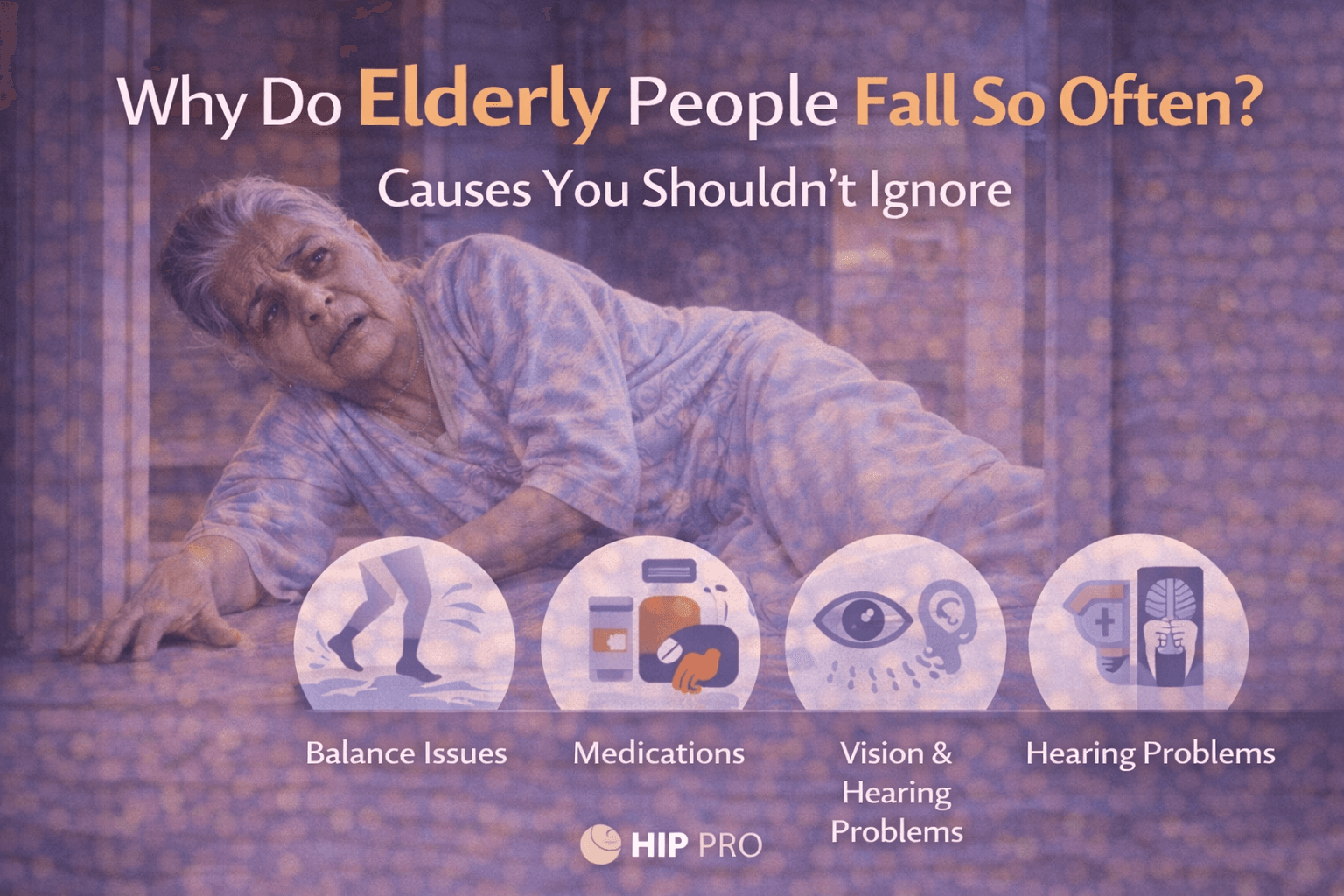
As people age, balance naturally declines due to: Muscle weakness Slower reflexes Reduced coordination Elderly individuals may shuffle while walking, take shorter steps, or feel unsteady—making falls more likely even on flat surfaces.
2. Muscle weakness and inactivity
Lack of regular movement leads to muscle loss (sarcopenia).
Why this matters:
Weak legs struggle to support body weight Difficulty getting up from chairs or beds Poor recovery when balance is disturbed
Inactivity creates a dangerous cycle: fear of falling → less movement → weaker muscles → higher fall risk.
3. Chronic diseases that increase fall risk
Several common conditions directly contribute to falls:
Arthritis
Pain and stiff joints affect walking
Diabetes
Nerve damage reduces foot sensation
Parkinson’s disease
Causes shuffling and freezing
Heart disease
Fatigue and dizziness
These conditions often coexist, compounding the risk.
4. Poor vision and hearing
Eyes and ears play a major role in balance.
Problems include:
Difficulty judging depth Missing steps or obstacles Trouble navigating low-light areas
Night-time trips to the bathroom are especially risky.
5. Medication side effects
Many elderly people take multiple medications. Some drugs can cause: Dizziness Drowsiness Sudden drops in blood pressure Confusion The combined effect of medications is a major but often overlooked fall trigger.
6. Unsafe home environment
Homes that haven’t been adapted for ageing increase fall risk: Slippery bathroom floors Poor lighting Loose rugs and wires Uneven steps Most elderly falls happen inside the home, not outdoors.
7. Low bone strength (osteoporosis)
Osteoporosis doesn’t cause falls—but it makes falls far more dangerous. A minor slip can result in: Hip fracture Spine fracture Long-term disability This is why preventing injury is just as important as preventing falls.
8. Cognitive decline and confusion
Elderly individuals with memory or attention issues may: Forget to use support Misjudge distances Make unsafe movements This significantly raises the chance of repeated falls.
The hidden danger: hip fractures after falls
Hip fractures are among the most serious consequences of elderly falls. Recovery is slow, painful, and often incomplete. Many seniors never regain their previous level of mobility or independence. That’s why fall prevention must go beyond awareness.
Elderly fall prevention checklist (practical & actionable)
Health & mobility
Regular vision and hearing checks Review medications with a doctor Encourage light daily movement Manage chronic conditions actively
Home safety
Install grab bars in bathrooms Ensure adequate night lighting Remove loose rugs and clutter Use non-slip mats
Personal safety
Wear supportive footwear Avoid rushing, especially at night Use walking aids when needed
Why protection matters even when prevention fails
Even with the best precautions, falls can still happen. That’s where injury prevention becomes crucial. For elderly individuals with: Balance problems Previous falls Osteoporosis Neurological conditions HIP PRO(https://www.ripplehealthcare.in/Buynow) provides an added layer of safety by: Absorbing impact during unexpected falls Protecting the hip—one of the most vulnerable areas Allowing normal movement without restriction It works quietly in the background, helping reduce the severity of injuries when falls occur.
Final thoughts
If you’re wondering why elderly people fall so often, the answer lies in a combination of health changes, environment, and ageing itself. The good news is that falls are not inevitable. With awareness, simple home changes, and protective solutions like HIP PRO, families can significantly reduce both fall risk and injury severity—helping elderly loved ones live safer, more confident lives. Prevention starts today, not after the first fall.