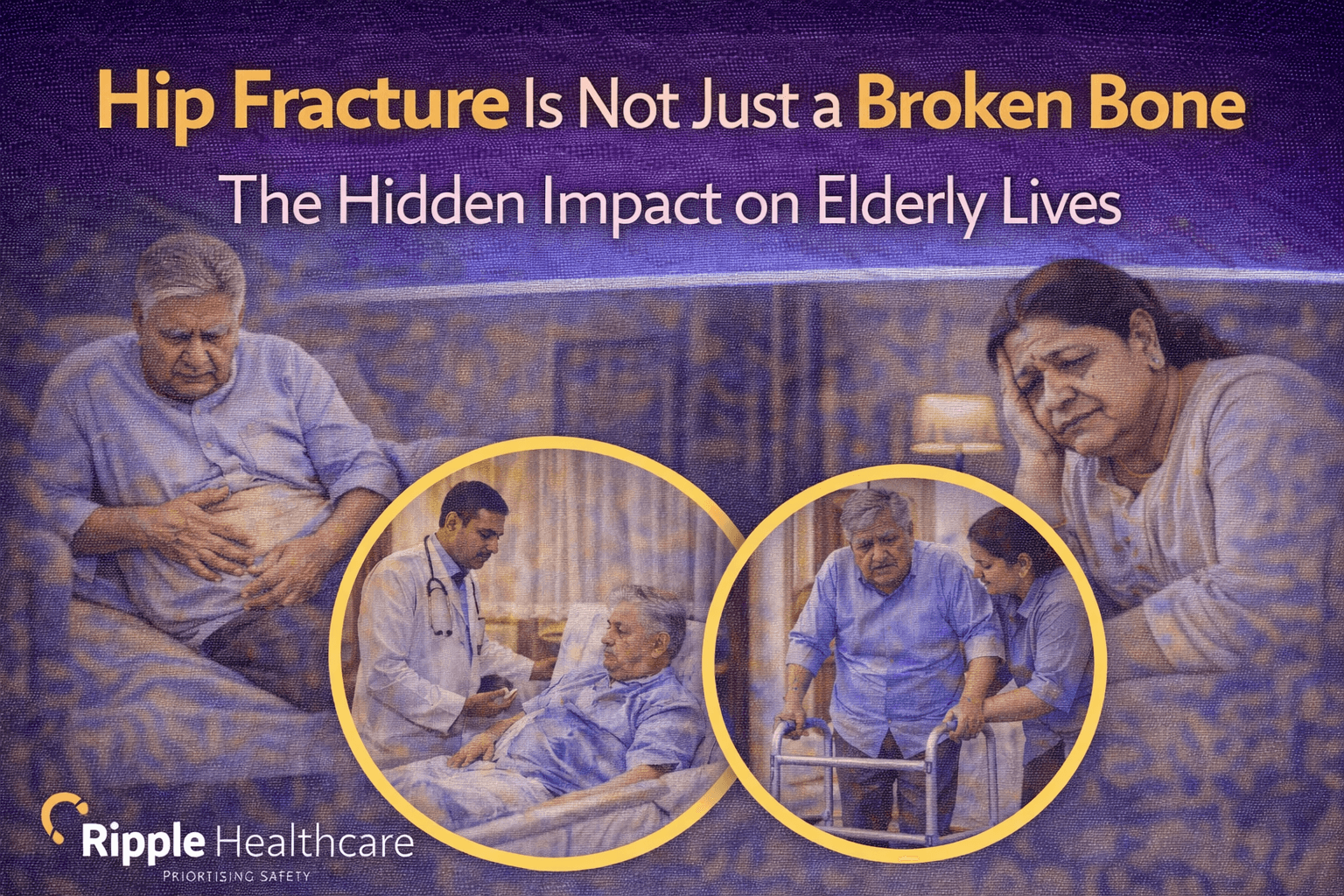


A hip fracture is not just a broken bone—it is often a life-changing event for elderly individuals. This in-depth pillar article explains the physical, emotional, social, and financial consequences of hip fractures and how Ripple Healthcare focuses on prevention and protection to reduce life-altering outcomes.
Introduction: A Single Moment That Changes Everything
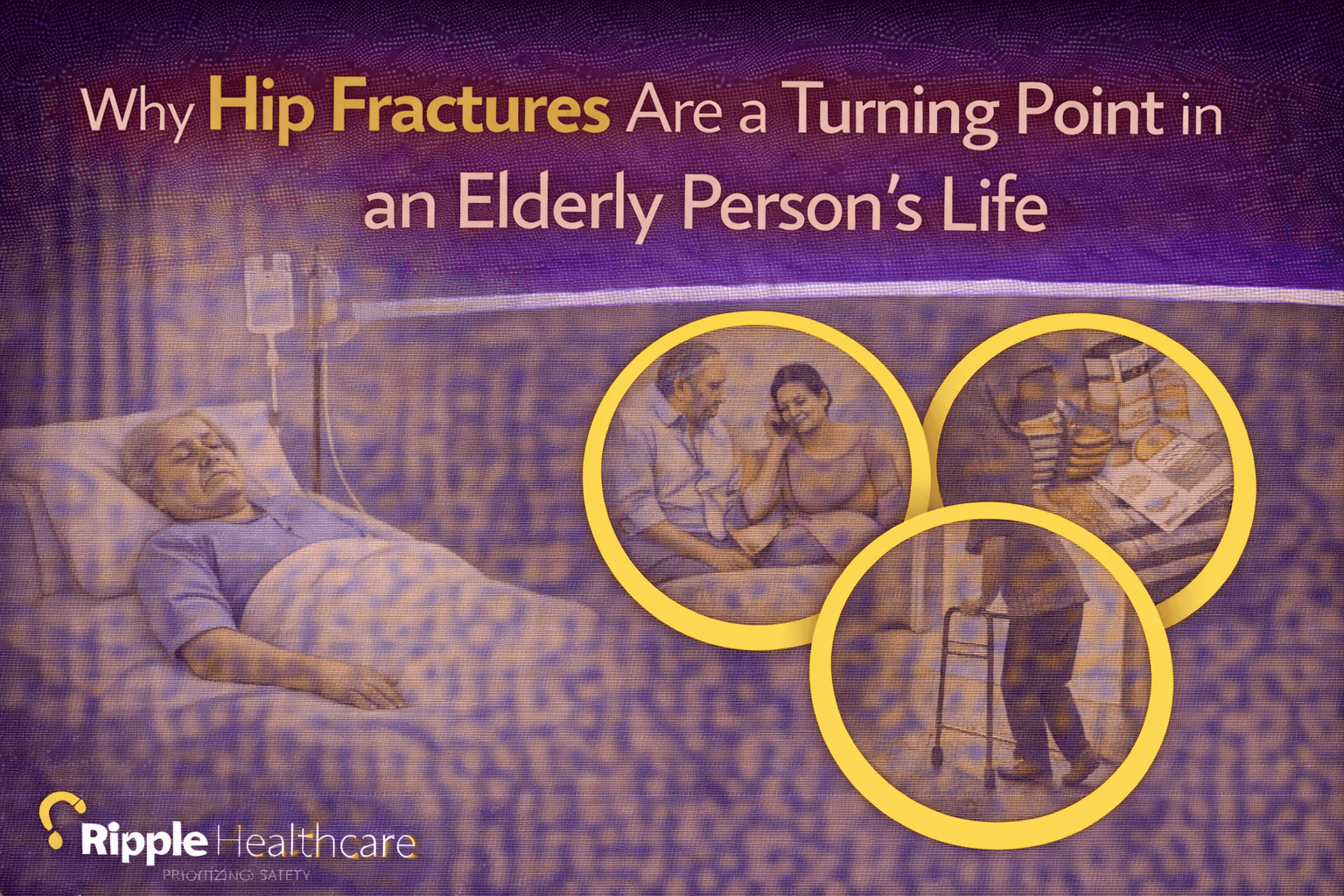
A hip fracture is often described in simple medical terms—a break in the upper part of the thigh bone. But in elderly individuals, it is rarely just a fracture. It is a turning point. One fall can transform an independent, active senior into someone dependent on caregivers overnight. The physical injury is immediate, but the ripple effects—loss of confidence, reduced mobility, emotional distress, and financial strain—can last for years. Families often underestimate the long-term consequences. They focus on surgery and discharge dates, assuming recovery will follow naturally. In reality, hip fractures often mark the beginning of a new and more fragile phase of life.
Why Hip Fractures Are So Common After 65
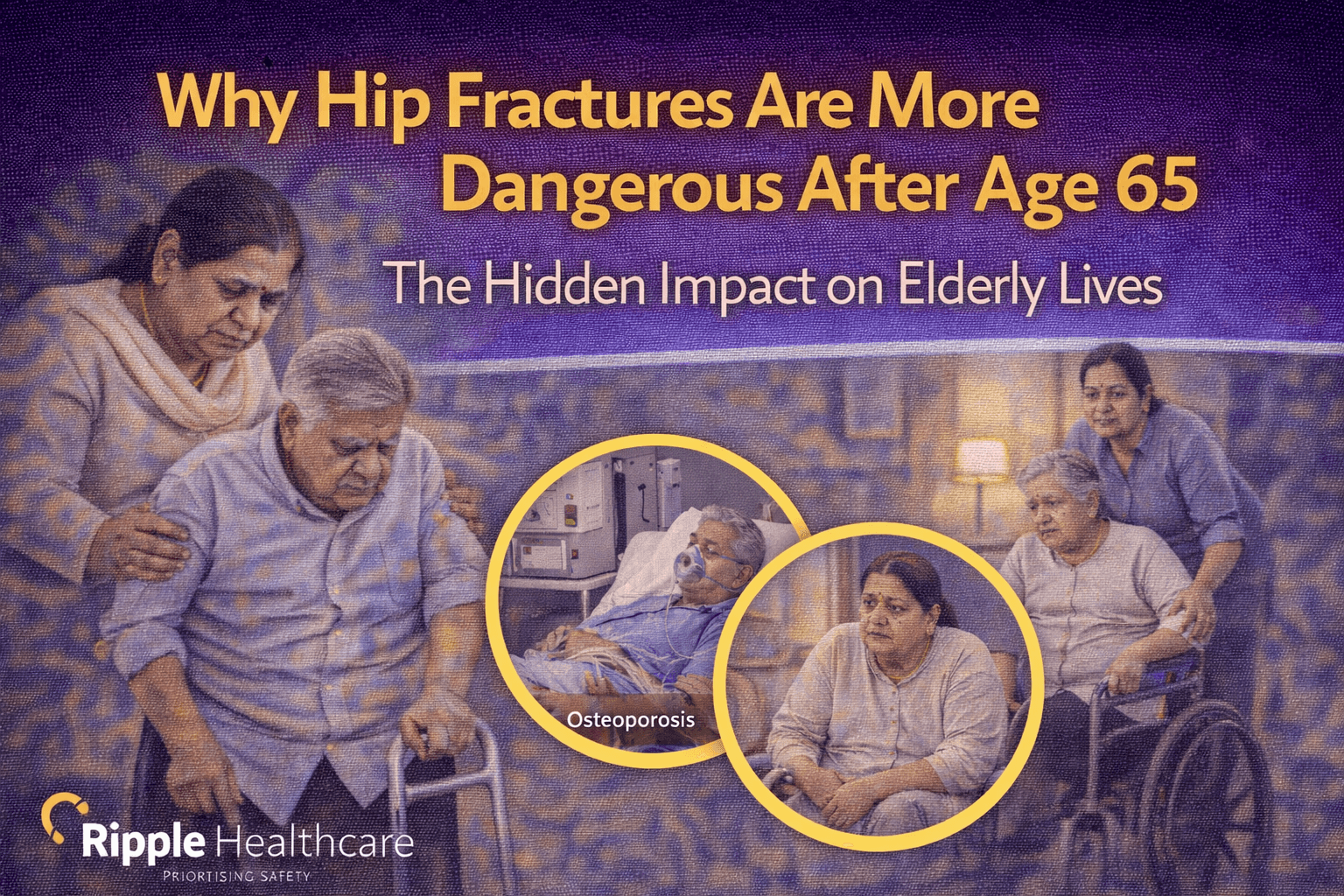
After the age of 65, several biological changes increase vulnerability. Bone density decreases gradually due to osteoporosis, making bones more fragile. At the same time, muscle mass declines—a condition known as sarcopenia—which reduces stability and shock absorption. Balance also weakens due to inner ear changes, slower nerve responses, and reduced coordination. Even a small slip can result in a sideways fall, which directs full body weight onto the hip. This combination of weak bones, weaker muscles, and slower reflexes creates the perfect environment for hip fractures to occur.
The Immediate Physical Trauma
When a hip fracture happens, pain is severe and mobility is instantly compromised. The person often cannot stand or bear weight. Emergency hospitalization is usually required. For elderly individuals, this sudden immobility can be deeply frightening. The body enters stress mode, and complications begin almost immediately—especially if surgery is delayed. Unlike minor fractures in younger adults, hip fractures in seniors rarely heal without surgical intervention.
Surgery and Its Risks in Older Adults
Hip fracture surgery is often necessary within 24–48 hours. While surgery can stabilize the bone, it carries significant risks for elderly patients. Anesthesia may cause confusion or delirium. Pre-existing conditions like heart disease, diabetes, or respiratory problems increase complication risk. Even successful surgery does not guarantee full functional recovery.
Extended Hospitalization and Muscle Loss
During hospital stays, elderly patients are often confined to beds. Muscle deterioration begins rapidly—sometimes within days. Loss of muscle strength further reduces stability. Even after the bone heals, the body may not regain its former strength. This physical decline often becomes permanent.
The Psychological Turning Point
One of the most overlooked effects of hip fractures is psychological trauma. Seniors who once walked confidently may now fear every step. Fear of falling again can be more disabling than the fracture itself. Many elderly individuals reduce activity drastically, accelerating weakness and dependency. This psychological shift is often the true turning point.
Loss of Independence
After a hip fracture, simple tasks—bathing, dressing, using stairs—may require assistance. For someone who valued independence, this shift can feel devastating. Some seniors never return to living independently. Long-term caregiving or assisted living may become necessary. This change affects not only the individual but the entire family dynamic.
Increased Risk of Future Fractures
A previous hip fracture significantly increases the likelihood of another fracture. Bone weakness and balance problems do not disappear after surgery. Without preventive measures, the cycle continues. This is why the first fracture is often described as a warning sign.
The Financial Burden on Families
Hip fracture treatment involves surgery, hospital stays, physiotherapy, medications, and home modifications. Beyond medical costs, families may face lost income due to caregiving responsibilities. The emotional cost—stress, worry, exhaustion—is equally significant.
Why Recovery Is Often Incomplete
Studies show that many elderly individuals do not regain pre-fracture mobility levels. Reduced activity leads to further muscle decline. Confidence remains low. Balance remains fragile. This incomplete recovery explains why hip fractures are true turning points.
Why Prevention Must Be Prioritized
Once a hip fracture occurs, damage extends far beyond the bone. Preventing severe injury is far more effective than trying to restore lost independence. This requires awareness, home safety, balance support, and impact protection.
Ripple Healthcare’s Prevention-First Philosophy
Ripple Healthcare recognizes that elderly safety must focus on preventing life-altering injuries—not just reacting after they occur. By combining awareness, education, and protective innovation, Ripple Healthcare aims to reduce the severity of hip injuries during falls.
How the HipPro Belt Reduces Impact
The HipPro Belt is designed to absorb and disperse the force of impact during sideways falls—the most common cause of hip fractures. By reducing the force transmitted to fragile bones, it adds a protective layer during unexpected accidents. This protection can make the difference between a bruise and a fracture.
Encouraging Confident Movement
When seniors feel protected, they are more likely to remain active. Movement maintains muscle strength and balance. Confidence is critical for preventing the fear–weakness cycle that follows injury.
A Turning Point Can Be Prevented
A hip fracture does not have to define an elderly person’s future. With proactive safety strategies and injury-reducing solutions from Ripple Healthcare, families can change outcomes before accidents become life-altering events.
Learn More About Ripple Healthcare
To learn more about elderly fall prevention and hip protection, visit https://www.ripplehealthcare.in. For inquiries, contact https://www.ripplehealthcare.in/contact. To explore or purchase the HipPro Belt, visit https://www.ripplehealthcare.in/Buynow.