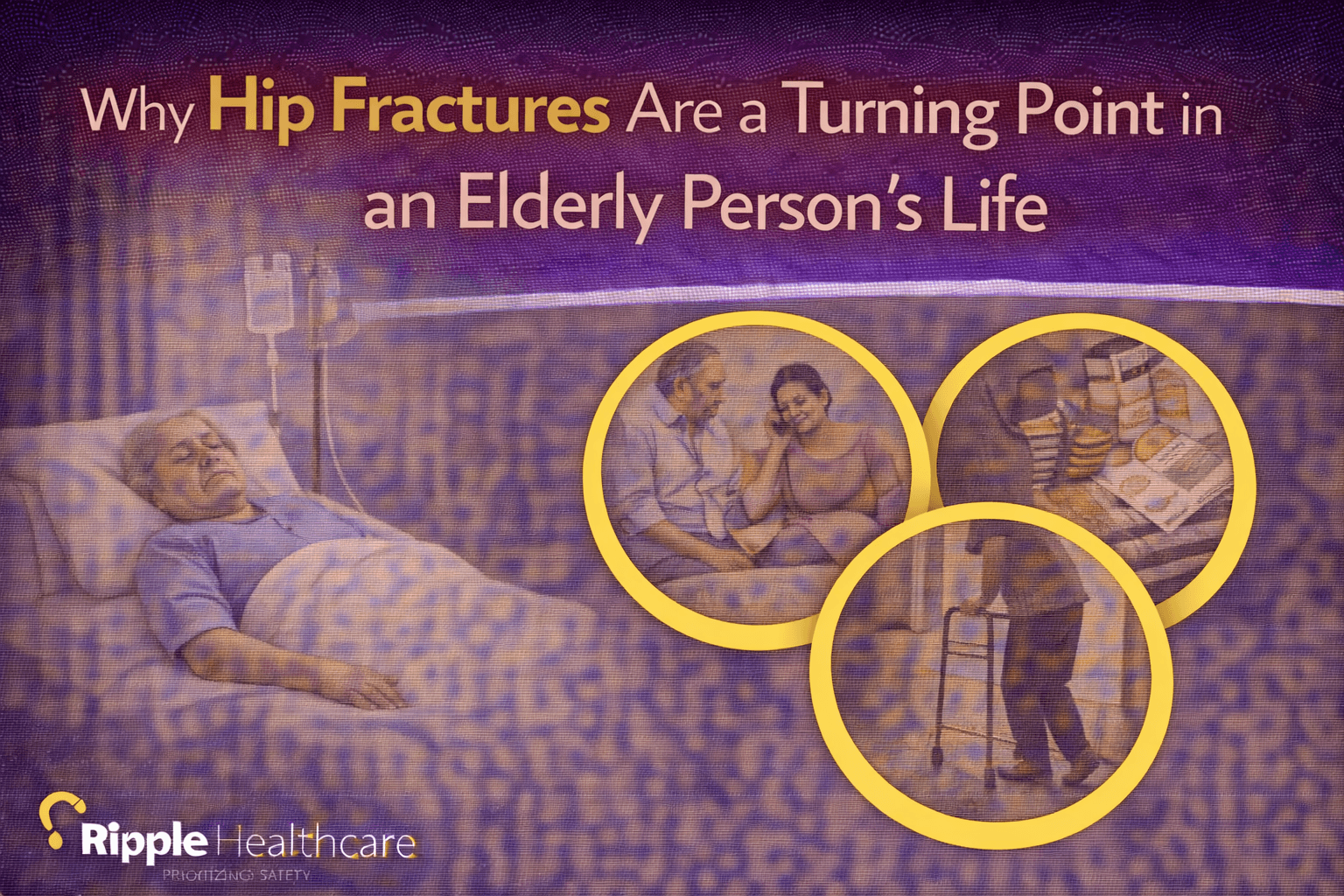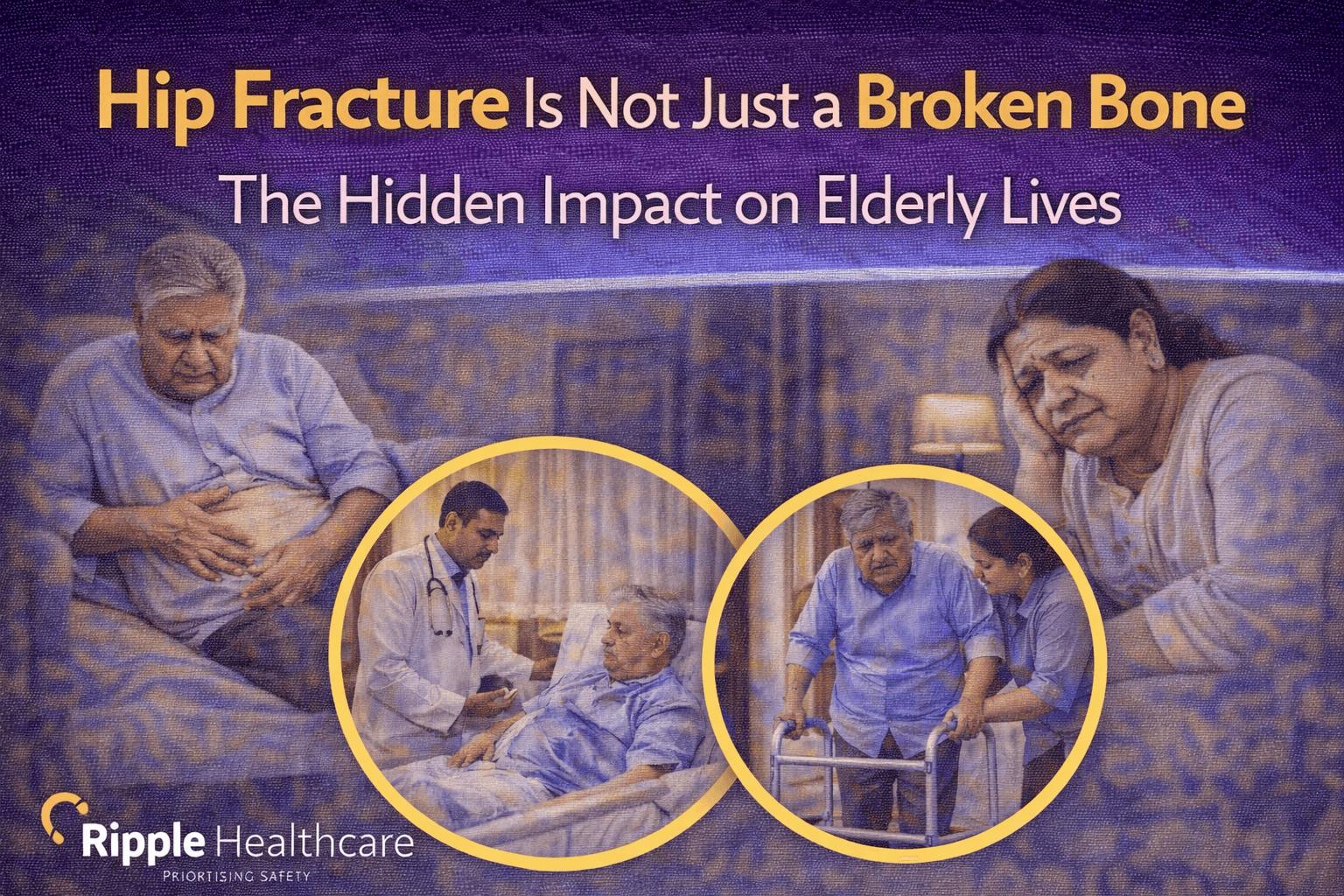


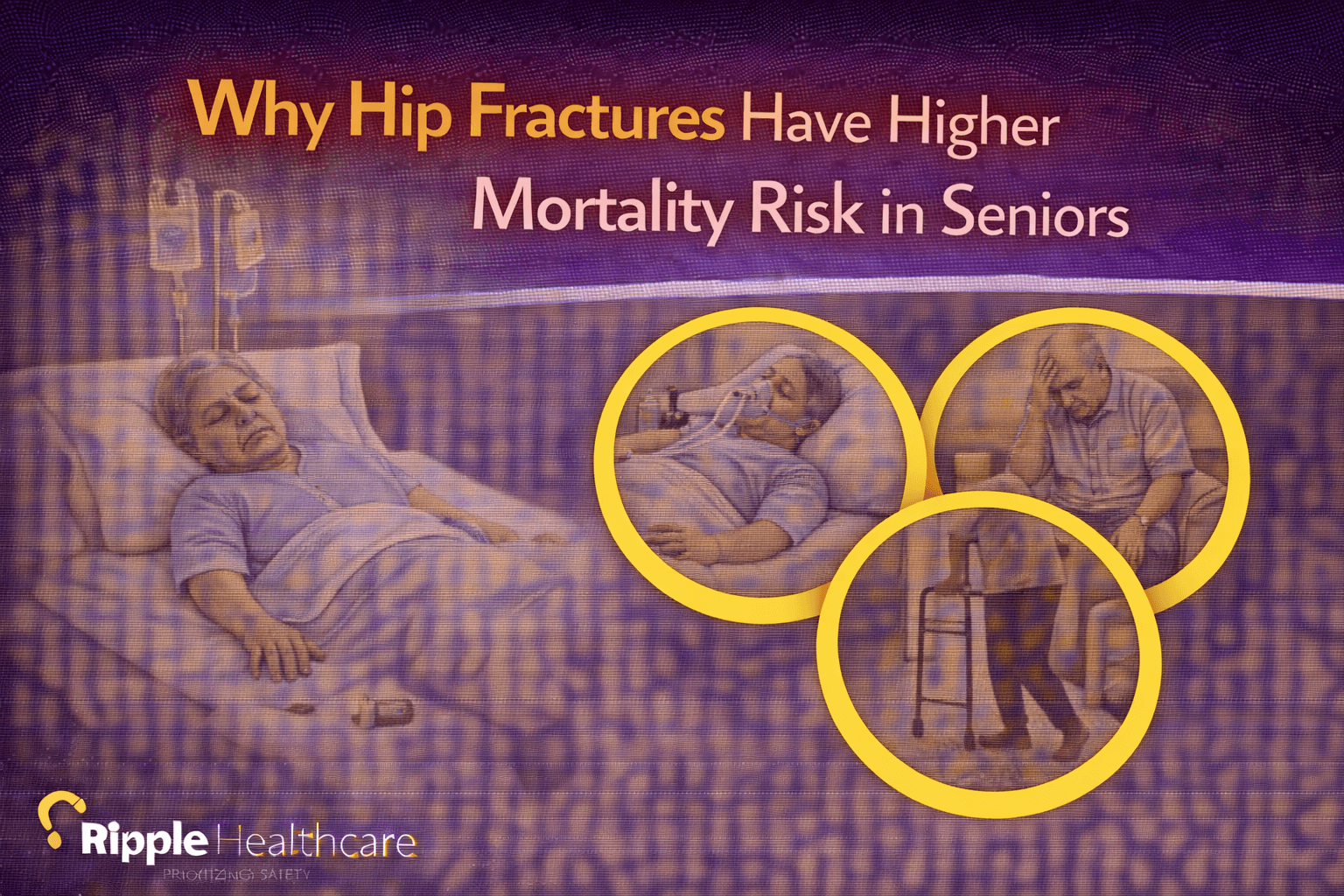
Hip fractures in seniors are not just orthopedic injuries—they are serious medical events linked to increased mortality. This flagship article explains the biological, surgical, emotional, and systemic reasons behind this risk and how prevention through Ripple Healthcare can reduce life-altering consequences.
Introduction: More Than a Broken Bone
A hip fracture in a senior is not simply a bone injury. It is often a life-defining medical event. Studies consistently show that elderly individuals who experience hip fractures face significantly increased mortality risk within the first year. The reason is not the bone itself—it is the cascade of complications that follow.
The Immediate Trauma Response
When a hip fracture occurs, the body undergoes intense physiological stress. Pain, blood loss, and shock strain the cardiovascular system. In elderly patients with pre-existing heart disease or hypertension, this sudden stress can destabilize overall health.
Surgical Risk in Older Adults
Most hip fractures require surgical repair or replacement. Surgery in elderly individuals carries higher risks due to reduced organ reserve, slower healing capacity, and multiple chronic conditions. Anesthesia alone may trigger confusion, delirium, or cardiac complications.
Immobility: The Hidden Danger
After a hip fracture, prolonged immobility is common. Bed rest increases risk of pneumonia, blood clots (deep vein thrombosis), and pulmonary embolism. These complications significantly raise mortality risk.
Muscle Loss and Physical Decline
Even short periods of inactivity cause rapid muscle deterioration in seniors. This weakens balance, reduces lung efficiency, and delays rehabilitation.
Infections During Hospitalization
Hospital-acquired infections such as pneumonia and urinary tract infections are common during recovery. Elderly immune systems respond less effectively, increasing severity.
The Impact on Chronic Conditions
Diabetes, heart disease, kidney dysfunction, and respiratory disorders often worsen after major injury. The stress of surgery and immobility exacerbates these conditions.
Post-Surgical Delirium
Confusion and cognitive decline after surgery are common in seniors. Delirium increases risk of further complications and delays recovery.
Loss of Independence
Many seniors never regain pre-fracture mobility. Loss of independence affects mental health and long-term survival.
Depression After Hip Fracture
Psychological trauma following a fracture can lead to depression, reducing participation in rehabilitation and slowing recovery.
Increased Risk of Repeat Falls
Even after recovery, balance remains compromised. A second fall may occur, compounding injury and mortality risk.
The One-Year Mortality Window
The first year after a hip fracture is statistically the most dangerous. Complications accumulate, and resilience decreases.
Why Prevention Is Critical
Preventing the fracture prevents the entire cascade of medical decline. Early fall risk management is essential.
Ripple Healthcare’s Prevention-First Mission
Ripple Healthcare focuses on reducing injury severity before a fracture occurs. Awareness and proactive protection are central to preserving life and independence.
How the HipPro Belt Reduces Impact Force
The HipPro Belt is designed to absorb and disperse force during sideways falls—the primary cause of hip fractures. Reducing impact may lower fracture severity.
Preserving Life Through Protection
By minimizing fracture risk, preventive solutions can reduce hospitalization, surgery, and complications.
Final Takeaway
Hip fractures are serious medical events with systemic consequences. Prevention and impact protection through solutions like those offered by Ripple Healthcare can play a vital role in protecting elderly lives.
Learn More About Ripple Healthcare
Visit https://www.ripplehealthcare.in Contact https://www.ripplehealthcare.in/contact Buy Now https://www.ripplehealthcare.in/Buynow