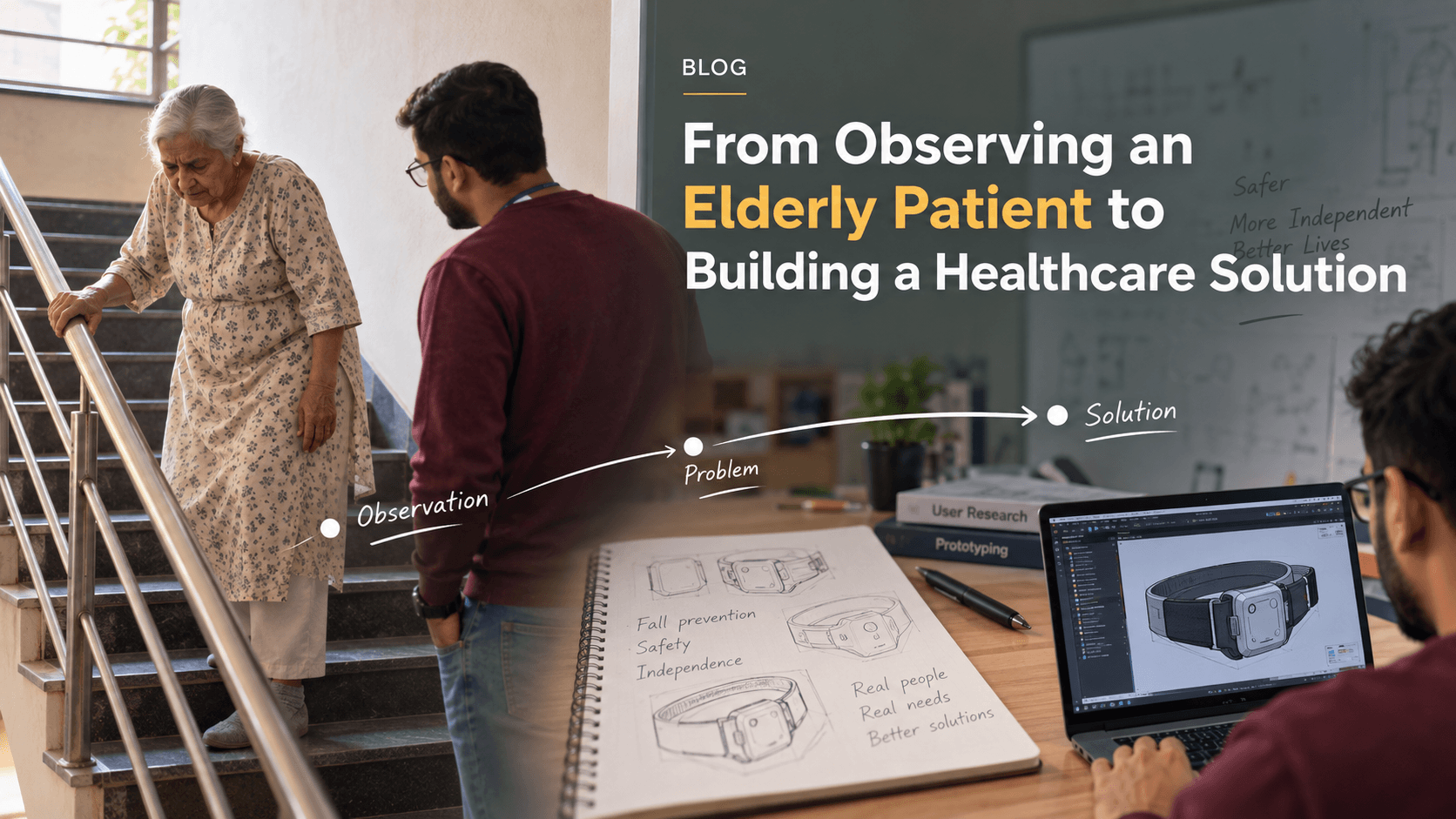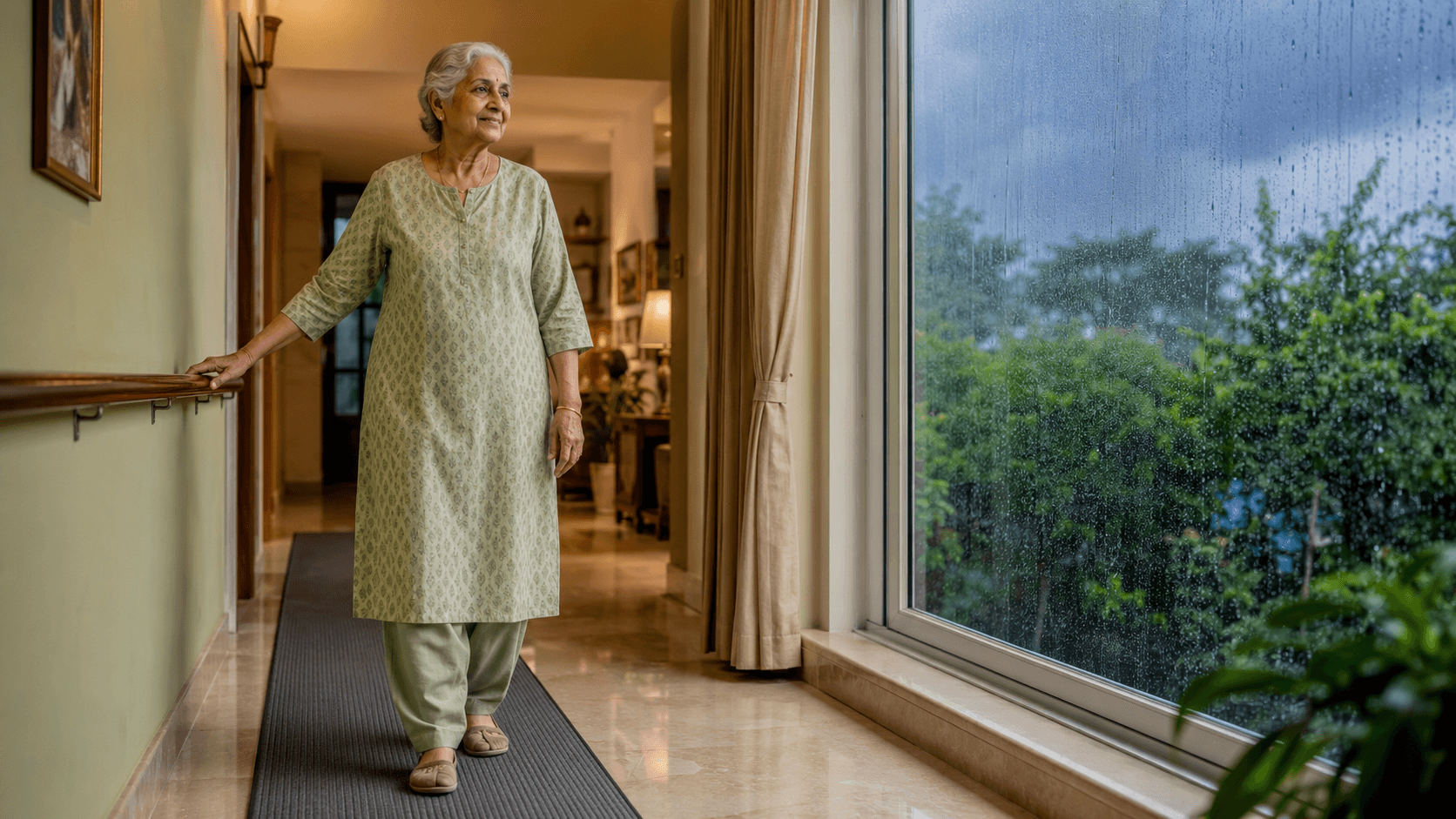


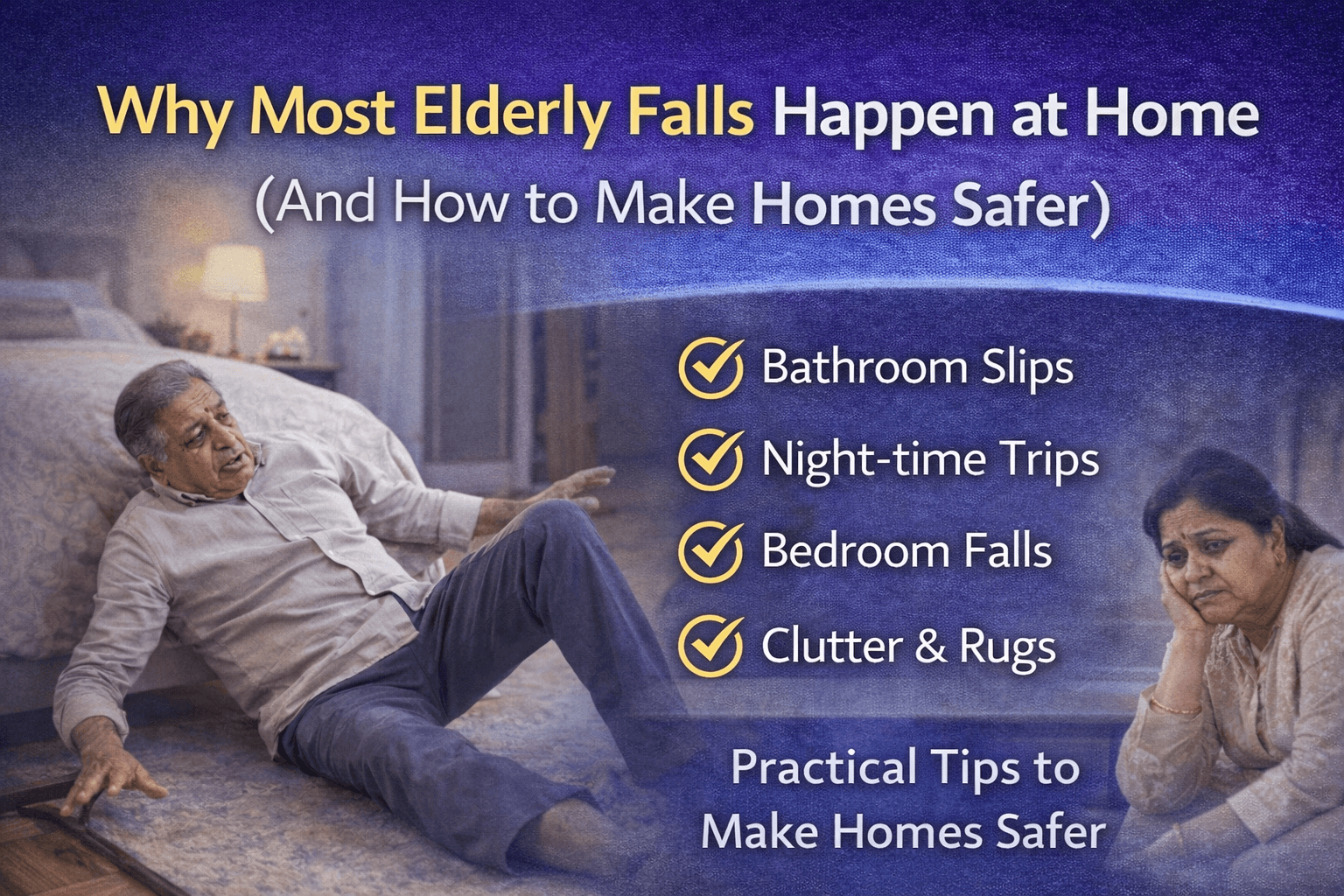
Most elderly falls do not happen outdoors or during risky activities—they happen at home, during routine daily movements. This blog explains why homes pose a high fall risk for seniors, the most dangerous areas inside the house, and practical steps families can take to make homes safer and reduce fall-related injuries.
Why Home Is the Most Common Place for Elderly Falls
Contrary to popular belief, most falls among older adults happen at home. Familiar environments often create a false sense of safety, while age-related balance, vision, and strength issues turn everyday movements into potential risks.
Common Reasons Elderly Falls Occur at Home
Several factors make home environments risky for seniors:
Overconfidence in familiar surroundings
Seniors often move without caution at home because they feel comfortable and familiar with the space.
Age-related balance and mobility decline
Reduced balance, muscle weakness, and slower reflexes increase fall risk during simple activities.
Lack of safety modifications
Many homes are not designed with elderly safety in mind.
Poor lighting and night-time movement
Dim lighting and sudden movement at night significantly increase fall risk.
The Most Dangerous Areas in the Home
Certain areas inside the home are responsible for a large percentage of elderly falls:
Bathroom
Wet floors, slippery tiles, and lack of grab bars make bathrooms one of the most dangerous spaces.
Bedroom
Getting out of bed, walking in the dark, or tripping over rugs often leads to falls.
Living room
Loose carpets, clutter, and low furniture can easily cause trips and slips.
Stairs
Poor handrails, uneven steps, and poor lighting make stairs high-risk areas.
How a Simple Fall at Home Can Change Everything
A fall at home can result in serious consequences for the elderly:
Hip fractures
Falls at home are one of the leading causes of hip fractures in older adults.
Loss of independence
Many seniors struggle to return to daily activities after a fall.
Fear of falling again
Fear leads to reduced movement, worsening strength and balance.
Practical Steps to Make Homes Safer for the Elderly
Small changes at home can significantly reduce fall risk:
Improve lighting
Ensure adequate lighting in hallways, bathrooms, and bedrooms, especially at night.
Remove tripping hazards
Secure loose rugs, remove clutter, and keep walkways clear.
Install grab bars and handrails
Grab bars in bathrooms and sturdy handrails on stairs provide essential support.
Encourage safe footwear
Non-slip, well-fitting footwear improves stability indoors.
Why Home Safety Alone Is Not Always Enough
Even with the best home modifications, falls can still occur due to sudden loss of balance or medical conditions. This is why combining home safety with injury-prevention strategies is essential for elderly care.
How Ripple Healthcare Helps Reduce Fall-Related Injuries
Ripple Healthcare focuses on preventive elderly care by reducing the severity of injuries when falls occur. Solutions like the HipPro Belt are designed to absorb impact during falls and help protect elderly individuals from serious hip injuries—especially during common home falls.
Learn More or Take Action
To learn more about Ripple Healthcare and its approach to elderly fall prevention, visit https://www.ripplehealthcare.in. If you would like guidance or have questions, contact the team at https://www.ripplehealthcare.in/contact. To explore or purchase protective solutions like the HipPro Belt, visit https://www.ripplehealthcare.in/Buynow.
Final Thoughts
Most elderly falls happen at home—but they are not inevitable. With safer home environments, awareness, and preventive solutions from Ripple Healthcare, seniors can continue living confidently, safely, and independently in their own homes.