

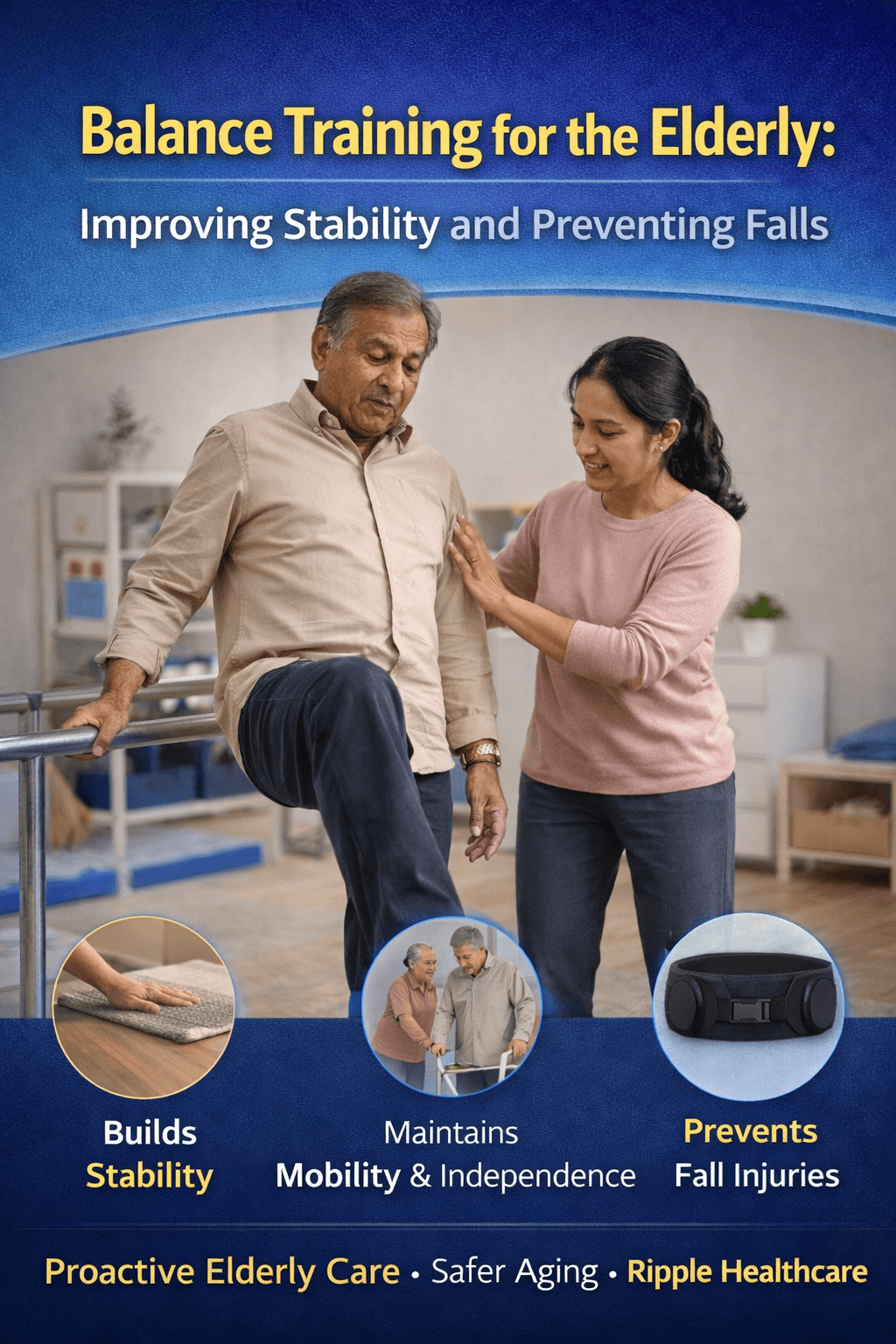
Balance training plays a crucial role in reducing fall risk among older adults. As balance naturally declines with age, targeted exercises and early assessment can significantly improve stability, confidence, and independence. This blog explains why balance training matters, how it helps prevent falls, and how Ripple Healthcare supports safer aging through balance-focused solutions.
What Is Balance Training?
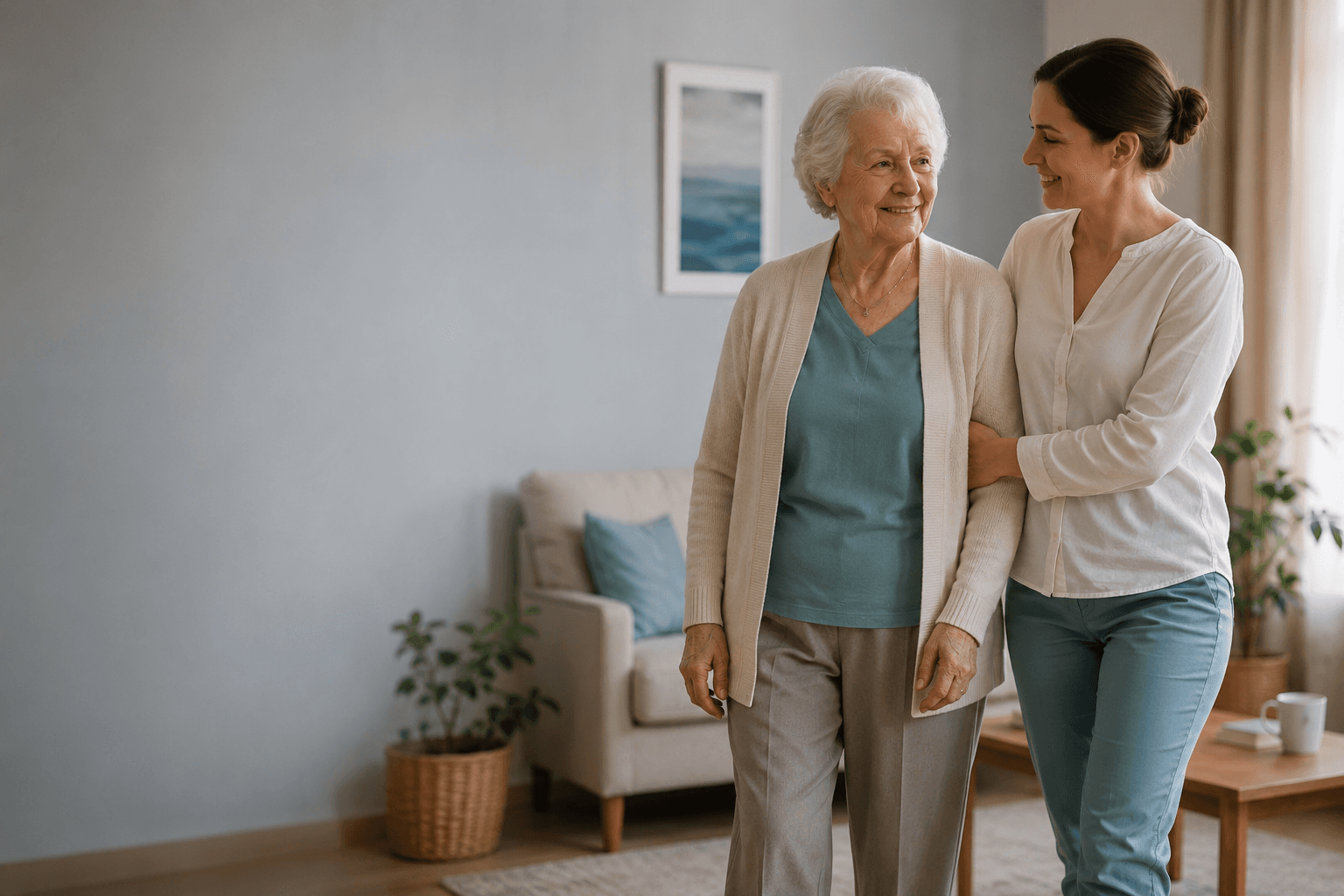
Balance training involves exercises and activities designed to improve stability, coordination, and control of body movements. For older adults, balance training helps maintain posture, prevent falls, and support safe mobility during daily activities.
Why Balance Declines With Age
Several age-related changes contribute to reduced balance in older adults:
Muscle weakness
Loss of strength in the legs and core muscles reduces stability.
Slower reflexes
Delayed response time makes it harder to recover from slips or trips.
Joint stiffness
Reduced flexibility affects smooth and controlled movements.
Vision and inner ear changes
These systems play a major role in maintaining balance and spatial awareness.
How Poor Balance Increases Fall Risk
Impaired balance is one of the strongest predictors of falls in the elderly:
Difficulty standing or walking
Unsteady gait increases the chance of tripping.
Problems during transitions
Standing up from a chair or turning suddenly often leads to loss of balance.
Reduced confidence
Fear of falling causes seniors to move less, worsening balance further.
Benefits of Balance Training for Older Adults
Regular balance training provides both physical and emotional benefits:
Reduced fall risk
Improved stability significantly lowers the likelihood of falls.
Better mobility and independence
Seniors can perform daily tasks with greater confidence.
Improved posture and coordination
Balance exercises enhance body control and movement efficiency.
Increased confidence
Confidence in movement reduces fear-driven inactivity.
Common Balance Training Exercises
Simple and safe balance exercises can be performed under guidance:
Sit-to-stand exercises
Improves leg strength and transition stability.
Single-leg standing
Enhances core strength and balance control.
Heel-to-toe walking
Improves coordination and walking stability.
Tandem and semi-tandem stance
Challenges balance safely in a controlled manner.
How Ripple Healthcare Supports Balance and Fall Prevention
Ripple Healthcare focuses on proactive elderly care by combining balance assessment, training, and injury prevention:
Balance assessment and monitoring
Ripple Healthcare emphasizes early identification of balance issues to prevent falls before they happen.
Injury prevention solutions
Protective solutions such as the HipPro Belt help reduce the severity of injuries if a fall occurs.
Supporting safe and confident movement
By addressing both balance and impact protection, Ripple Healthcare enables seniors to stay active with confidence.
Learn More About Ripple Healthcare
To know more about how Ripple Healthcare is improving elderly safety, balance, and fall prevention, visit https://ripplehealthcare.in.
Final Thoughts
Balance training is not optional—it is essential for healthy aging. With regular balance exercises, early assessment, and supportive solutions from Ripple Healthcare, older adults can significantly reduce fall risk and maintain independence and quality of life.