

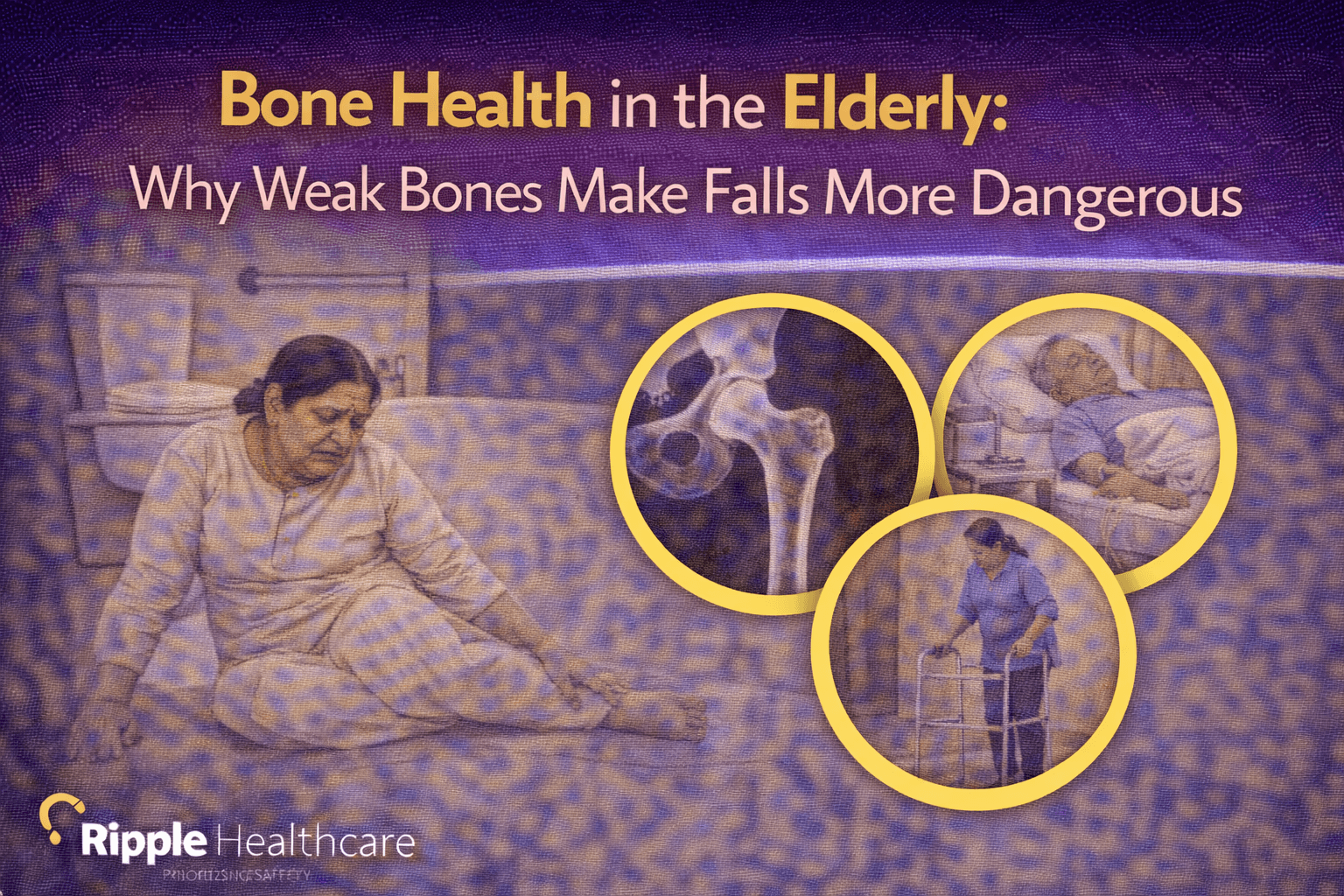
Weak bones dramatically increase injury severity after falls in the elderly. This in-depth guide explains how bone health declines with age, why fractures happen so easily, and how Ripple Healthcare focuses on prevention to protect fragile hips.
Introduction: When a Simple Fall Becomes a Serious Injury
In elderly individuals, falls are not dangerous only because they happen—but because bones are often too weak to withstand even minor impact. Declining bone health silently turns everyday falls into life-changing injuries.
How Bone Density Changes With Age
As people age, bones gradually lose minerals like calcium, becoming thinner and more fragile. This process accelerates after 60, especially in women, making hips and thighs highly vulnerable.
Understanding Osteoporosis in Simple Terms
Osteoporosis weakens the internal structure of bones. From the outside bones look normal, but internally they become brittle and prone to breaking during low-impact falls.
Why the Hip Is the Most Vulnerable Bone
The hip absorbs most of the impact during sideways falls. Combined with bone weakness, this makes hip fractures one of the most common and severe injuries in the elderly.
Why Bone Weakness Often Goes Undetected
Bone loss is painless and gradual. Many elderly individuals do not realize their bones are weak until a fracture occurs.
The Relationship Between Bone Health and Falls
Falls cause fractures, but weak bones turn minor falls into major injuries. Improving safety must address both fall risk and bone fragility.
Why Diet Alone Is Not Enough
While calcium and vitamin D are important, they cannot instantly restore bone strength in elderly individuals.
Delayed Healing in Fragile Bones
Weak bones heal slowly, increasing the risk of complications like immobility, infections, and long-term disability.
The Emotional Impact of Bone Fractures
Bone fractures often lead to fear of movement, loss of confidence, and emotional withdrawal.
Why Families Underestimate Bone Health
Families often focus on visible risks like slippery floors, ignoring invisible risks like fragile bones.
Why Prevention Matters More Than Treatment
Once a fracture occurs, recovery is difficult. Preventing severe injury is far more effective than treating it afterward.
Ripple Healthcare’s Preventive Philosophy
Ripple Healthcare focuses on reducing injury severity by protecting vulnerable areas like the hip before fractures occur.
How the HipPro Belt Protects Fragile Bones
The HipPro Belt absorbs and disperses fall impact, reducing the force transferred to fragile hip bones.
Encouraging Safe Movement Despite Weak Bones
When elderly individuals feel protected, they remain active—helping slow further bone and muscle loss.
Long-Term Benefits of Injury Prevention
Preventive protection helps preserve mobility, confidence, and independence.
Final Takeaway
Weak bones make falls dangerous—but with awareness and protection from Ripple Healthcare, elderly individuals can live safer, more confident lives.
Learn More About Ripple Healthcare
Visit https://www.ripplehealthcare.in | Contact https://www.ripplehealthcare.in/contact | Buy Now https://www.ripplehealthcare.in/Buynow