

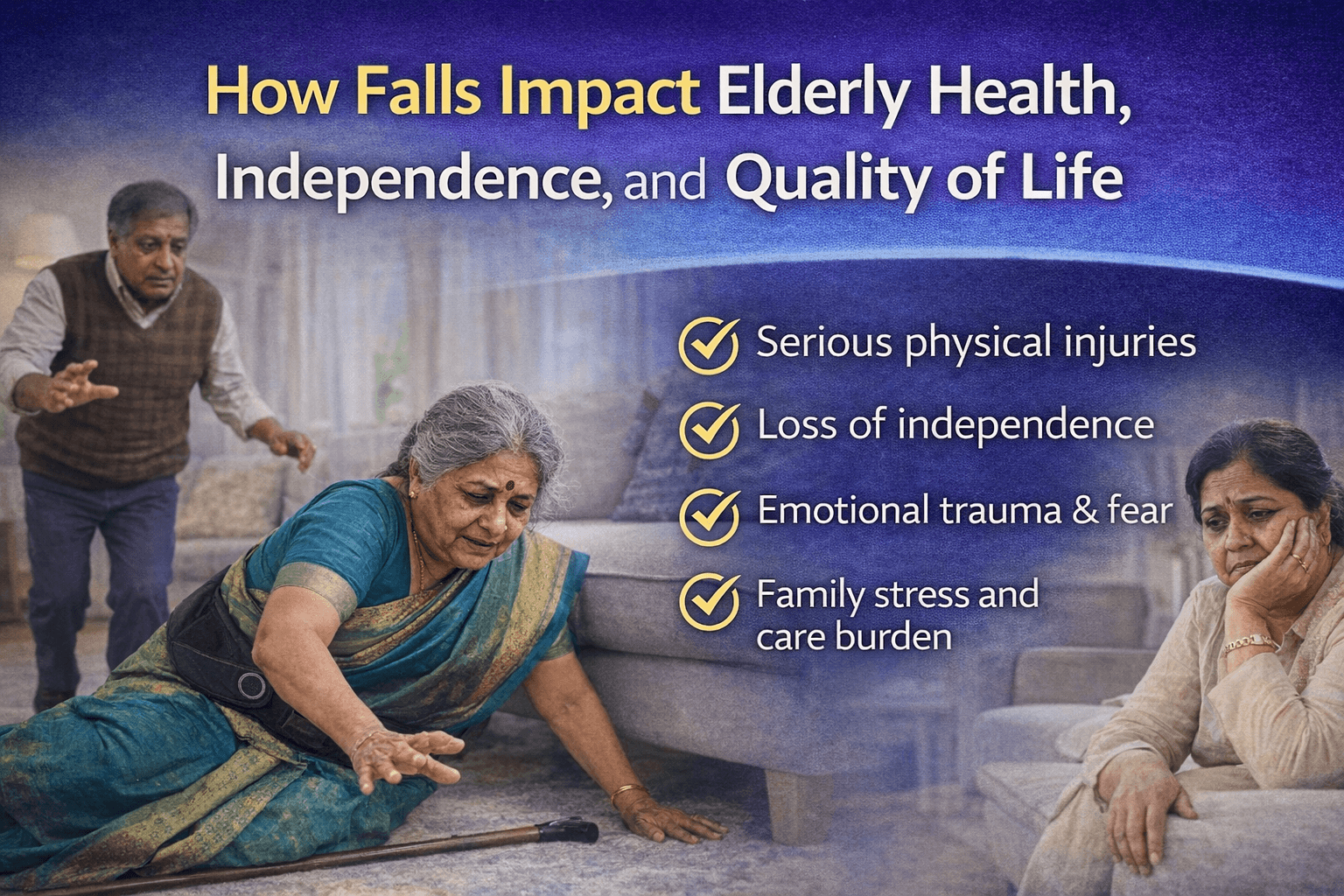
Falls are one of the most significant health events affecting older adults. Beyond physical injuries, a fall can deeply impact an elderly person’s independence, confidence, emotional well-being, and overall quality of life. This blog explores the short-term and long-term effects of falls on the elderly and highlights how Ripple Healthcare supports safer aging.
Falls: A Common but Serious Event in Aging
For many older adults, falls are not rare accidents but recurring risks. As balance, strength, and reflexes decline with age, even simple daily activities like walking, standing up, or turning can lead to a fall. Understanding the impact of falls is the first step toward prevention.
Physical Impact of Falls on the Elderly
The physical consequences of falls can be severe and long-lasting:
Fractures and broken bones
Hip fractures, wrist fractures, and spinal injuries are common and often require surgery and prolonged rehabilitation.
Head injuries
Falls are a leading cause of traumatic brain injuries in older adults, even without visible wounds.
Reduced mobility
Many elderly individuals struggle to regain their previous level of movement after a fall.
Loss of Independence After a Fall
One of the most profound impacts of a fall is the loss of independence:
Difficulty with daily activities
Tasks like bathing, dressing, or walking may require assistance after a fall.
Increased reliance on caregivers
Falls often lead to long-term dependence on family members or professional caregivers.
Lifestyle changes
Some seniors are forced to reduce activities or move to assisted living environments.
Emotional and Psychological Effects of Falls
The emotional impact of falls is often underestimated but deeply affects elderly well-being:
Fear of falling again
Many seniors restrict movement due to fear, which increases weakness and fall risk.
Loss of confidence
Confidence in walking and daily movement often declines significantly.
Anxiety and depression
Isolation and reduced independence can lead to mental health challenges.
How Falls Affect Families and Caregivers
Falls impact not only elderly individuals but also their families:
Emotional stress
Families often worry constantly about their loved one’s safety.
Financial burden
Medical expenses, rehabilitation, and long-term care add significant costs.
Increased caregiving responsibility
Daily supervision and assistance become necessary after serious falls.
The Importance of Fall Prevention
Preventing falls or reducing injury severity can dramatically improve elderly outcomes. Protective strategies, balance training, home safety improvements, and impact-reducing solutions play a crucial role in maintaining independence and dignity.
How Ripple Healthcare Supports Safer Aging
Ripple Healthcare focuses on preventive elderly care by addressing fall risks and injury severity. Solutions like the HipPro Belt are designed to absorb impact during falls and reduce the risk of serious hip injuries, helping seniors stay active and confident.
Learn More or Take the Next Step
To learn more about Ripple Healthcare and its approach to elderly safety, visit https://www.ripplehealthcare.in. If you have questions or need guidance, you can contact the team directly at https://www.ripplehealthcare.in/contact. To explore or purchase protective solutions like the HipPro Belt, visit https://www.ripplehealthcare.in/Buynow.
Final Thoughts
Falls are life-changing events for many elderly individuals, affecting physical health, independence, and emotional well-being. With awareness, preventive care, and support from Ripple Healthcare, seniors can reduce fall-related risks and continue to live safer, more confident lives.