

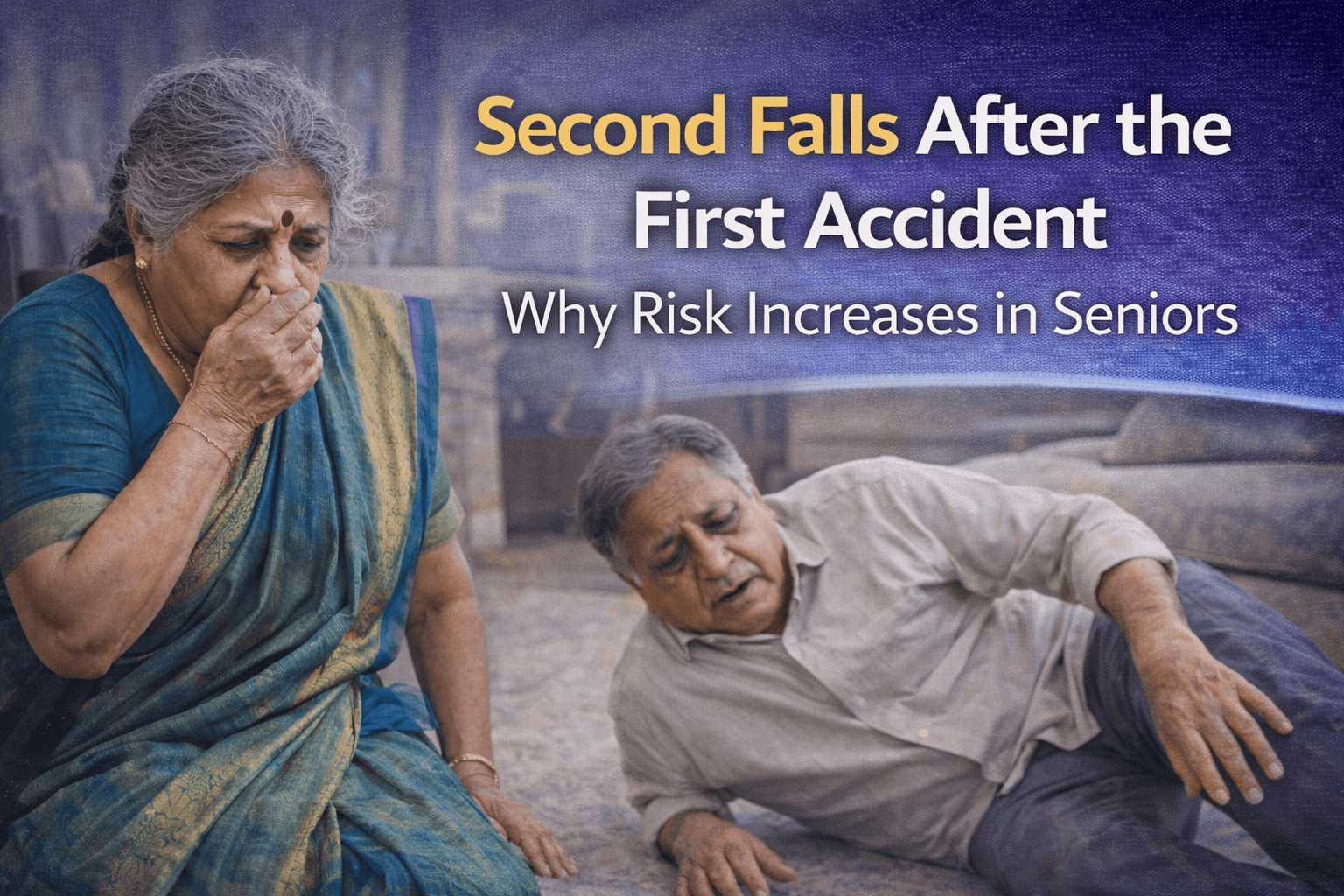
For many seniors, the first fall is not the last. In fact, the risk of a second fall increases significantly after an initial accident. This blog explains why second falls are more common and more dangerous in older adults, the hidden factors that raise risk, and how timely prevention and support from Ripple Healthcare can help break the cycle.
Why the First Fall Is a Major Warning Sign
A first fall is often a signal that balance, strength, or mobility has already declined. While the immediate focus is usually on treating injuries, the underlying causes of the fall often remain unaddressed—setting the stage for a second accident.
Why Second Falls Are More Likely in Seniors
After an initial fall, several factors combine to increase the risk of falling again:
Muscle weakness after inactivity
Recovery periods often involve rest, leading to further loss of strength and balance.
Fear of falling again
Fear causes seniors to move less, which worsens weakness and instability.
Unresolved balance issues
If balance problems are not addressed after the first fall, risk remains high.
Changes in walking pattern
Compensatory movements after injury can reduce stability.
Why Second Falls Are Often More Dangerous
Second falls tend to cause more severe injuries than the first:
Higher risk of hip fractures
Weakened bones and muscles increase fracture risk.
Slower recovery
Recovery becomes more difficult with each subsequent injury.
Greater loss of independence
Repeated falls often lead to long-term dependence on caregivers.
The Vicious Cycle of Falls in the Elderly
A dangerous cycle often follows the first fall:
Fall leads to fear
Fear reduces confidence and movement.
Reduced movement causes weakness
Muscle loss worsens balance and stability.
Weakness increases fall risk
This leads to another fall, continuing the cycle.
Warning Signs That a Second Fall May Occur
Families should watch closely for these signs after a first fall:
Avoiding walking or standing
Fear-driven inactivity is a strong warning sign.
Increased reliance on furniture or walls
This indicates worsening balance.
Reduced confidence in daily activities
Hesitation during routine movements signals instability.
What Families Can Do After the First Fall
The period after a first fall is critical for prevention:
Encourage safe movement and rehabilitation
Gentle activity helps restore strength and balance.
Improve home safety
Remove hazards and improve lighting to reduce risk.
Address fear and confidence
Emotional reassurance is as important as physical recovery.
Why Injury Prevention Matters More After the First Fall
Even with the best care, sudden loss of balance can still occur. Reducing injury severity becomes essential to prevent life-altering consequences from a second fall.
How Ripple Healthcare Helps Break the Cycle of Repeat Falls
Ripple Healthcare focuses on prevention-first elderly care, especially after a first fall:
HipPro Belt for impact protection
The HipPro Belt is designed to absorb impact during falls, reducing the risk of serious hip injuries during repeat accidents.
Supporting confident movement
Protective support helps seniors move without constant fear, encouraging healthy activity.
Peace of mind for families
Ripple Healthcare solutions provide reassurance during the high-risk period after a first fall.
Learn More or Take the Next Step
To learn more about Ripple Healthcare and its approach to preventing fall-related injuries, visit https://www.ripplehealthcare.in. If you need guidance or support, contact the team at https://www.ripplehealthcare.in/contact. To explore or purchase the HipPro Belt, visit https://www.ripplehealthcare.in/Buynow.
Final Thoughts
The first fall should never be ignored. It is often the strongest predictor of a second, more dangerous accident. With early action, confidence-building care, and preventive solutions from Ripple Healthcare, families can reduce repeat fall risk and help seniors continue living safely and independently.