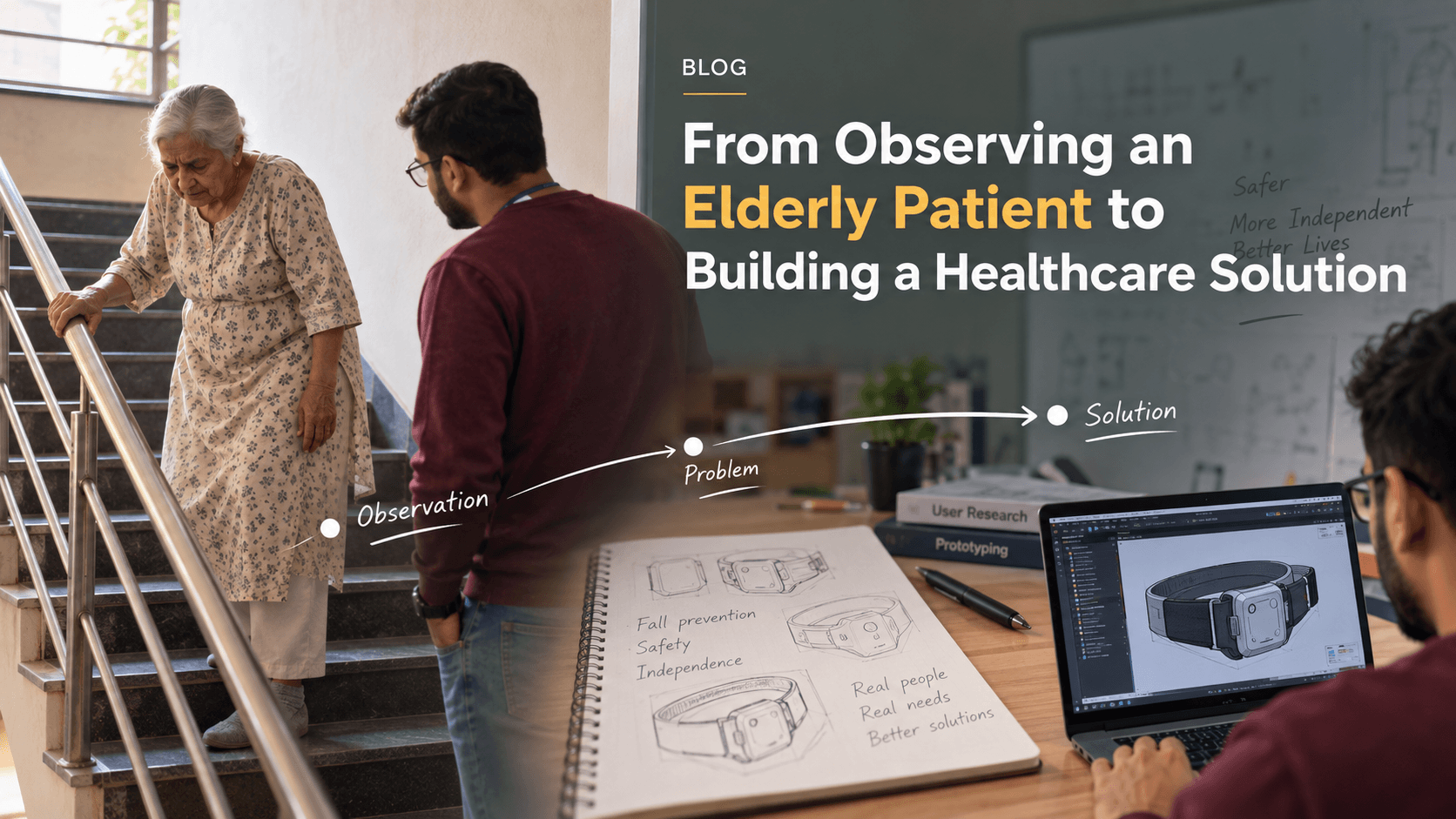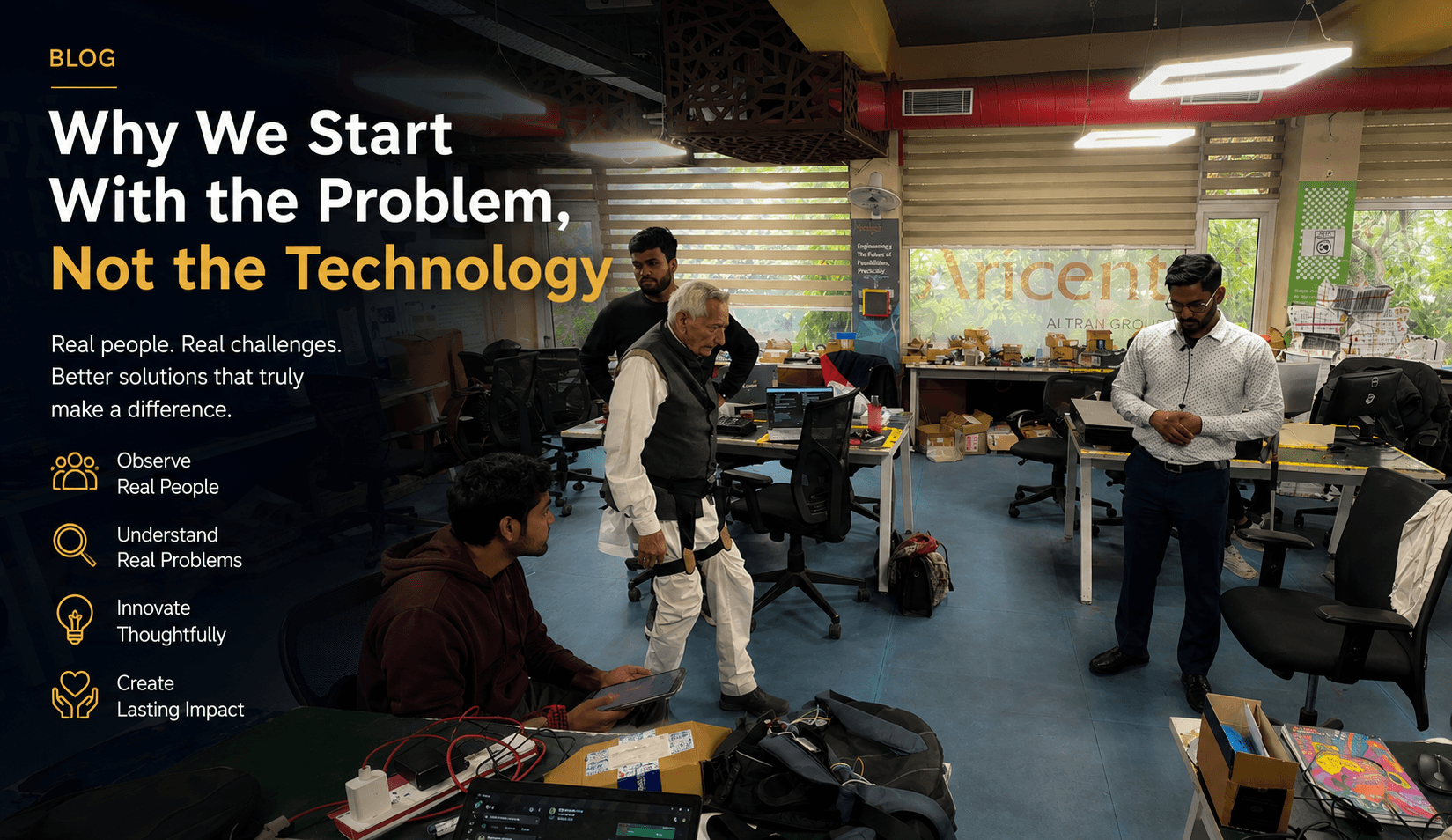


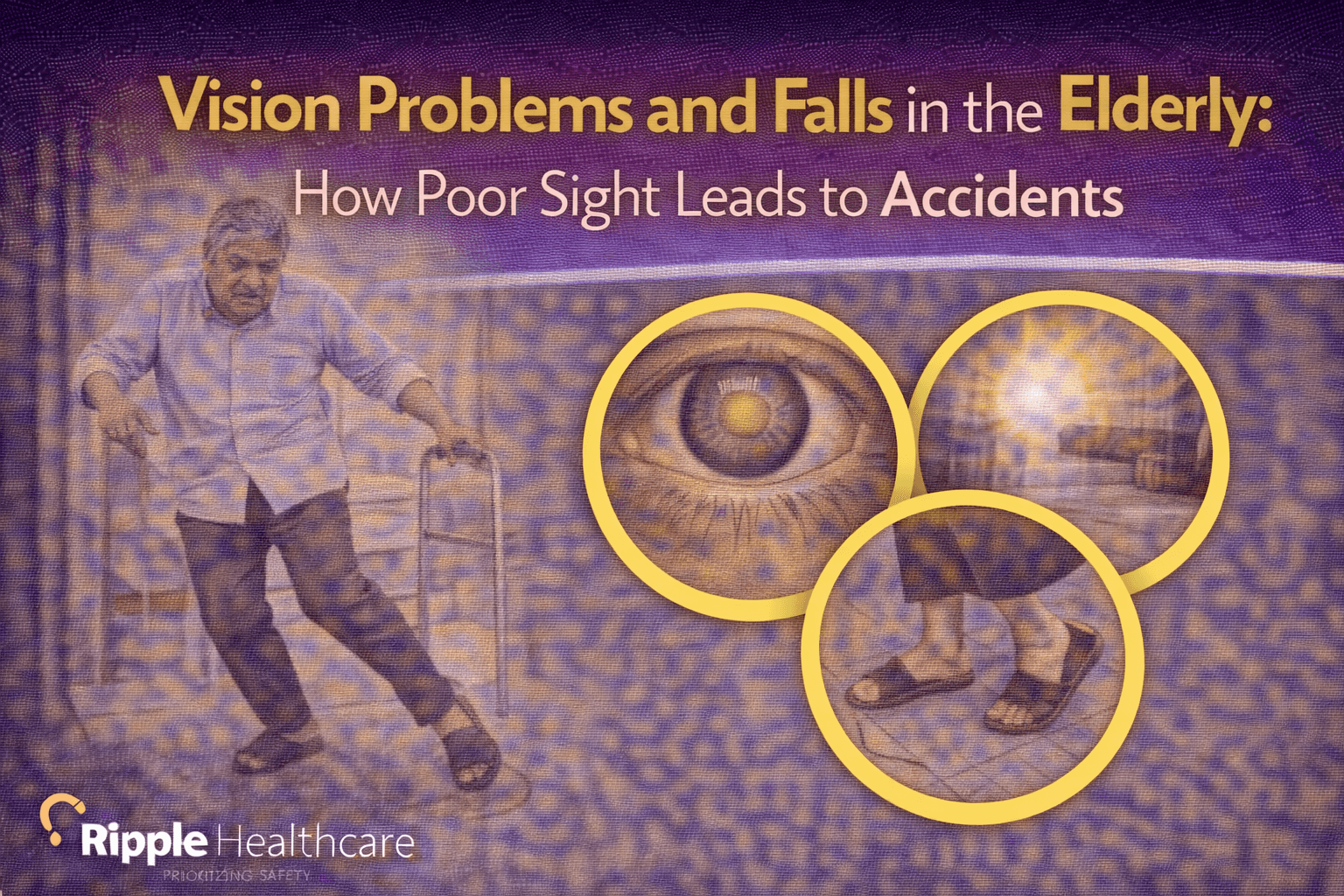
Vision decline is a major contributor to elderly falls. This in-depth blog explains how eyesight affects balance and safety—and how Ripple Healthcare reduces injury risk when falls occur.
Introduction: Seeing Less, Falling More
Vision plays a crucial role in balance. When eyesight declines, fall risk increases significantly.
Common Age-Related Vision Changes
Cataracts, glaucoma, and reduced depth perception are common in older adults.
How Vision Affects Balance
Eyes help the brain judge distance and obstacles. Poor vision disrupts this process.
Difficulty Detecting Obstacles
Low contrast and poor lighting hide hazards like steps and rugs.
Night Vision Decline
Reduced night vision increases falls during low-light conditions.
Depth Perception Problems
Misjudging step height or distance causes trips and missteps.
Glare Sensitivity and Slipping Risk
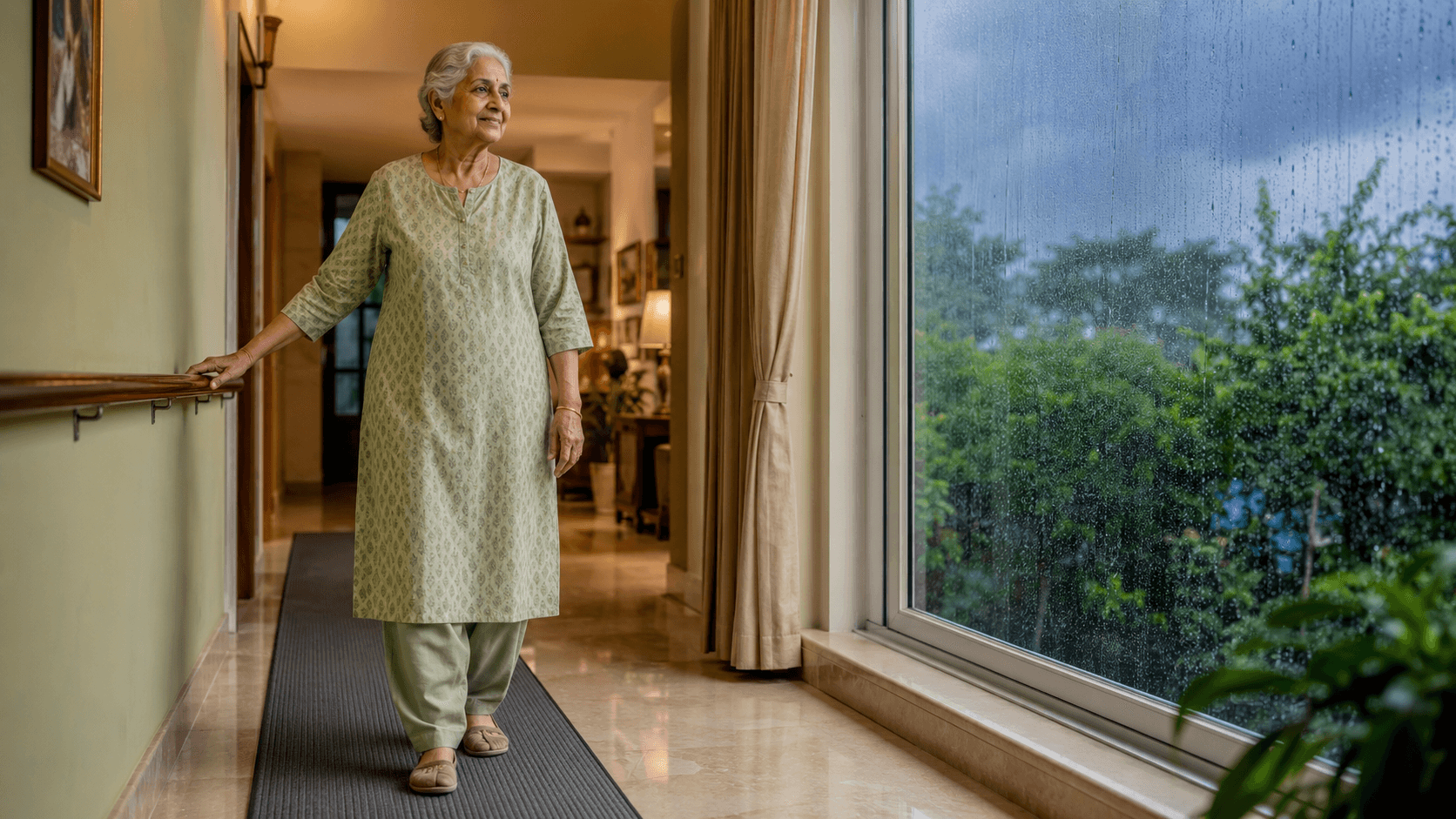
Bright reflections on polished floors confuse visual cues.
Why Vision Problems Are Often Ignored
Gradual vision decline goes unnoticed until accidents occur.
Why Glasses Alone Are Not Enough
Corrective lenses cannot fully restore balance-related vision functions.
The Link Between Vision Loss and Hip Injuries
Visual misjudgment often leads to sideways falls impacting the hip.
Why Injury Prevention Is Essential
Not all vision-related falls can be prevented.
Ripple Healthcare’s Role in Fall Injury Reduction
Ripple Healthcare focuses on protecting vulnerable body areas during unavoidable falls.
How the HipPro Belt Helps Vision-Impaired Seniors
Hip protection reduces fracture risk when vision-related falls occur.
Restoring Confidence Despite Vision Loss
Protection helps seniors move without constant fear.
Supporting Independent Living
Confidence and safety help maintain independence.
Final Takeaway
Vision loss increases fall risk, but Ripple Healthcare helps reduce life-altering injuries.
Learn More About Ripple Healthcare
Visit https://www.ripplehealthcare.in | Contact https://www.ripplehealthcare.in/contact | Buy Now https://www.ripplehealthcare.in/Buynow