

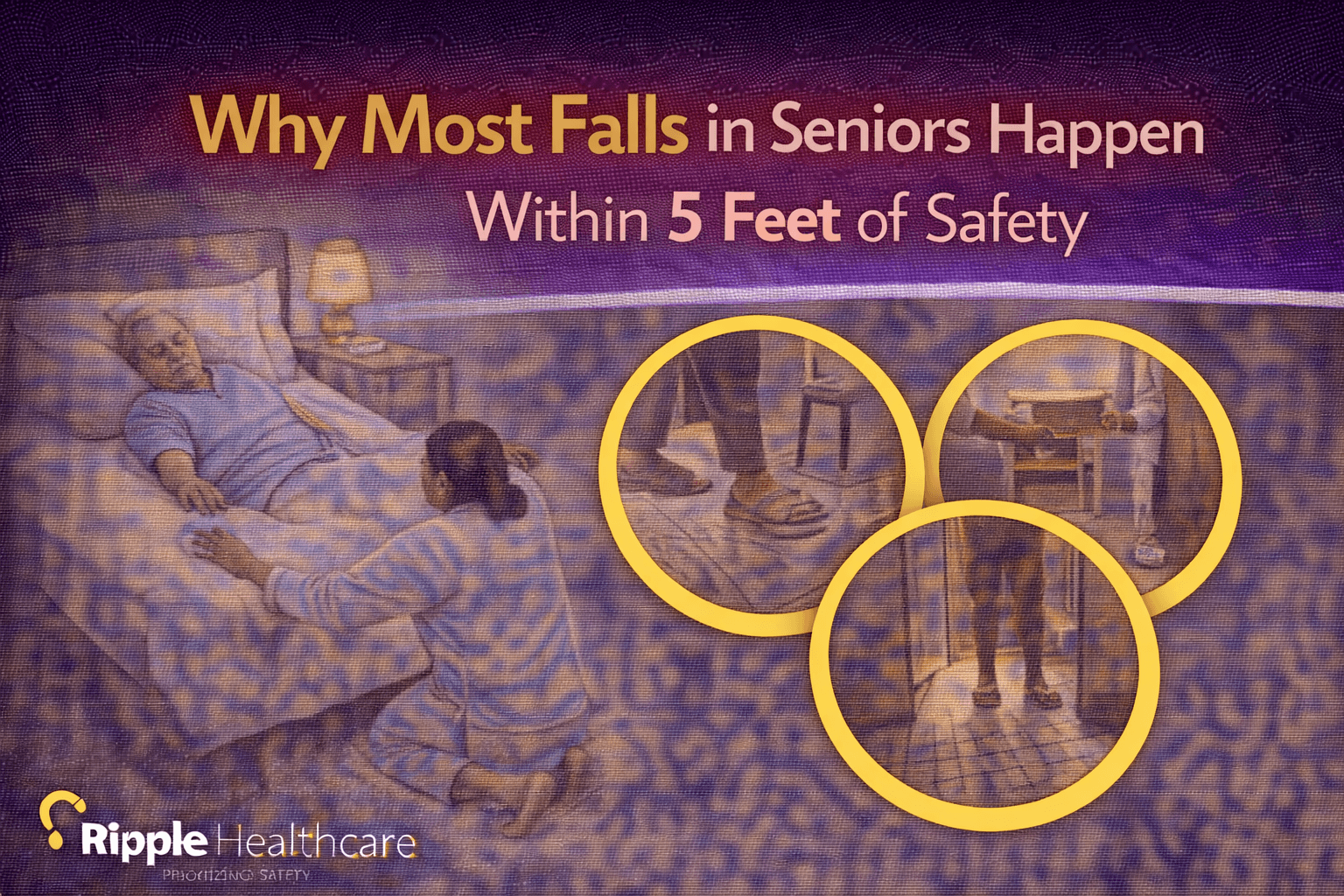
Many elderly falls occur just steps away from beds, chairs, or bathrooms. This deep pillar blog explains why short-distance falls are so dangerous, the biological reasons behind them, and how Ripple Healthcare adds a critical layer of protection.
Introduction: The Illusion of Being Safe
Many families imagine that serious falls happen on staircases or outside the home. In reality, most elderly falls happen within just a few feet of something considered safe—a bed, a chair, a bathroom sink. This creates a dangerous illusion. Seniors believe they are safe because support is nearby. But when balance fails, those few feet can feel like an impossible distance.
Standing Up: The Most Dangerous Transition
One of the highest-risk moments for seniors is simply standing up. Blood pressure can drop suddenly, causing dizziness known as orthostatic hypotension. Within seconds, the body becomes unstable. If reflexes are slow, a fall can occur before reaching nearby support.
Night-Time Falls Near the Bed
Falls frequently happen during late-night bathroom trips. Sleepiness reduces coordination, vision is limited, and reflexes are slower. Even if a chair or wall is nearby, the body may not respond quickly enough.
Overconfidence in Familiar Spaces
Familiarity reduces caution. Seniors move quickly in their own homes because they believe they know every corner. But aging bodies change, even when environments do not.
Hard Flooring Amplifies Impact
Marble and tile floors, common in many homes, dramatically increase impact force. A short fall onto a hard surface can generate enough force to fracture a fragile hip.
Reaching for Support That Isn’t There
During imbalance, seniors instinctively reach for something. If the chair is slightly farther than expected, or the table shifts, the fall continues unbroken.
Slow Reflexes and Delayed Reaction
Aging slows nerve signals between brain and muscles. Even a half-second delay prevents proper correction. This is why falls feel sudden and unstoppable.
Why Short Falls Cause Severe Injuries
Contrary to belief, falls do not need height to be dangerous. Sideways impact onto the hip concentrates force into a small area. Fragile bones cannot absorb that shock.
The Psychological Shock of Indoor Falls
When a fall happens at home, it deeply shakes confidence. If even familiar spaces feel unsafe, fear grows rapidly.
Environmental Fixes Have Limits
Grab bars and lighting help—but they cannot prevent sudden balance failure. Prevention must go beyond environmental adjustments.
The Importance of Impact Reduction
If falls cannot be completely prevented, reducing injury severity becomes essential.
Ripple Healthcare’s Layered Protection Philosophy
Ripple Healthcare emphasizes layered safety—awareness, environment, balance, and impact protection working together.
How the HipPro Belt Protects During Short-Distance Falls
The HipPro Belt absorbs and disperses impact during sideways falls near beds or chairs. This can significantly reduce fracture risk.
Restoring Confidence Indoors
Knowing that impact is reduced encourages seniors to move confidently within their homes.
Changing the Outcome of Everyday Falls
Most falls happen within reach of safety. With proactive protection from Ripple Healthcare, those falls do not have to become life-changing injuries.
Learn More About Ripple Healthcare
Visit https://www.ripplehealthcare.in Contact https://www.ripplehealthcare.in/contact Buy Now https://www.ripplehealthcare.in/Buynow